Titanopsis calcarea
Titanopsis calcarea Care Guide
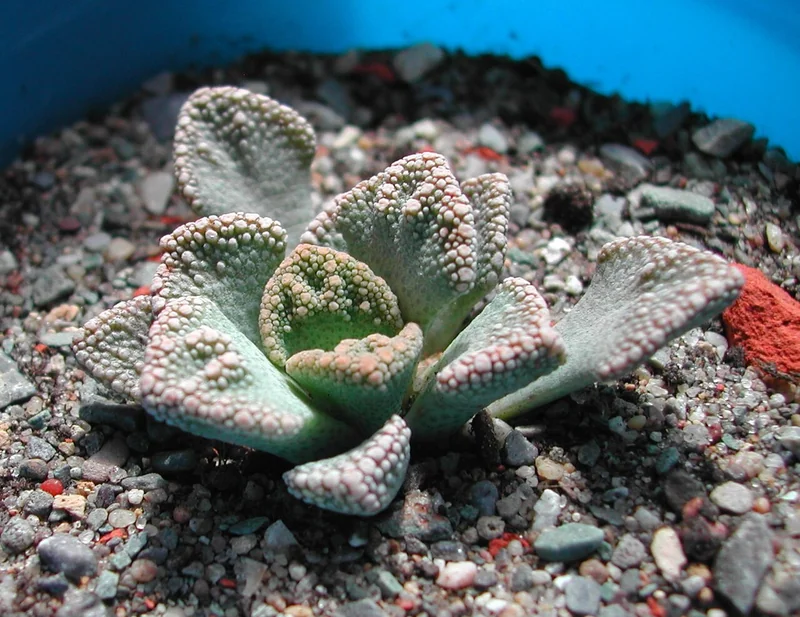 Featured phototitanopsis-calcarea.jpg
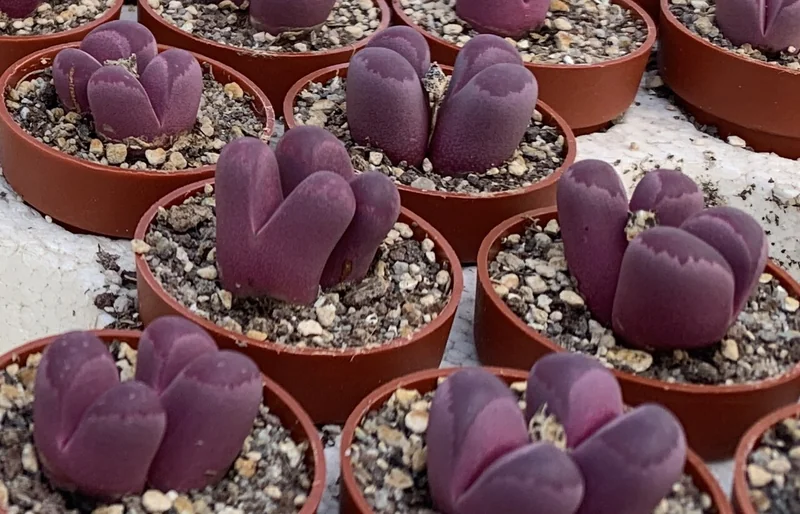
Titanopsis calcarea, the jewel plant, is a fascinating miniature succulent from the Northern Cape of South Africa. It forms flat rosettes of small, grey-blue leaves whose tips are covered in raised, warty, whitish tubercles that closely resemble fragments of limestone or quartz — a remarkable camouflage adaptation. It is among the most geometrically precise and architecturally interesting succulents available, and thrives with intense light and minimal watering.
Care facts at a glance
- Light
- Bright indirect
- Water
- Water sparingly — once every 3 to 4 weeks in summer, once every 6 to 8 weeks in winter.
- Humidity
- 20–45 %
- Temperature
- 5–40 °C
- Soil
- Extremely gritty mineral mix with limestone chips if available; standard gritty succulent mix as an alternative.
- Origin
- Limestone outcrops and rocky flats of the Northern Cape and Namaqualand, South Africa.
- Mature size
- 4 to 8 cm tall; flat rosette 8 to 12 cm across.
Overview
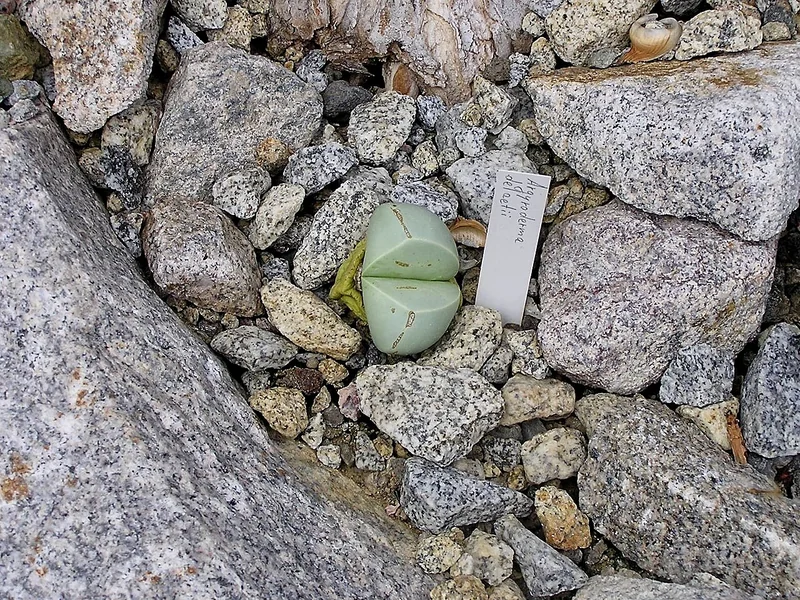
Titanopsis calcarea was described by (Marloth) Schwantes and belongs to the Aizoaceae family alongside Lithops, Faucaria, and other mimicry succulents of southern Africa. The genus name comes from the Greek Titan (chalk, lime) and opsis (appearance), referring to the limestone-mimicking leaf tips. It grows naturally on, between, and among limestone and dolomite outcrops, making it one of the most extreme stone-mimicking plants known.
Care Priorities
- Maximum available sunlight; the encrusted leaf tips tolerate full sun that would scorch most succulents.
- Unlike Lithops, Titanopsis is winter-growing; water slightly more in autumn and winter, reduce in summer.
- Provide alkaline, mineral-rich substrate if possible; adding a few crushed eggshells or limestone chips helps replicate its native soil.
- Deep pots accommodate the tap root system.
Common Problems
Root rot from summer overwatering is the primary issue — the plant is naturally drier in summer and wetter in winter. Pale, washed-out leaf colour in an otherwise healthy plant is a sign of insufficient light; this species requires intense light. Root mealybugs can silently damage the root system; inspect at every repot.
Sources & further reading (2)
- botanical-garden — accessed 2026-05-08
- encyclopedia — accessed 2026-05-08
Frequently asked questions
Why do the leaf tips look like rocks?
The whitish warty tubercles on the leaf tips closely mimic the limestone fragments of its native habitat. This camouflage significantly reduces herbivory — predators in the Karoo simply cannot distinguish the plant from surrounding gravel.
When does it flower?
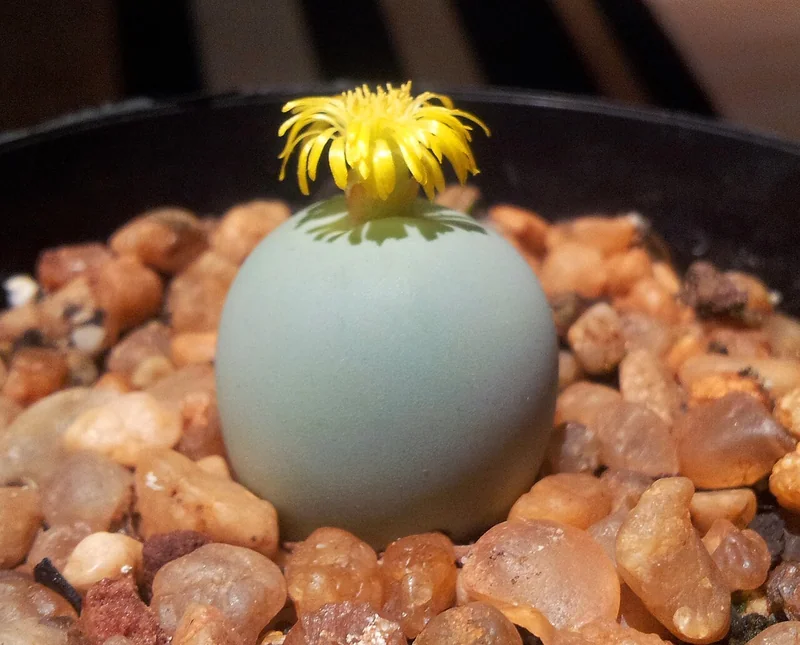
Titanopsis flowers in autumn to winter (its growing season), producing small, vivid yellow to orange daisy-like flowers that emerge from between the leaf tips.
Is it difficult to grow from seed?
It is relatively straightforward from seed — sow on a gritty mineral surface, keep warm (25 to 30 °C) and in good light. Germination occurs within 5 to 14 days but growth is very slow.