Lithops pseudotruncatella
Lithops pseudotruncatella Care Guide
 Featured photolithops-pseudotruncatella.jpg
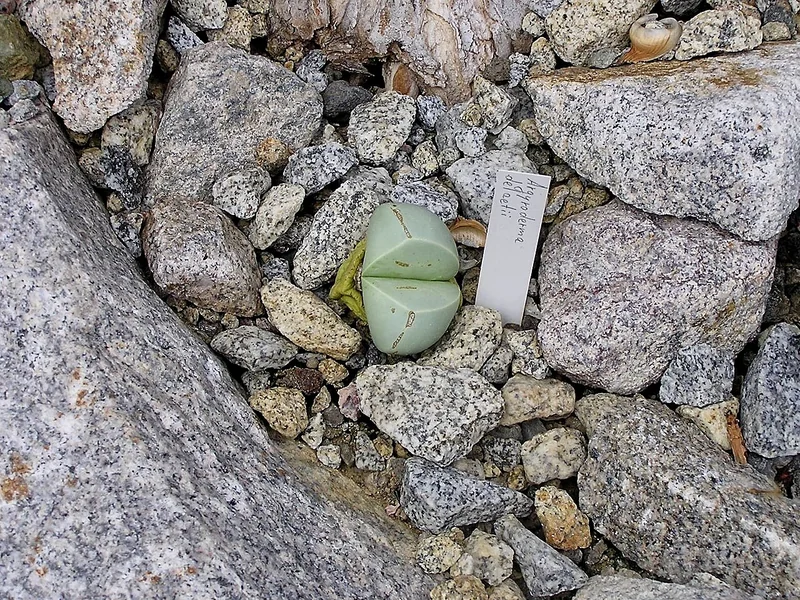
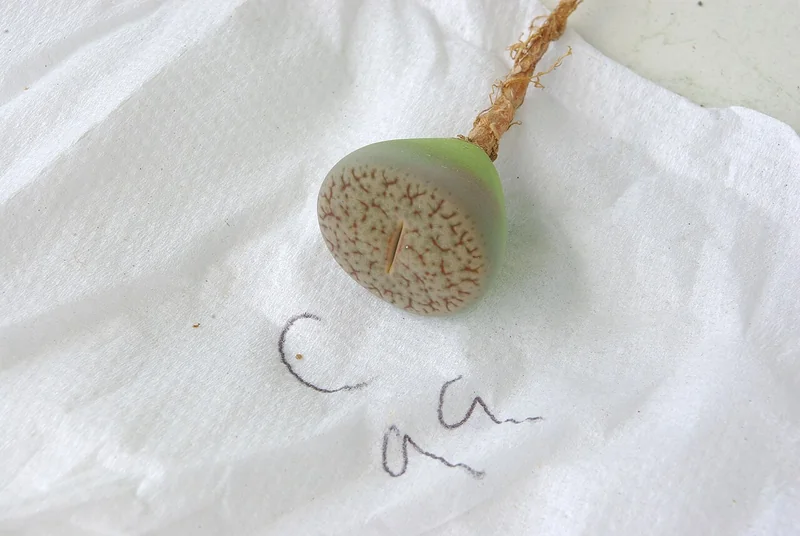
Lithops pseudotruncatella is a widely cultivated living stone from Namibia and Botswana, prized for its complex surface patterns of channels, dots, and islands in brown, tan, and olive-green tones. It is considered one of the more forgiving lithops for beginners due to its slightly more robust constitution compared to other species. Its stone-mimicking pattern is highly variable across the several subspecies and varieties, making it a popular species for collectors.
Care facts at a glance
- Light
- Bright indirect
- Water
- Water only during the active growth and leaf-replacement cycle — late summer to early winter; withhold completely in spring.
- Humidity
- 20–45 %
- Temperature
- 5–42 °C
- Soil
- Extremely gritty mineral mix: 70 to 80 percent coarse grit and sand, balance succulent compost.
- Origin
- Gravel plains and rocky outcrops of Namibia and Botswana.
- Mature size
- 2 to 3.5 cm tall; body 2 to 4 cm across.
Overview
Lithops pseudotruncatella was described by N.E. Brown and has several recognised subspecies including subsp. pseudotruncatella, subsp. dendritica, and subsp. volkii, each with distinct surface markings. In its native Karoo and Namib habitats it grows among quartz pebbles almost identical in colour and texture. The annual cycle of leaf replacement — in which the old leaf pair is consumed by the emerging new pair — is the defining feature of lithops cultivation.
Care Priorities
- Follow the watering cycle precisely: water in late summer and autumn only; none in spring or early summer.
- Maximum sunlight available, ideally a south-facing windowsill in the northern hemisphere.
- Use the grittiest possible substrate in a deep, narrow pot that accommodates the tap root.
- Avoid high humidity environments, which predispose to root rot.
Common Problems
The body swelling and cracking open (splitting) between the lobes is caused by watering during dormancy. Yellowing and softening of the body indicates root rot — remove from soil, air dry for a week, then repot in fresh dry gritty mix. Very slow growth and no flowers after 3 or more years usually means insufficient light.
Sources & further reading (2)
- botanical-garden — accessed 2026-05-08
- encyclopedia — accessed 2026-05-08
Frequently asked questions
What makes L. pseudotruncatella easier for beginners?
It tolerates a slightly wider temperature range than some other species and is somewhat more forgiving of minor watering mistakes. It also produces seeds more readily, making it common and affordable.
Are the patterns on the surface always the same?
No — each subspecies and individual plant has a unique pattern of channels, dots, and islands on the window surface. This variation makes it a popular species for collectors who seek out distinct forms.
Can I grow multiple lithops in one pot?
Yes — a community pot of several species is popular. Use a wide, shallow dish filled with gritty mix and leave space between plants. All plants in the pot should follow the same watering schedule.