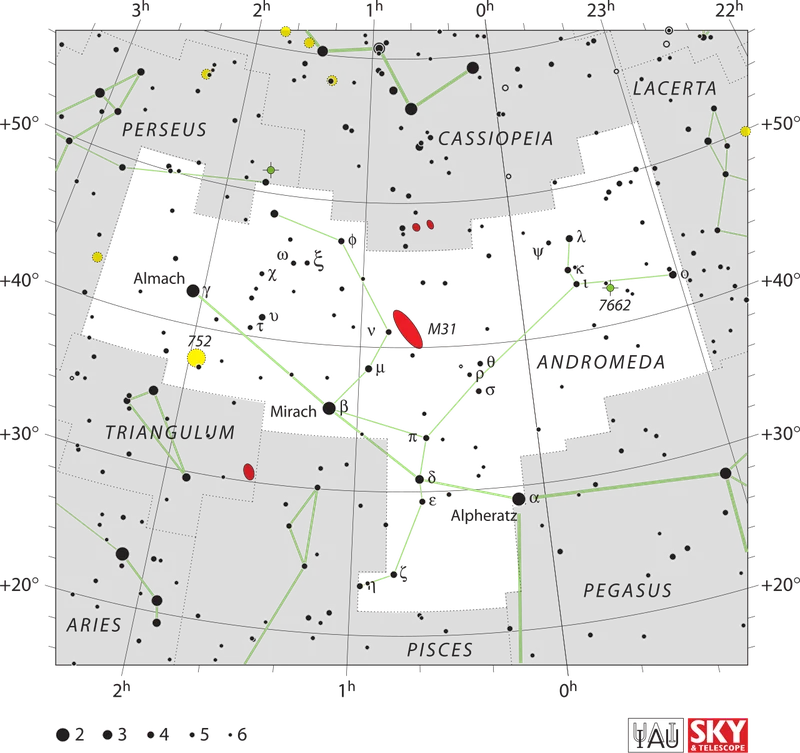
 And
AndASTRONOMY · 88 CONSTELLATIONS
Eighty-eight constellations, one guide at a time.
Bayer designation, brightest stars, mythology — from IAU and Hipparcos.
The IAU divides the entire celestial sphere into 88 constellations — most named by Ptolemy in the 2nd century, the rest filled in by 16th-to-18th-century cartographers mapping the southern sky. Below: the 12 zodiac, the mythology-rich Ptolemy classics, and the remaining 61 regions.
For fun · sources cited. The astronomy and mythology here are real; we do not publish astrology, predictions, or personality readings.
The zodiac — twelve constellations along the ecliptic.
The Sun appears to pass through these twelve regions over the year. The dates below are the tropical-zodiac fixed-date convention (Western popular usage).
AriesThe RamMar 21 – Apr 19
Northern spring constellation between Pisces and Taurus.
TaurusThe BullApr 20 – May 20Home to Aldebaran and the Pleiades star cluster (M45).
GeminiThe TwinsMay 21 – Jun 20Marked by the bright pair Castor and Pollux.
CancerThe CrabJun 21 – Jul 22Faintest zodiac constellation; hosts the Beehive Cluster (M44).
LeoThe LionJul 23 – Aug 22Brightest spring star Regulus sits at its heart.
VirgoThe MaidenAug 23 – Sep 22Second-largest constellation; anchored by Spica.
LibraThe ScalesSep 23 – Oct 22The only zodiac constellation depicting an inanimate object.
ScorpiusThe ScorpionOct 23 – Nov 21Crowned by red supergiant Antares — "rival of Mars".
SagittariusThe ArcherNov 22 – Dec 21Points toward the centre of the Milky Way galaxy.
CapricornusThe Sea-GoatDec 22 – Jan 19Faint zodiac constellation south of the celestial equator.
AquariusThe Water-BearerJan 20 – Feb 18Large autumn constellation; home to the Helix Nebula.
PiscesThe FishesFeb 19 – Mar 20Contains the vernal equinox point — the Sun's spring crossing.
The classical sky — heroes, beasts, and rescues.
Ptolemy catalogued 48 of these in the 2nd-century Almagest. We highlight 15 with the richest narrative continuity from Greek and Roman sources.
And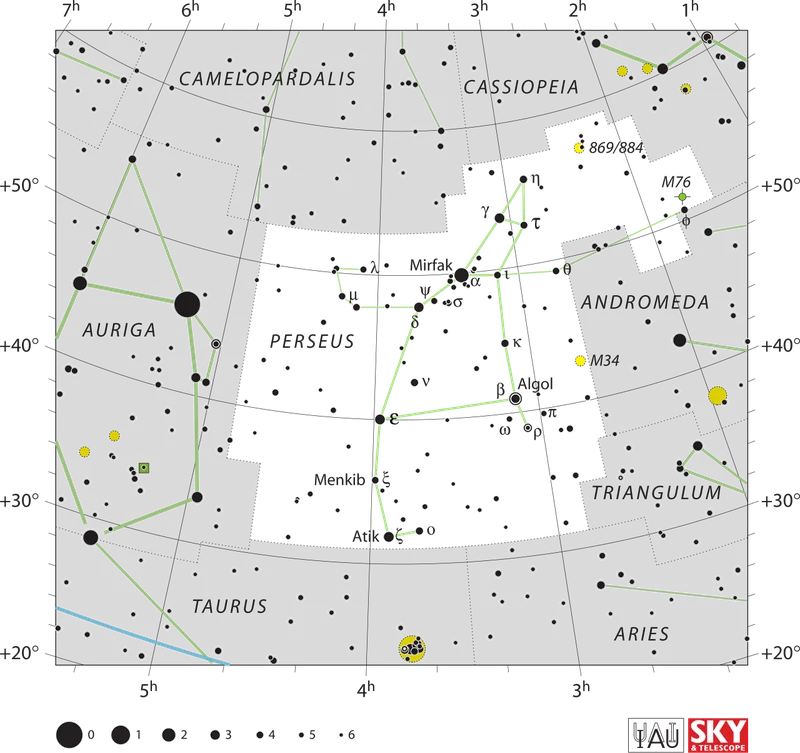 Per
PerPerseus Constellation
Read guide →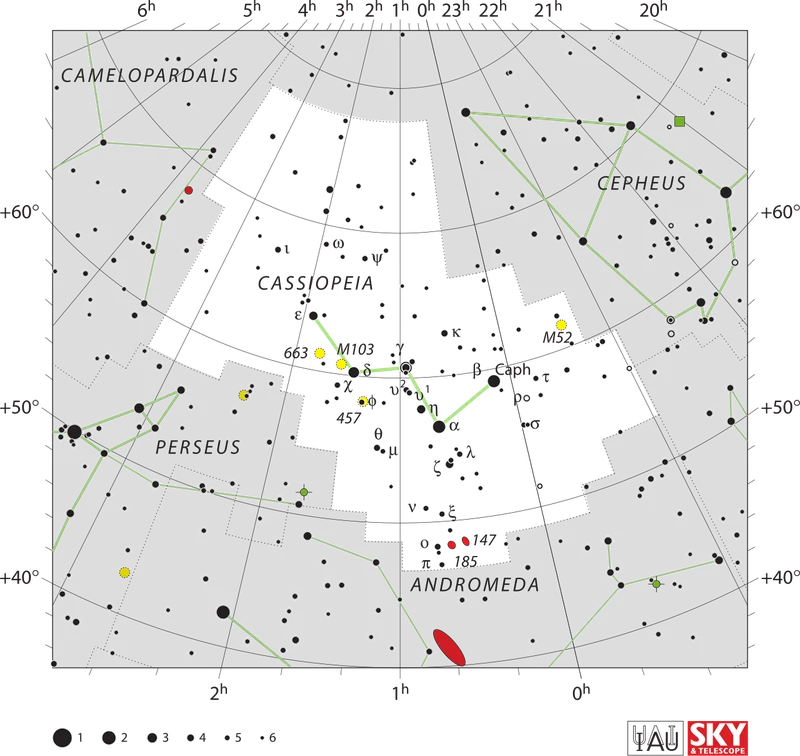 Cas
CasCassiopeia Constellation
Read guide →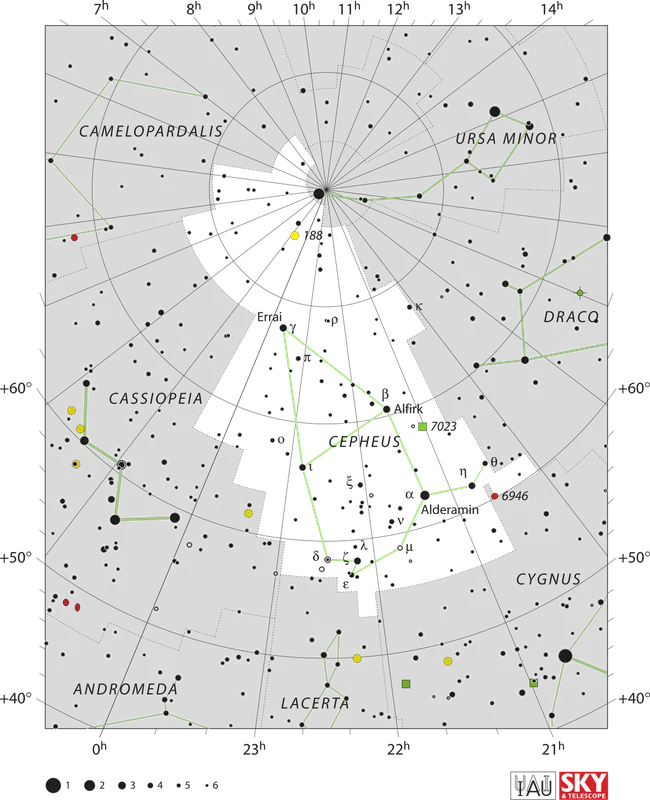 Cep
CepCepheus Constellation
Read guide →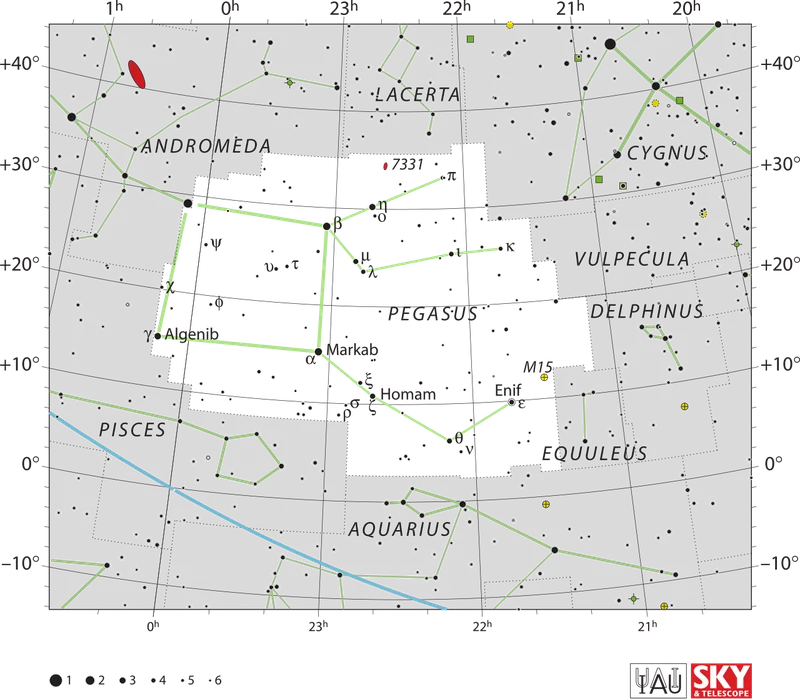 Peg
PegPegasus Constellation
Read guide →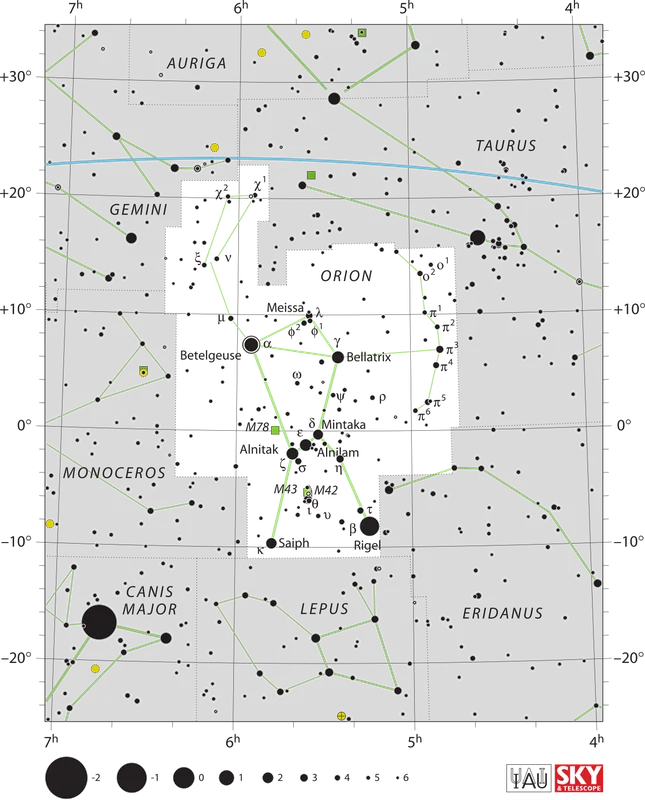 Ori
OriOrion Constellation
Read guide →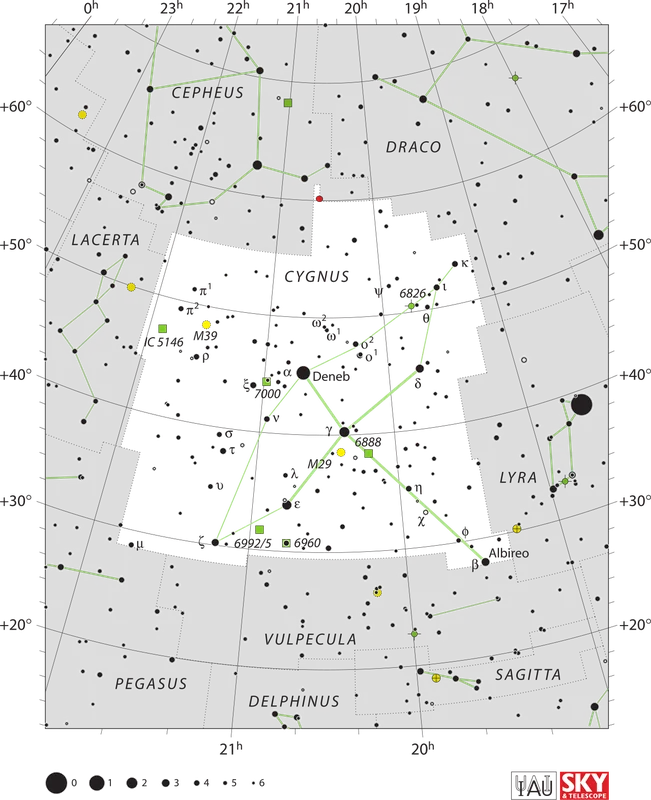 Cyg
CygCygnus Constellation
Read guide →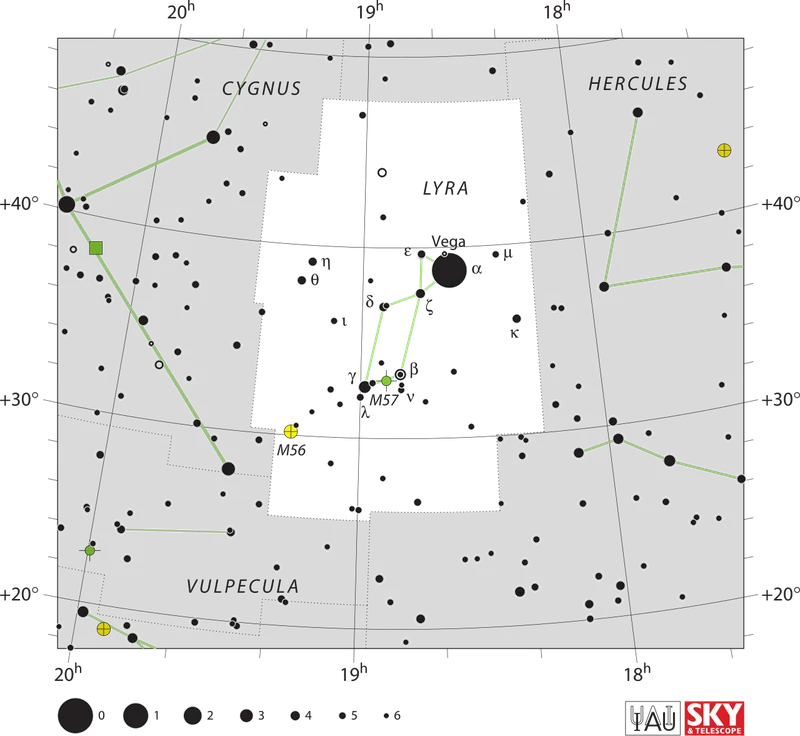 Lyr
LyrLyra Constellation
Read guide →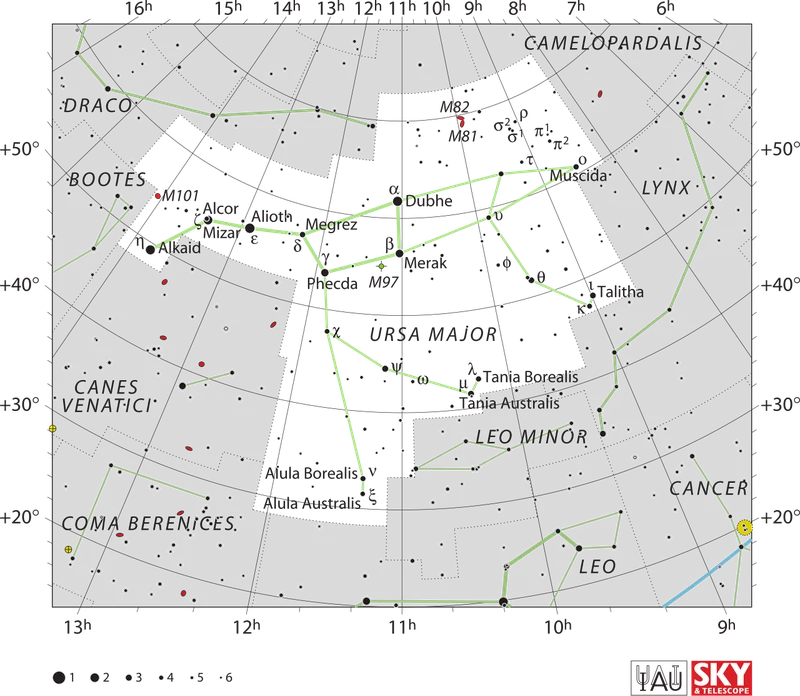 UMa
UMaUrsa Major Constellation
Read guide →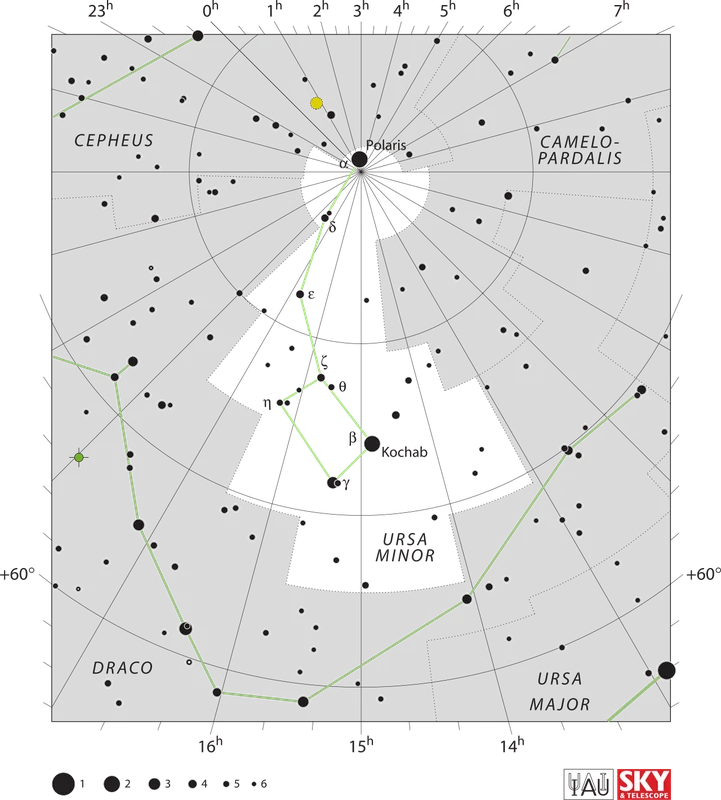 UMi
UMiUrsa Minor Constellation
Read guide →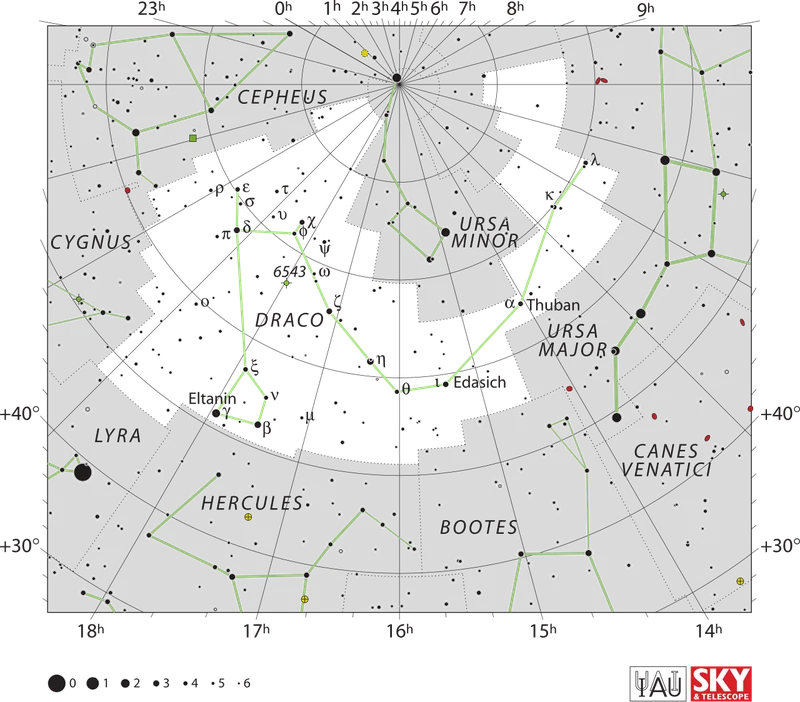 Dra
DraDraco Constellation
Read guide →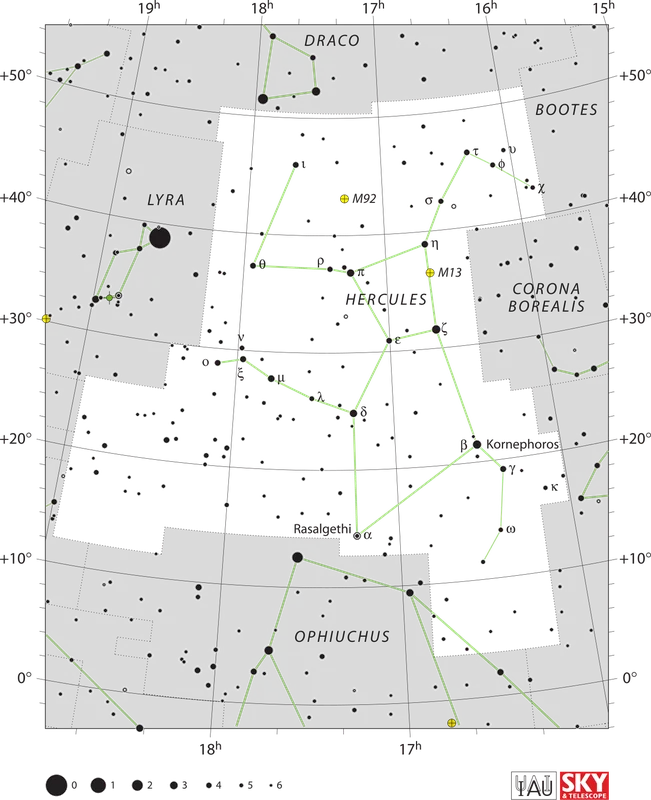 Her
HerHercules Constellation
Read guide →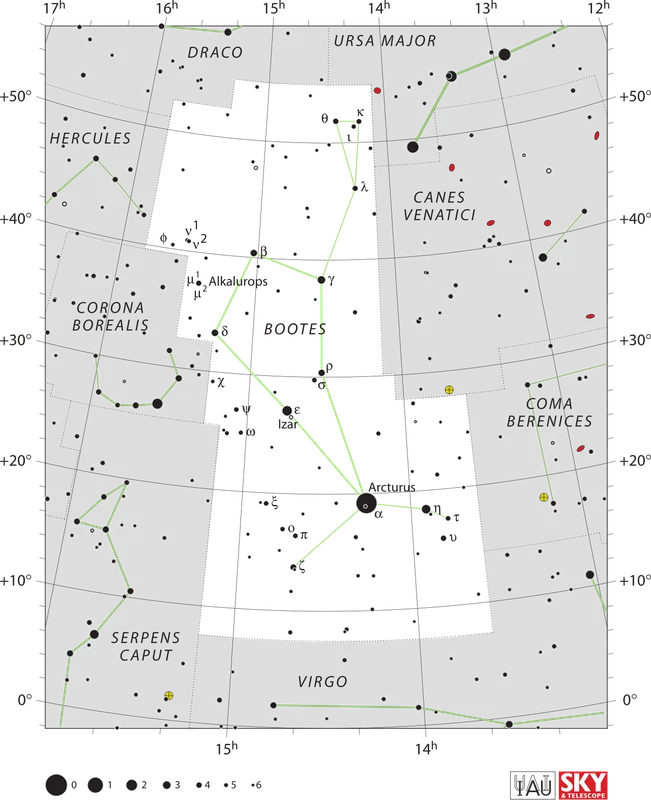 Boo
BooBootes Constellation
Read guide →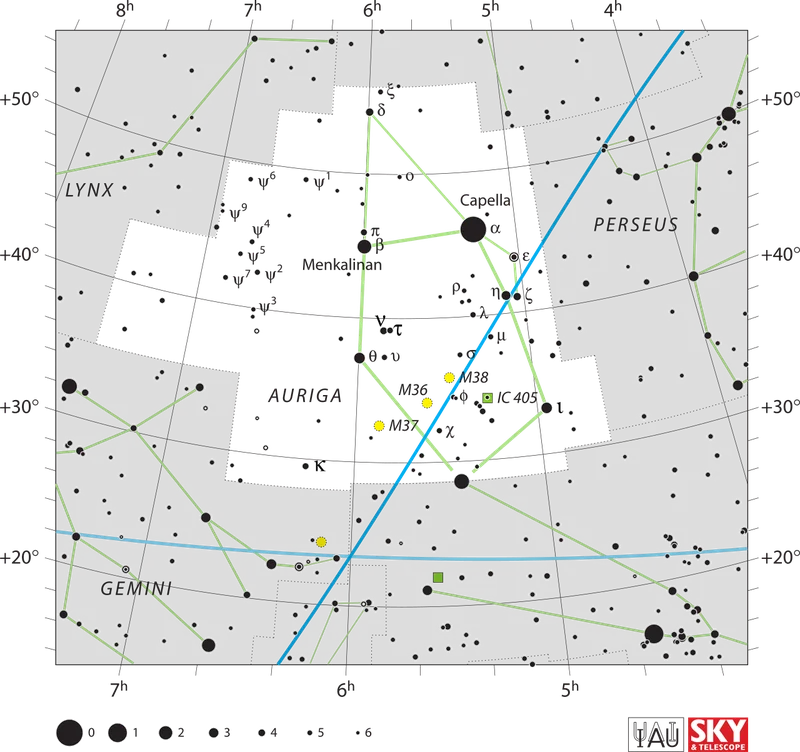 Aur
AurAuriga Constellation
Read guide →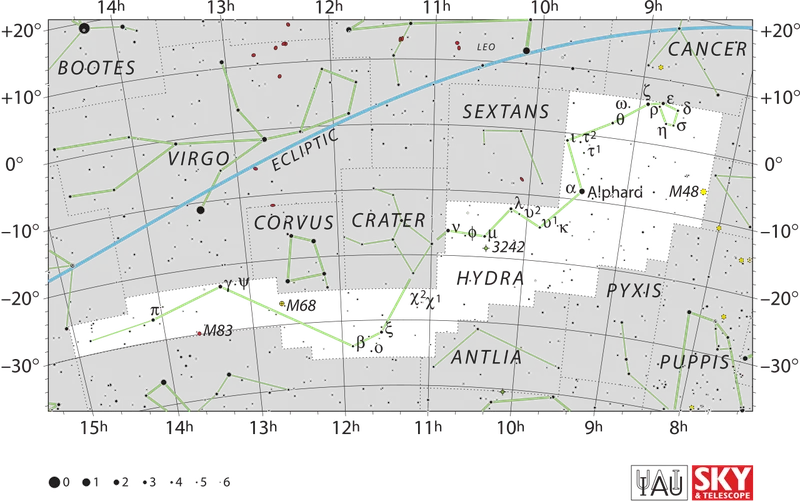 Hya
HyaHydra Constellation
Read guide →The remaining 61 regions.
Modern southern-sky additions (Lacaille 1750s) and the smaller Ptolemy entries — every patch of sky has a name and a boundary set in 1930.
- Antlia
- Apus
- Aquila
- Ara
- Caelum
- Camelopardalis
- Canes Venatici
- Canis Major
- Canis Minor
- Carina
- Centaurus
- Cetus
- Chamaeleon
- Circinus
- Columba
- Coma Berenices
- Corona Australis
- Corona Borealis
- Corvus
- Crater
- Crux
- Delphinus
- Dorado
- Equuleus
- Eridanus
- Fornax
- Grus
- Horologium
- Hydrus
- Indus
- Lacerta
- Leo Minor
- Lepus
- Lupus
- Lynx
- Mensa
- Microscopium
- Monoceros
- Musca
- Norma
- Octans
- Ophiuchus
- Pavo
- Phoenix
- Pictor
- Piscis Austrinus
- Puppis
- Pyxis
- Reticulum
- Sagitta
- Sculptor
- Scutum
- Serpens
- Sextans
- Telescopium
- Triangulum Australe
- Triangulum
- Tucana
- Vela
- Volans
- Vulpecula
World Cup · Live
Pick your favorite constellation, one match at a time.
64 IAU regions face off — 12 zodiac plus Ptolemy classics plus a curated rest. Mythology, brightness, or vibe — your bracket, your call.
Take the Constellations World Cup