Tillandsia cyanea
Tillandsia cyanea Care Guide
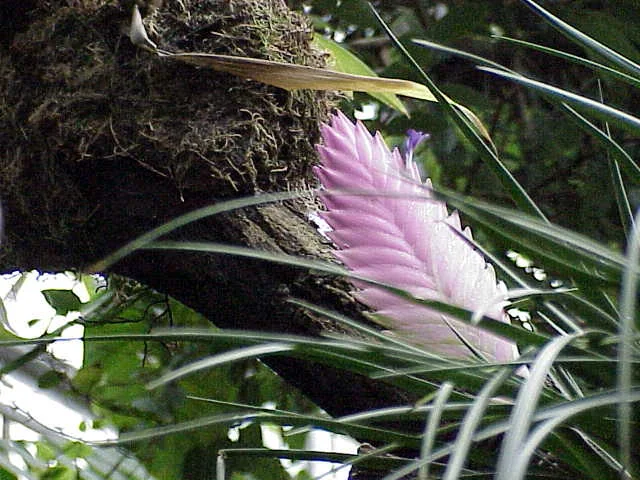 Featured phototillandsia-cyanea.jpg
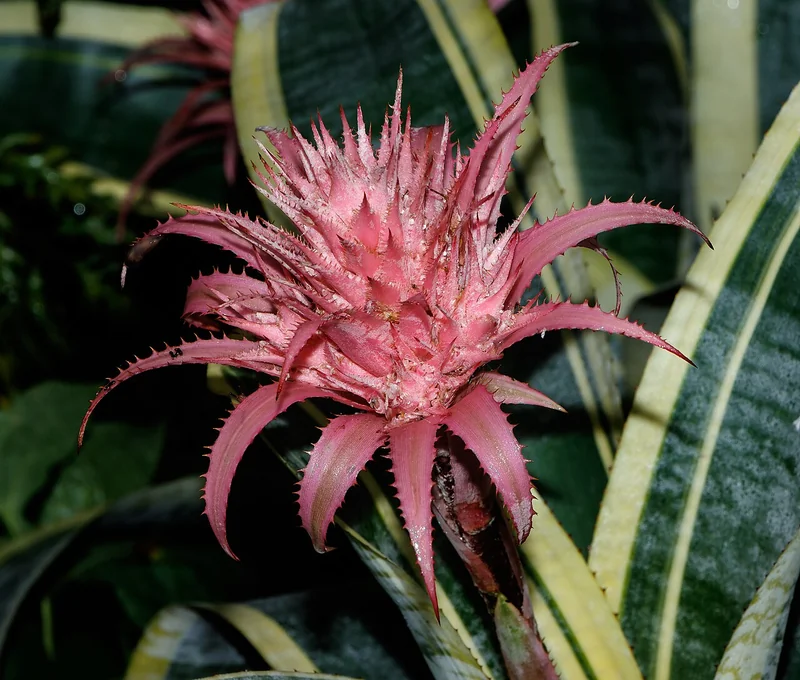
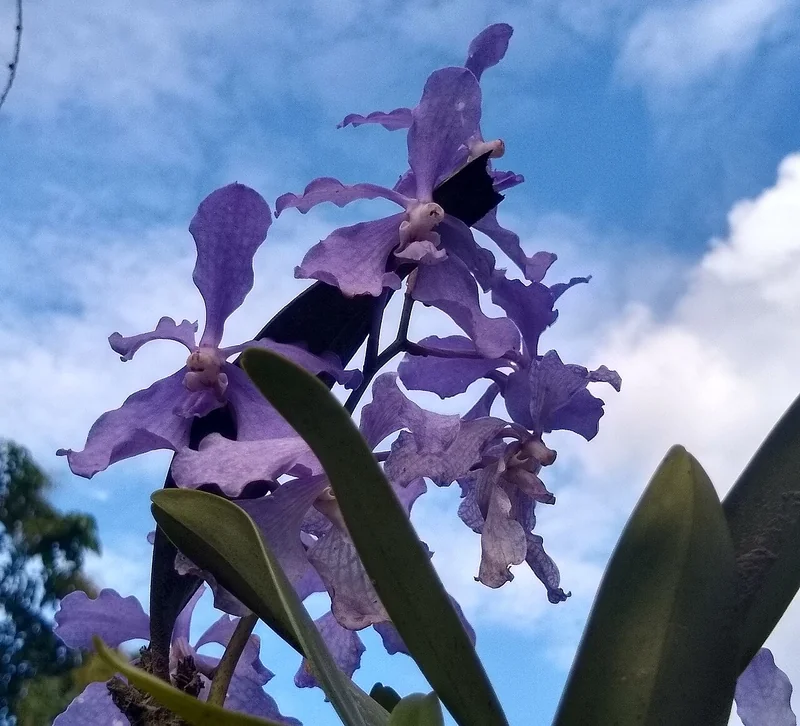
Tillandsia cyanea, the Pink Quill Plant (now reclassified as Wallisia cyanea by some authorities), is a compact bromeliad from Ecuador with narrow, grass-like, dark-green leaves forming a rounded rosette, and an extraordinary flower structure: a flat, paddle-shaped bright-pink bract from which violet-blue flowers with white centres emerge one or two at a time over a period of months. The bract persists long after the flowers fade, extending the ornamental display considerably.
Care facts at a glance
- Light
- Bright indirect
- Water
- Mist the foliage and roots 2–3 times per week; water the base or dip the plant briefly in water weekly. Reduce in winter.
- Humidity
- 50–75 %
- Temperature
- 13–30 °C
- Soil
- Mounted epiphyte (preferred), or loosely potted in orchid bark or bromeliad mix; minimal soil contact.
- Origin
- Humid cloud forests and lower montane forests of Ecuador.
- Mature size
- 25–35 cm tall; rosette 15–25 cm across.
Overview
Tillandsia cyanea K.Koch ex E.Morren was described in 1874 and is native to the cloud forests of Ecuador. The genus Tillandsia is the largest in the bromeliad family, containing around 650 species adapted to a vast range of habitats from tropical rainforests to near-desert conditions. T. cyanea is one of the most spectacular-flowering of all tillandsias. Modern phylogenetic studies have moved it to the genus Wallisia, though Tillandsia cyanea remains the most widely used name in horticulture. The violet-blue petals are among the most vivid of any bromeliad flower.
Care Priorities
- Water by misting: spray the entire plant thoroughly 2–3 times per week, ensuring the scales (white surface coating on leaves) absorb moisture.
- The pink bract lasts for several months; individual flowers emerge from its edges over time.
- Bright, indirect light maintains the best leaf colour and flower production.
- After the bract finishes, the parent rosette will slowly decline and produce 1–3 pups; pot these up when they are one-third the parent size.
Common Problems
Base rot (at the point where leaves join the stem) is caused by water sitting at the base of the plant — always shake or tilt after watering to prevent pooling. Fading of the pink bract colour occurs normally as the plant finishes its flowering cycle; the transition from vivid pink to pale pink and eventually brown over 2–6 months is the natural aging of the inflorescence. Spider mites appear in dry conditions; increase misting frequency and ensure good airflow.
Sources & further reading (2)
- botanical-garden — accessed 2026-05-27
- encyclopedia — accessed 2026-05-27
Frequently asked questions
How do I water a misting-type bromeliad?
Mist the entire plant — including leaves and roots — thoroughly until the foliage is wet. Allow to dry completely within 4 hours; avoid misting in the evening so the plant is dry before temperatures drop. Once per week, submerge the whole plant in a bowl of water for 30 minutes, then shake off excess and return to its position.
Can I grow it mounted?
Yes — mounting on cork bark, driftwood, or a branch is the natural and preferred display method. Attach the root zone to the mount with fishing line or natural twine and mist regularly. Once established, the roots will grip the mount and the display becomes maintenance-free except for misting.
Is it the same as Wallisia cyanea?
Yes, they refer to the same plant. Molecular studies have transferred many Tillandsia species to the genus Wallisia, but T. cyanea has been in horticulture for 150 years under its original name and is still widely sold and listed under Tillandsia.