Aechmea fasciata
Aechmea fasciata Care Guide
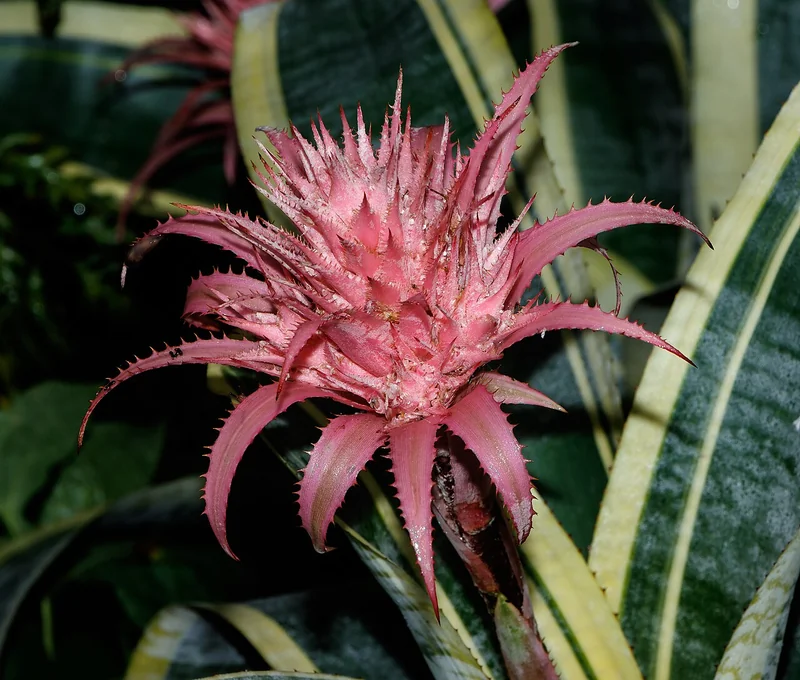 Featured photoaechmea-fasciata.jpg
Aechmea fasciata, the silver vase plant or urn plant, is one of the most recognisable and long-cultivated bromeliads. Its stiff, silver-green leaves banded with silvery-white scales form a sturdy vase, and the stunning inflorescence consists of vivid pink bracts studded with small blue-purple flowers. The pink display lasts for 3 to 6 months, making it one of the most enduring of all indoor flowering plants. It is tolerant of a wide range of conditions and is an excellent bromeliad for beginners.
Care facts at a glance
- Light
- Bright indirect
- Water
- Keep the central vase (urn) filled with fresh water at all times; refresh every 1 to 2 weeks. Water the soil moderately when the top 2 to 3 cm dries.
- Humidity
- 50–75 %
- Temperature
- 13–32 °C
- Soil
- Free-draining bromeliad mix or coarse orchid bark with perlite.
- Origin
- Humid Atlantic rainforest of southeastern Brazil.
- Mature size
- 45 to 60 cm tall; rosette 40 to 55 cm across.
Overview
Aechmea fasciata was described by (Lindl.) Baker and has been cultivated in Europe since the 1820s. The silver-banded leaf pattern is produced by scales called trichomes that reflect light and also absorb moisture and dissolved nutrients. The long-lasting inflorescence — sometimes called a 'pink quill' — is composed of pink bracts that remain vivid long after the small blue flowers have faded. It is more tolerant of lower humidity and varied light than many tropical bromeliads.
Care Priorities
- Bright, indirect light maintains the silvery leaf banding at its most vivid.
- Fill the central vase with fresh water consistently and flush it every 10 to 14 days to prevent stagnation.
- Avoid direct sun, which causes leaf scorch; indirect or filtered light is ideal.
- After the inflorescence fades, allow pups to develop before separating.
Common Problems
The inflorescence turning brown prematurely usually indicates that it has completed its natural cycle rather than a problem — the pink display typically lasts 3 to 6 months. Leaf banding fading or becoming all-green means insufficient light; increase indirect light. Spider mites thrive in dry conditions; maintain adequate humidity and treat with neem oil if detected.
Sources & further reading (2)
- botanical-garden — accessed 2026-05-08
- encyclopedia — accessed 2026-05-08
Frequently asked questions
How do I know when the inflorescence is finished?
The pink bracts will gradually turn brown from the tips inward over 3 to 6 months. Once most of the display has browned, it can be removed. Pups should already be forming at the base.
Can I force it to flower?
Yes — place the plant in a clear bag with a ripe apple or banana for 1 week. The ethylene gas triggers flowering in 6 to 12 weeks. This method is used commercially to time bromeliad flowering.
How big do the pups get before I separate them?
Separate pups when they are at least one third the size of the mother plant and have begun to develop their own root system. Smaller pups are fragile and slow to establish independently.