Sphaeropteris cooperi
Sphaeropteris cooperi Care Guide
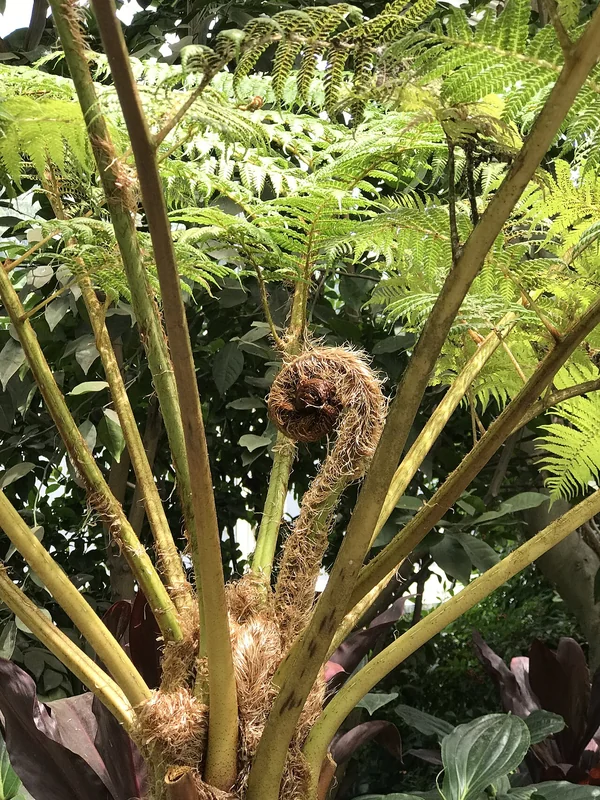 Featured photosphaeropteris-cooperi.jpg
Sphaeropteris cooperi, the Australian Tree Fern or Lacy Tree Fern, is a fast-growing tree fern from the rainforests of northeastern Australia and New South Wales, producing a slender trunk covered in attractive pale-brown scales topped by a spreading crown of large, pale-green, bipinnate fronds up to 3 m across. It is one of the easiest tree ferns to grow indoors and outdoors in mild climates, responding well to consistent moisture, high humidity, and bright indirect light.
Care facts at a glance
- Light
- Bright indirect
- Water
- Water generously every 2–4 days; keep the trunk and crown consistently moist by also spraying the trunk regularly.
- Humidity
- 60–90 %
- Temperature
- 5–28 °C
- Soil
- Rich, moisture-retentive, well-draining mix; mix standard potting compost with bark chips.
- Origin
- Rainforest gullies and moist forests of northeastern Australia (Queensland and New South Wales).
- Mature size
- 3–6 m tall outdoors; 1.5–2.5 m indoors in containers.
Overview
Sphaeropteris cooperi (Hook.) R.M.Tryon was described in its current combination in 1970 and is sometimes sold under the synonym Cyathea cooperi. The 'tree' in tree fern refers to the erect, trunk-like rhizome — these are not woody trunks like those of flowering plants but rather compressed masses of fibrous root material that provide structural support. In good conditions, S. cooperi grows 30–60 cm of trunk per year — unusually fast for a tree fern. The fronds can be damaged by frost but the crown typically survives brief frost events.
Care Priorities
- Water both the root zone and the trunk — wet the trunk and crown of unfurling fronds ('crosiers') daily in warm, dry weather.
- Provide a large container (at least 40 cm diameter) as the plant grows rapidly and the trunk needs support.
- High humidity accelerates growth considerably; a conservatory or sheltered outdoor position in a mild climate is ideal.
- Protect from winds which can shred and brown the large fronds irreversibly.
Common Problems
Brown frond tips that progress inward on all fronds simultaneously indicate drought stress — increase watering frequency and trunk misting. Fronds that fail to unfurl properly, remaining tightly rolled or browning at the crozier tip, signal low humidity or insufficient water at the critical unfurling stage. Crown rot develops if water collects at the top of the trunk in poor drainage conditions; ensure the crown is freely draining. Scale insects cluster on frond undersides; treat with horticultural oil.
Sources & further reading (2)
- botanical-garden — accessed 2026-05-27
- encyclopedia — accessed 2026-05-27
Frequently asked questions
How quickly does it grow?
In good conditions (warm temperatures, high humidity, consistent water), S. cooperi can grow 30–60 cm of trunk per year — making it one of the fastest-growing tree ferns. Each frond can be up to 3 m long in mature outdoor specimens.
Can I keep it in a pot long-term?
Yes, with regular repotting. Start in a 40 cm pot and move up one size each spring as the trunk grows. After 5–7 years it may need a 60–80 cm container and a very stable base due to the top-heavy frond crown.
Is it frost-hardy?
Marginally — it can survive brief frosts down to about -3 °C if the crown is protected. In colder climates, move it inside for winter or protect the crown with fleece. The trunk is more resilient than the fronds; new fronds will replace frost-damaged ones in spring.