Aechmea blanchetiana
Aechmea blanchetiana Care Guide
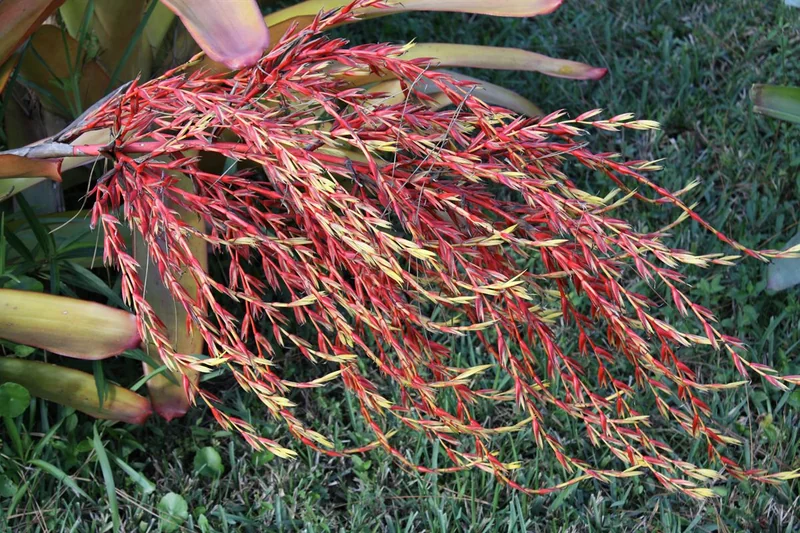 Featured photoaechmea-blanchetiana.jpg
Aechmea blanchetiana is a large, sun-loving bromeliad from coastal Brazil celebrated for its long, sword-like leaves that transition dramatically from green in shade through orange to a blazing, near-scarlet red under strong light. It produces tall, branched inflorescences covered in golden-orange flowers that last for months. Its ability to tolerate full sun and dry conditions makes it one of the most versatile large bromeliads for bright indoor spaces and outdoor tropical gardens.
Care facts at a glance
- Light
- Bright indirect
- Water
- Keep the central cup filled; flush monthly. Water the soil every 10–14 days. Tolerates brief drought exceptionally well.
- Humidity
- 40–70 %
- Temperature
- 10–38 °C
- Soil
- Well-draining bromeliad or orchid bark mix.
- Origin
- Coastal Atlantic forests and restinga scrubland of Brazil.
- Mature size
- 60–90 cm tall; rosette 50–80 cm across.
Overview
Aechmea blanchetiana (Baker) L.B.Sm. was described in 1952, named for the French botanist Jacques Samuel Blanchet who collected extensively in Brazil in the 19th century. Unlike most bromeliads that prefer shade, A. blanchetiana evolved in the exposed coastal restinga (scrubland) habitat and actively seeks strong light. The leaf colour change from green to orange to red is caused by anthocyanin production triggered by UV radiation — the intensity of the colour directly correlates with the light intensity the plant receives.
Care Priorities
- Maximum light for maximum colour: direct sun through a south-facing window or a conservatory is ideal; shaded plants remain plain green.
- As one of the larger bromeliads, it needs a heavy, stable pot (25–35 cm diameter) to prevent tipping.
- Keep the central cup filled with water and flush monthly.
- Pups produced after flowering should be allowed to grow to at least 15 cm before separation.
Common Problems
Plain green leaves with no orange colouration indicate insufficient light — this is the most common issue. Move to a significantly brighter position; colour development takes 4–6 weeks after improving light. Leaf tips drying excessively on all leaves simultaneously indicates drought; check the soil moisture and cup level. Scale insects on this large bromeliad can be extensive; treat with horticultural oil applied to leaf bases and cup margins, flushing the cup afterwards.
Sources & further reading (2)
- botanical-garden — accessed 2026-05-27
- encyclopedia — accessed 2026-05-27
Frequently asked questions
How much sun does it need to turn orange-red?
Direct sun for at least 4–6 hours per day produces the most vivid orange to red colouration. A south-facing window or a bright conservatory is ideal. In pure shade the leaves remain entirely green — both appearances are healthy, but the colour is the primary ornamental appeal.
How tall does the flower spike get?
The branched flower spike can reach 60–90 cm tall on mature plants, considerably taller than the leaf rosette. It bears dense clusters of golden-orange flowers and persists as an ornamental structure for several months, turning a russet-brown when the flowers finish.
Can it grow outdoors year-round?
In frost-free climates (minimum 10 °C year-round), yes. It is widely used as a landscape plant in tropical and subtropical gardens, where it reaches its maximum size in full sun positions. Bring indoors when temperatures drop below 10 °C.