Rhaphidophora decursiva
Rhaphidophora decursiva Care Guide
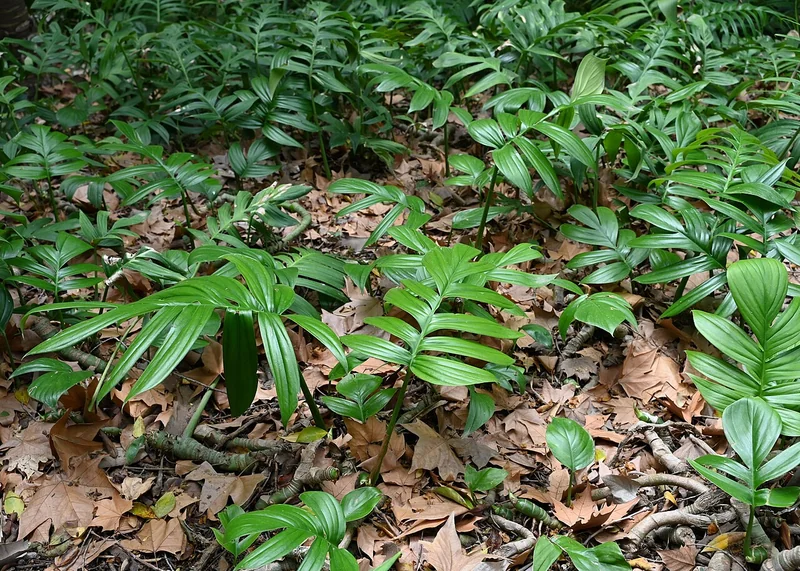 Featured photorhaphidophora-decursiva.jpg
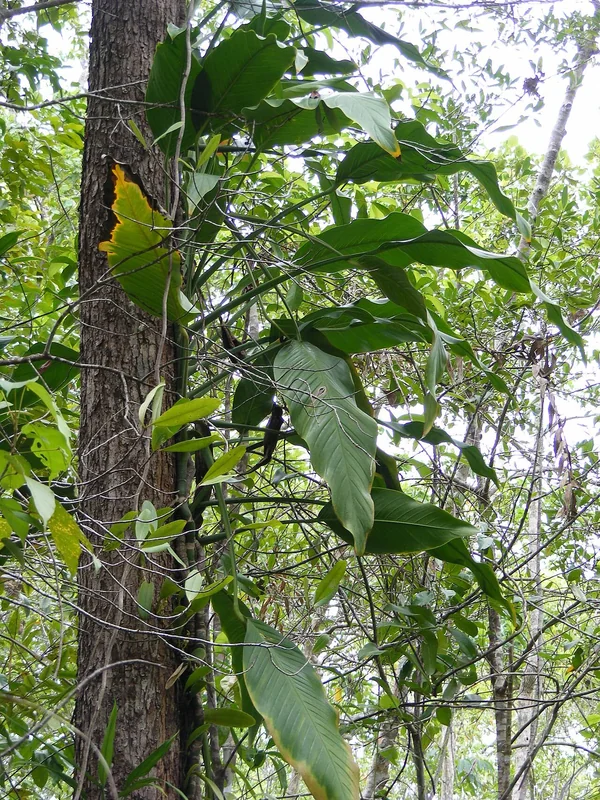
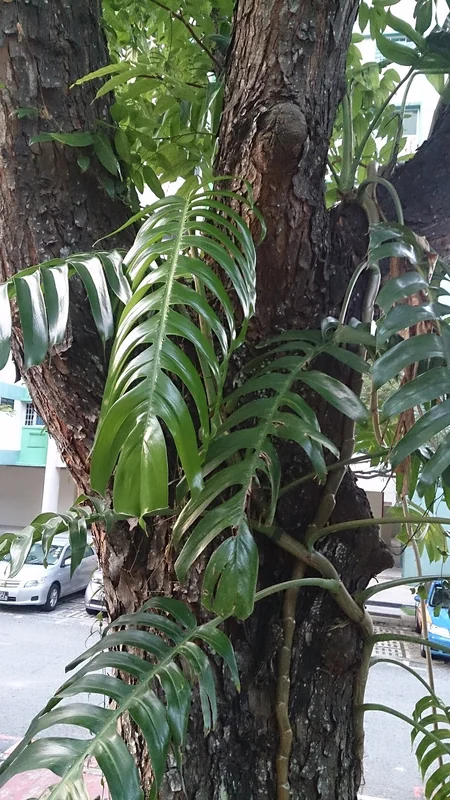
Rhaphidophora decursiva is a vigorous climbing aroid native to India, Sri Lanka, and Southeast Asia. Juvenile plants have entire, lance-shaped leaves; as the plant climbs and matures, the leaves transform into enormous, deeply pinnate blades up to 80 cm long. This dramatic leaf metamorphosis makes it one of the most impressive aroids for large indoor spaces. It tolerates a wider range of conditions than many tropical aroids and grows rapidly with adequate light.
Care facts at a glance
- Light
- Bright indirect
- Water
- Water when the top 3 to 4 cm of soil has dried; large mature plants may need watering every 5 to 7 days in summer.
- Humidity
- 50–80 %
- Temperature
- 16–30 °C
- Soil
- Well-draining aroid mix with perlite and bark; tolerates slightly denser mixes than more delicate aroids.
- Origin
- Forests of India, Sri Lanka, China, and mainland Southeast Asia.
- Mature size
- 5 m or more as a climber; adult leaves 50 to 80 cm long.
Overview
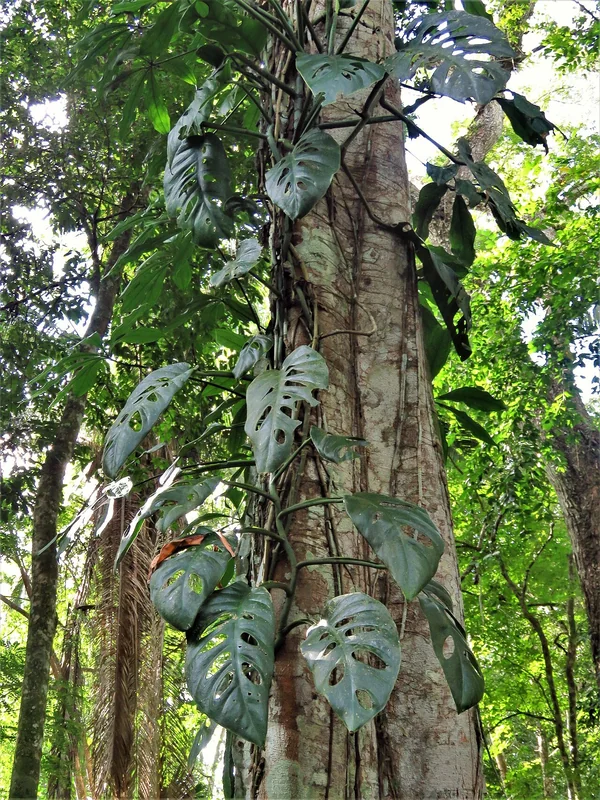
Rhaphidophora decursiva is sometimes sold under the name 'dragon tail philodendron' or 'decursiva' despite being neither a philodendron nor a dragon tail (the latter is a common name also used for Epipremnum pinnatum). True decursiva juveniles look completely different from the adults; the transformation only begins once the plant finds a vertical surface to climb and the vines start running upward.
Care Priorities
- Give it a tall, sturdy moss pole or trellis — pinnate adult leaves only form once the plant can climb vertically.
- Bright indirect light accelerates the leaf-metamorphosis and keeps internodes compact.
- Allow moderate drying between waterings; it is more drought-tolerant than many aroids once established.
- Repot every 1 to 2 years; root-bound plants pause leaf production.
Common Problems
Leaves that stay small and entire despite a mature plant usually mean insufficient climbing space or low light. Yellowing from the bottom up is normal leaf turnover; widespread yellowing is overwatering. Brown leaf tips can result from either low humidity or root stress — check both before treating.
Sources & further reading (2)
- botanical-garden — accessed 2026-05-08
- encyclopedia — accessed 2026-05-08
Frequently asked questions
When do the leaves start looking pinnate?
Typically once the vine reaches 1 to 1.5 m and begins climbing upward. The leaves enlarge and develop pinnate lobes progressively from that point.
Can it survive lower light?
It tolerates low-light conditions better than many aroids, but leaves will remain small and internodes will be long. Bright indirect light is needed for dramatic adult leaf development.
Is decursiva the same as Epipremnum pinnatum?
No. Both are sometimes called 'dragon tail,' which causes confusion. Rhaphidophora decursiva is a different genus; its pinnate lobes are deeper and more symmetrical than those of E. pinnatum.