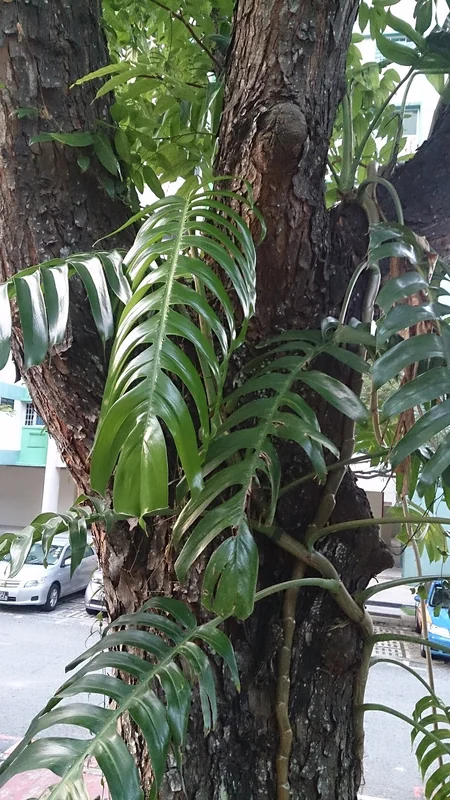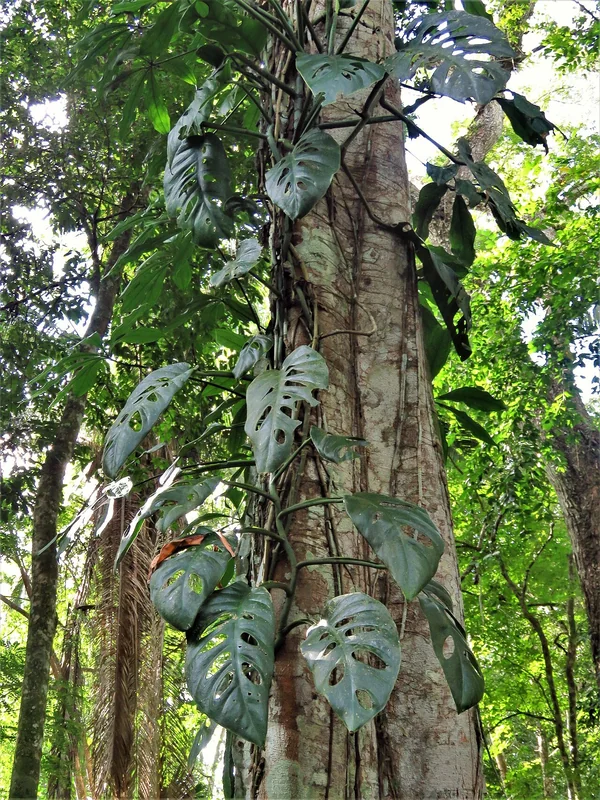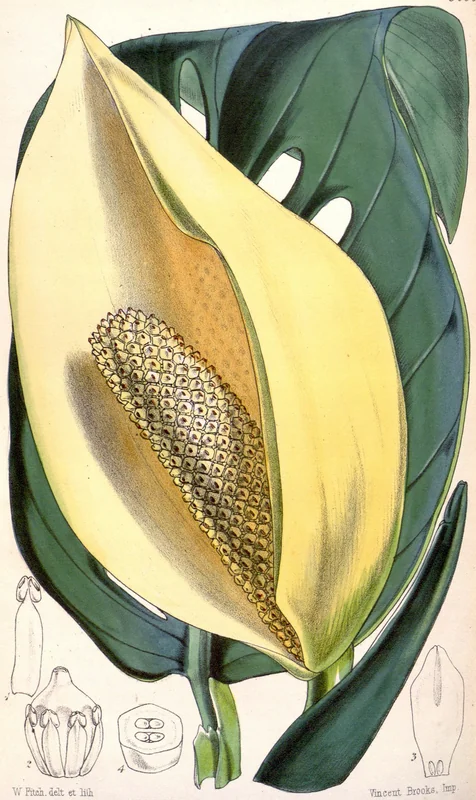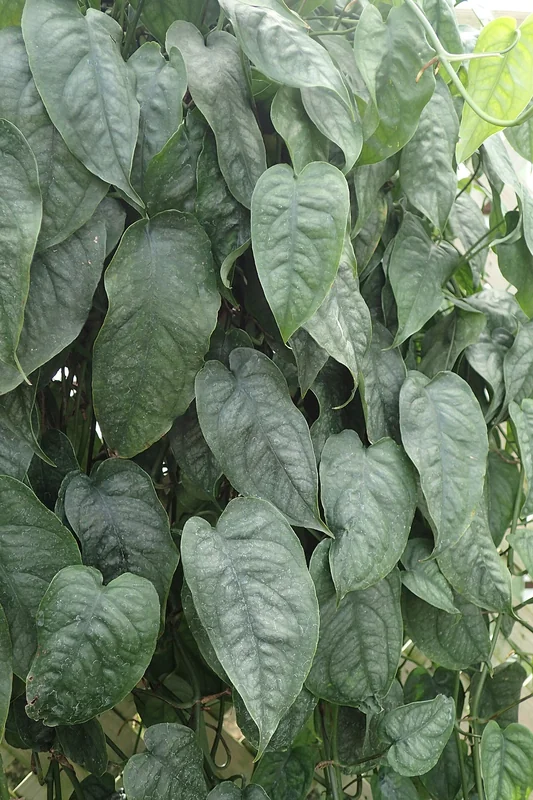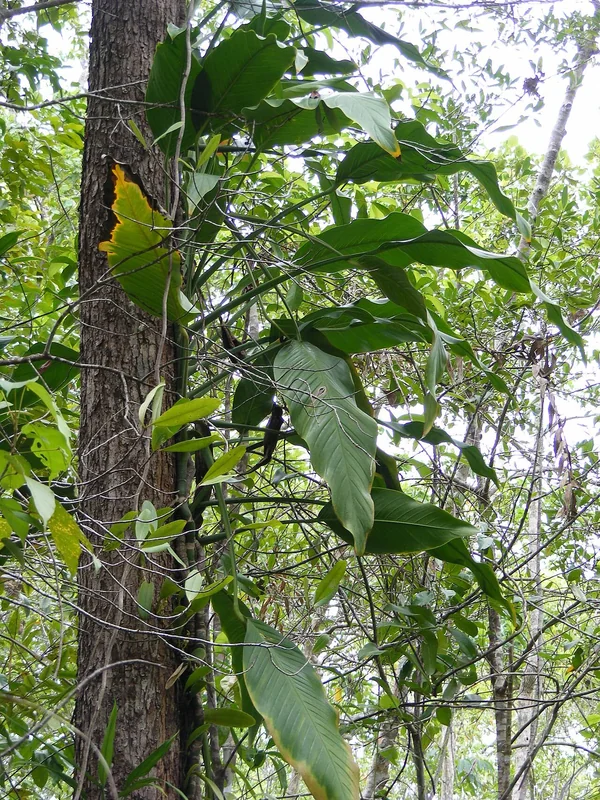
Epipremnum amplissimum is a less-common climbing aroid with long lance-shaped leaves that look more like a Monstera standleyana than a typical pothos. The juvenile leaves can show silver streaking; mature leaves are deep glossy green. It climbs vigorously when given a tall moss pole and is otherwise as forgiving as standard pothos.
Care facts at a glance
- Light
- Bright indirect
- Water
- Water when the top 2 to 3 cm of mix has dried.
- Humidity
- 50–70 %
- Temperature
- 18–29 °C
- Soil
- Chunky aroid mix of bark, perlite, and coir.
- Origin
- Forests from the Solomon Islands through New Guinea and northern Australia.
- Mature size
- Vines to 3 metres or more indoors; leaves up to 50 cm long with maturity.
Overview
Epipremnum amplissimum is from the western Pacific and is sometimes confused with Monstera standleyana because of its long lance-shaped leaves. The genus key is in the leaf venation and inflorescence shape.
Care Priorities
- Provide a tall moss pole or trellis.
- Bright filtered light brings out subtle silver streaks on juvenile leaves.
- Allow the top of the mix to dry between waterings.
- Trim back leggy growth.
Common Problems
Yellow leaves with mushy stems is overwatering. Long bare internodes mean low light. Leaf scarring on undersides is usually old spider-mite damage; check undersides regularly.
Sources & further reading (2)
- encyclopedia — accessed 2026-04-28
- botanical-garden — accessed 2026-04-28
Frequently asked questions
Is it actually a pothos?
Yes — Epipremnum amplissimum sits in the same genus as common pothos. The leaf shape just reads less pothos-like.
Why is my amplissimum losing the silver streaks?
Streaking is a juvenile-leaf trait. Mature climbing leaves often lose it.
How fast does it grow?
Fast. In a warm bright room, 30 to 60 cm of vine per month is typical in summer.