Rhaphidophora cryptantha
Rhaphidophora cryptantha Care Guide
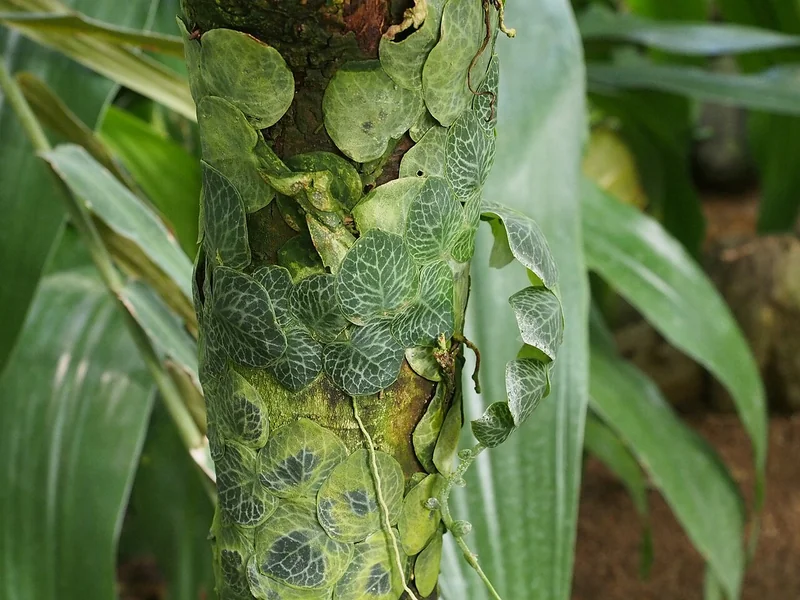 Featured photorhaphidophora-cryptantha.jpg
Rhaphidophora cryptantha is one of the most architecturally striking houseplants available, producing flat, shingle-like juvenile leaves that adhere directly to moss poles, wood slabs, or walls in an overlapping, scale-like pattern. Native to Papua New Guinea and the Solomon Islands, it is a collector's species that rewards precise care with a mesmerising climbing display unlike any other aroid. As the plant climbs and matures, the leaves gradually enlarge while retaining the shingling habit.
Care facts at a glance
- Light
- Bright indirect
- Water
- Water when the top 2–3 cm of medium dries; roughly every 5 to 7 days. Mist the climbing surface regularly to encourage aerial root attachment.
- Humidity
- 65–90 %
- Temperature
- 18–30 °C
- Soil
- Chunky aroid mix: orchid bark, perlite, and coco coir at equal parts for excellent drainage and aeration.
- Origin
- Humid tropical rainforests of Papua New Guinea and the Solomon Islands.
- Mature size
- Climbing stems to 2+ m; juvenile leaves 4–8 cm, mature leaves up to 20 cm.
Overview
Rhaphidophora cryptantha (Schott) Engl. is classified in the tribe Monstereae and exhibits one of the most extreme forms of the shingling growth habit found in aroids. The flat, overlapping leaves with no visible petiole result from a genetic programme that causes the plant to press its entire stem and leaves flush against the climbing substrate. This is an adaptation that allows the plant to avoid the desiccating air of the forest canopy by sheltering within the humid micro-climate formed between leaf and bark.
Care Priorities
- Provide a moss pole or rough wooden plank that the aerial roots can grip tightly; smooth surfaces cause the leaves to lose contact and grow outward rather than shingling.
- High humidity (above 65%) is essential — use a humidifier or enclose the climbing column in a humidity tent while the plant establishes.
- Bright, diffused light produces the most compact and evenly-spaced shingling pattern.
- Never allow the substrate to dry completely; consistent moisture encourages root attachment.
Common Problems
Leaves that stand away from the support rather than pressing flat indicate insufficient humidity, a support that is too smooth, or dry aerial roots. Increase humidity and keep the pole lightly misted. Brown, crispy leaf margins point to low humidity or fluoride in tap water; switch to filtered or rainwater. Root rot is usually a result of a support column that stays waterlogged; ensure the moss or wood medium in the pole allows airflow. Thrips leave silvery streaking on the leaf surface; treat with neem oil or spinosad-based insecticide.
Sources & further reading (2)
- botanical-garden — accessed 2026-05-27
- encyclopedia — accessed 2026-05-27
Frequently asked questions
What is the best support for the shingle effect?
A live sphagnum moss pole is ideal — the moist surface encourages aerial root attachment and maintains humidity around the stem. Rough cork bark boards also work well. Keep the pole misted and never let it dry out completely.
Will the leaves change as it climbs?
Yes. Juvenile leaves are small (4–8 cm) and may be noticeably fenestrated or have subtle perforations. As the plant climbs further up the pole, successive leaves typically enlarge while maintaining the flat, pressed-down form characteristic of the species.
How does it compare with Monstera dubia?
Both are shingle aroids with overlapping juvenile leaves. R. cryptantha tends to have darker green, slightly more elongated leaves and a flatter adhesion to the support. M. dubia often shows more prominent silvery patterning on juvenile leaves. Care requirements are nearly identical.