Anthurium andraeanum
Anthurium andraeanum (Flamingo Flower) Care Guide
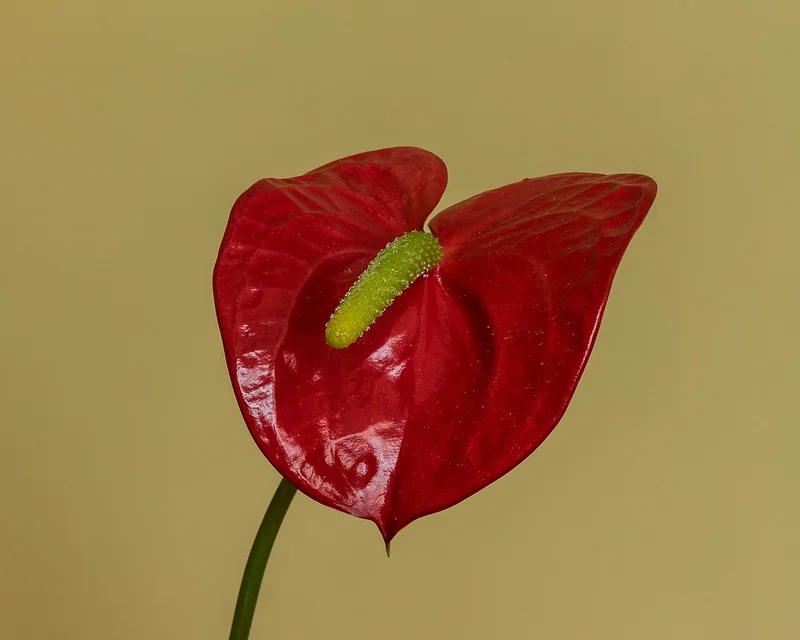 Featured photoanthurium-andraeanum.jpg
Anthurium andraeanum is the species behind most florist anthuriums and a reliable indoor bloomer when humidity and light are steady. The waxy, heart-shaped spathes can persist for six to eight weeks each, with healthy plants pushing new flowers most months of the year. Indoors it wants warm temperatures, bright filtered light, and a coarse, airy mix that drains within minutes.
Care facts at a glance
- Light
- Bright indirect
- Water
- Water when the top 2 to 3 cm of mix has dried but the lower root zone is still slightly moist.
- Humidity
- 60–80 %
- Temperature
- 18–29 °C
- Soil
- Coarse, chunky aroid mix: roughly equal parts orchid bark, perlite, and peat or coir, with optional charcoal.
- Origin
- Cloud forests of western Colombia and northwestern Ecuador.
- Mature size
- 30 to 60 cm tall and wide indoors.
Overview
Anthurium andraeanum is an epiphytic aroid from Colombian and Ecuadorian cloud forests, prized for its glossy heart-shaped spathes and a bright yellow spadix that produces tiny true flowers. The cultivars sold as houseplants have been bred for compact growth and long-lasting colour.
Care Priorities
- Bright, indirect light keeps spathes coloured; harsh sun bleaches them.
- Use an open, bark-heavy mix so roots get air between waterings.
- Hold humidity above 60 percent; pebble trays and grouped plants help in winter.
- Feed lightly and often rather than rarely and heavily — salt build-up burns aerial roots.
Common Problems
Yellowing lower leaves usually mean overwatering or stale, compacted mix. Brown leaf tips point to dry air or fluoride and chloride in tap water; rest tap water overnight or use filtered water. Failure to flower is almost always a light problem — move closer to an east or filtered south window.
Sources & further reading (2)
- botanical-garden — accessed 2026-04-28
- encyclopedia — accessed 2026-04-28
Frequently asked questions
Why are my anthurium spathes turning green?
New spathes often emerge in their full colour, hold it for several weeks, then fade to green as they age. That is normal senescence, not a deficiency. Trim the stem at the base once the spathe looks tired.
Does Anthurium andraeanum need a moss pole?
It can grow without one, but a moss pole or coarse bark slab gives the aerial roots something to grip and tends to produce a sturdier, more upright plant with larger leaves.
How often should I repot?
Every 18 to 24 months, or when roots circle the pot and water runs straight through. Move up only one pot size and refresh the bark mix each time.