Polystichum tsussimense
Polystichum tsussimense Care Guide
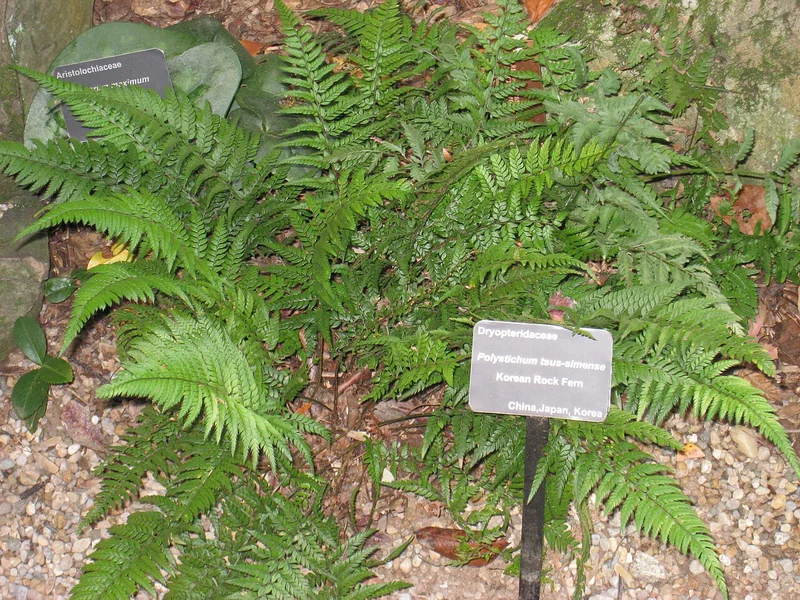 Featured photopolystichum-tsussimense.jpg
Polystichum tsussimense, the Korean rock fern or Tsus-sima holly fern, is a compact, slow-growing shield fern native to shaded rocky habitats of Japan, Korea, and China. It produces dense rosettes of dark, lustrous green fronds with finely toothed pinnae and a slightly holly-like outline. Unusually cold-hardy for a small decorative fern, it is prized as a container plant for shaded indoor and outdoor spaces and adapts remarkably well to average household conditions.
Care facts at a glance
- Light
- Medium light
- Water
- Keep evenly moist; water when the top 2 cm has begun to dry — about every 5 to 7 days in summer.
- Humidity
- 45–70 %
- Temperature
- 2–24 °C
- Soil
- Rich, humus-rich, well-draining mix; add perlite or coarse bark to standard potting compost.
- Origin
- Rocky shaded habitats of Japan, Korea, China, and Taiwan.
- Mature size
- 20 to 40 cm tall; compact clumping rosette.
Overview
Polystichum tsussimense was described by (Hook.) J.Sm. Its compact size and dark, lustrous fronds make it well suited to terrariums, dish gardens, and small shaded containers. Unlike many other shield ferns it is truly cold-hardy — capable of surviving outdoors in USDA zone 6 or warmer with protection. The species is semi-evergreen in mild climates; older fronds persist through winter and are replaced by fresh spring growth.
Care Priorities
- Prefers cool to moderate temperatures; it does not thrive in warm, stuffy rooms above 24 °C.
- Shade or indirect light only — bright or direct light causes the dark fronds to bleach and burn.
- Even moisture is the key; consistent watering prevents the tip-browning that affects ferns in dry conditions.
- Minimal fertilising; this species is adapted to nutrient-poor rocky habitats.
Common Problems
Frond tip browning is the most common complaint, usually caused by low humidity or inconsistent watering. Increase ambient humidity with a pebble tray or humidifier and water more regularly. The plant may slow or stop growing in summer heat above 24 °C — this is normal; resume regular care when temperatures moderate. Scale insects on the dark frond undersides are sometimes missed; inspect carefully.
Sources & further reading (2)
- botanical-garden — accessed 2026-05-08
- encyclopedia — accessed 2026-05-08
Frequently asked questions
Is it good for a terrarium?
Yes — its compact size, low light preference, and love of humidity make it an ideal terrarium fern. Ensure there is adequate ventilation to prevent fungal disease.
Can it survive outdoors in winter?
Yes — in USDA zone 6 and above it is frost-hardy and makes an excellent shade-garden plant. Protect from harsh winds and provide mulch around the base in cold winters.
How do I divide an established clump?
In spring, carefully remove the plant from its pot, separate the rosettes by hand or with a clean blade ensuring each has roots, and repot individually in fresh, moist fern mix.