Pleiospilos nelii
Pleiospilos nelii Care Guide
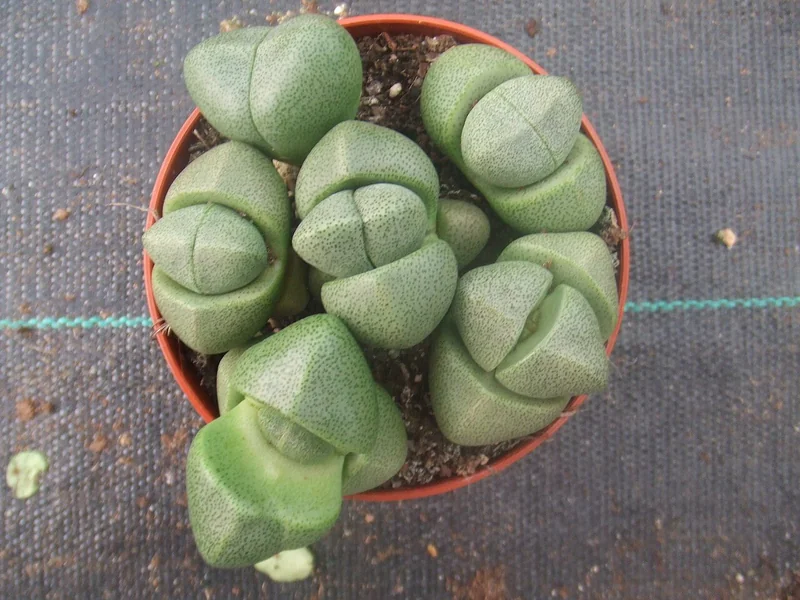 Featured photopleiospilos-nelii.jpg
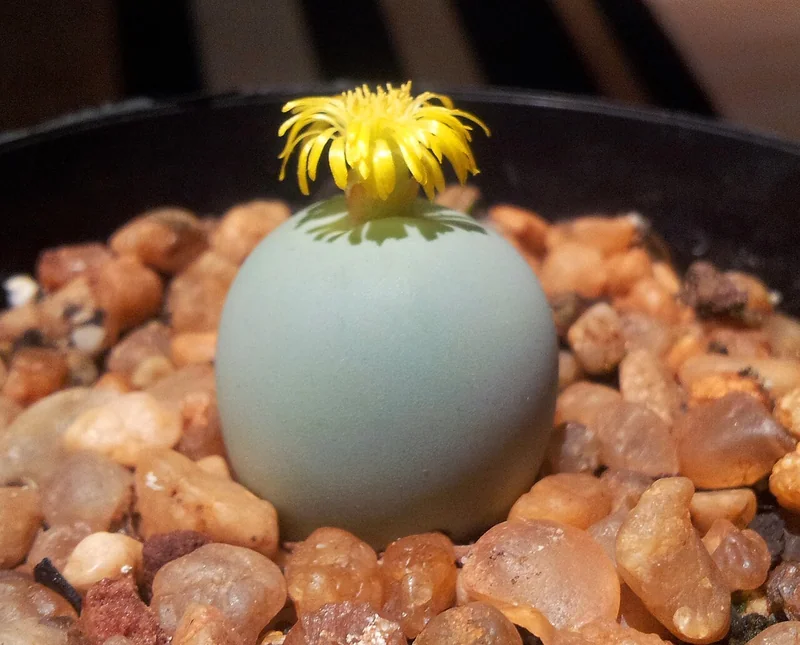
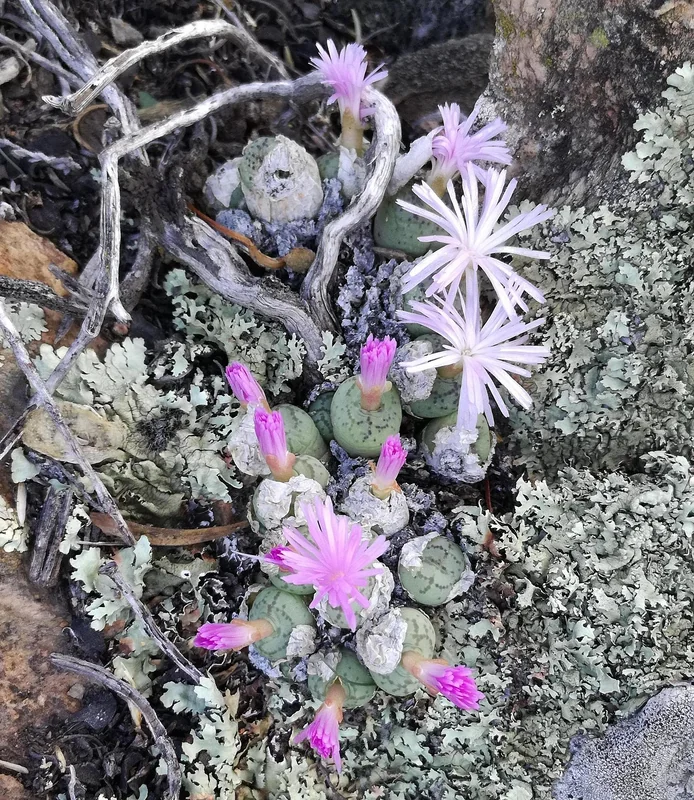
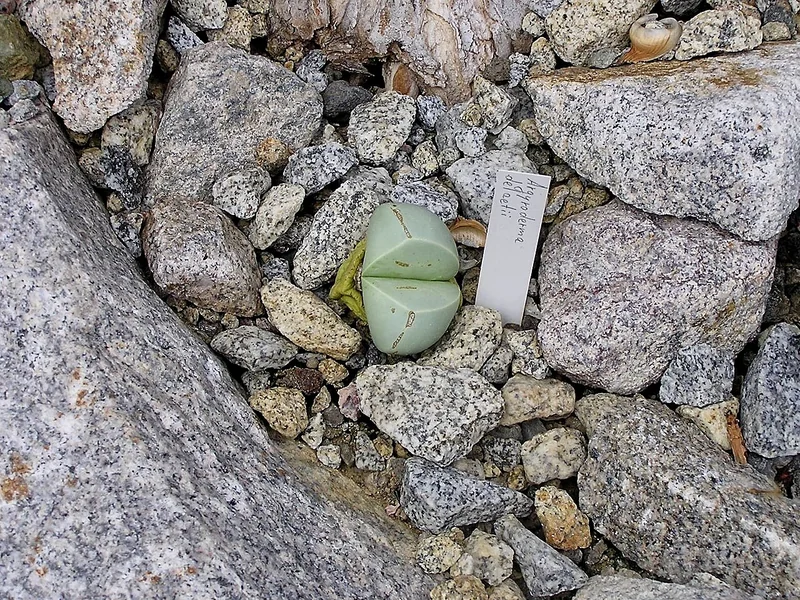
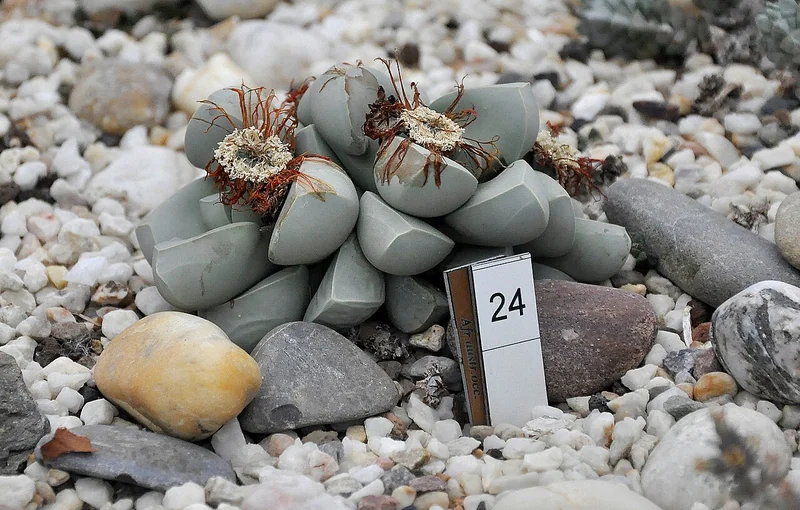
Pleiospilos nelii, the Split Rock Plant, is a stemless succulent from South Africa's Great Karoo that grows as one or two pairs of heavily textured, grey-green, dome-shaped leaf bodies that uncannily resemble pieces of weathered granite. Each year, a new pair of leaves splits through the centre of the old pair, and large, showy orange or pink flowers emerge from the cleft in autumn. It is one of the most fascinating and rewarding mesembs for specialist succulent collections.
Care facts at a glance
- Light
- Bright indirect
- Water
- Water sparingly in late summer and autumn only; once every 3–4 weeks at most. Keep completely dry in spring and summer.
- Humidity
- 10–35 %
- Temperature
- 5–38 °C
- Soil
- Very gritty, mineral-rich mix: 60% coarse sand or pumice, 40% lean potting mix.
- Origin
- Great Karoo and Little Karoo, South Africa.
- Mature size
- 3–6 cm tall, 5–8 cm wide; single or paired clumps.
Overview
Pleiospilos nelii Schwantes was described in 1928, named for the succulent collector Gert Cornelius Nel. The remarkable granite-like surface texture and colour — achieved through a combination of dark spotting and a grey-green waxy coating — allows the plant to blend almost perfectly with its quartz-gravel and granite-chip habitat. Each season, the plant produces exactly one new pair of leaves per growth point, which consume the previous pair from within, leaving the dried-out husks as a temporary papery sheath.
Care Priorities
- Follow the strict watering calendar: water only in late summer and autumn when new leaves are actively developing.
- Never water when old shrunken leaf bodies are still attached — watering at this stage causes the new leaves inside to rot before they emerge.
- Maximum light is essential: a south-facing unobstructed windowsill, at least 4–6 hours of direct sun per day.
- Plant in a small pot with excellent drainage and top-dress with granite grit to mimic its natural habitat.
Common Problems
Off-season watering is the most common cause of failure. If the old leaves have not yet dried and the plant is watered, the new leaves rot before they can emerge. Multiple new leaf pairs appearing from a single growth point can indicate too much water or fertiliser. Flowers that fail to appear are usually a result of insufficient light — try moving outdoors in summer if possible. The orange flowers typically last 1–2 weeks and open in the afternoon.
Sources & further reading (2)
- botanical-garden — accessed 2026-05-27
- encyclopedia — accessed 2026-05-27
Frequently asked questions
How do I know when to water it?
Water only when the new leaf pair has fully emerged and the old leaves have dried to a papery sheath. In practice, this is typically in late summer or early autumn. A gentle squeeze of the new leaves — if they feel slightly soft — is the best cue to water.
Why does my plant have more than one pair of leaves?
Healthy plants produce exactly one new pair per year. Multiple pairs emerging simultaneously usually indicates that watering was too frequent, causing multiple growth cycles. Reduce watering strictly to once every 3–4 weeks in the growing season and allow the old leaves to be fully absorbed.
Is it the same as Lithops?
They are closely related mesembs in the same family (Aizoaceae) but different genera. Pleiospilos is generally larger, taller, and more textured than Lithops. The care principles are similar, but Pleiospilos tolerates slightly warmer temperatures and more forgiving conditions than the most demanding Lithops species.