Lapidaria margaretae
Lapidaria margaretae Care Guide
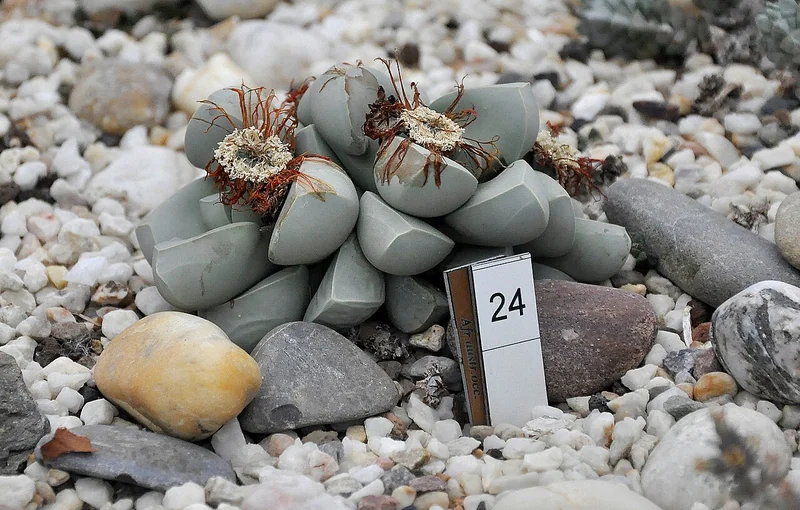 Featured photolapidaria-margaretae.jpg
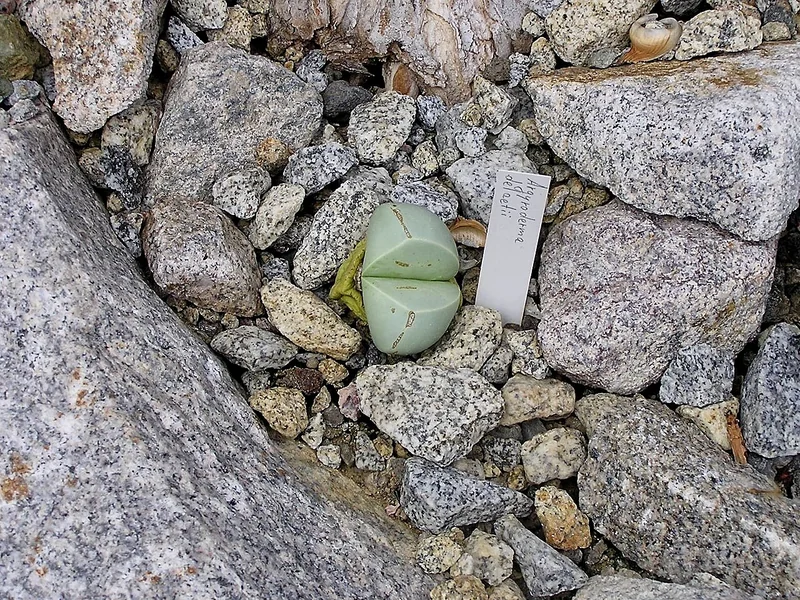
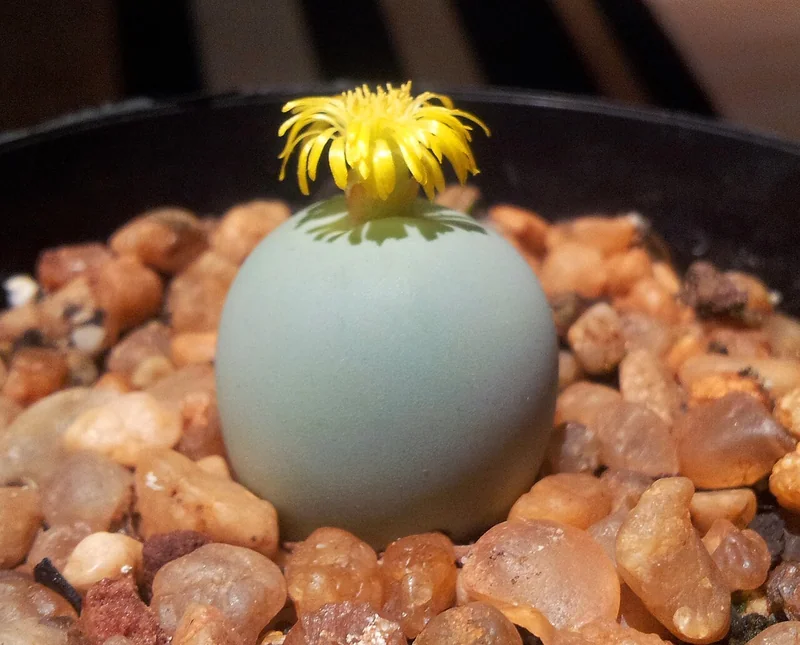
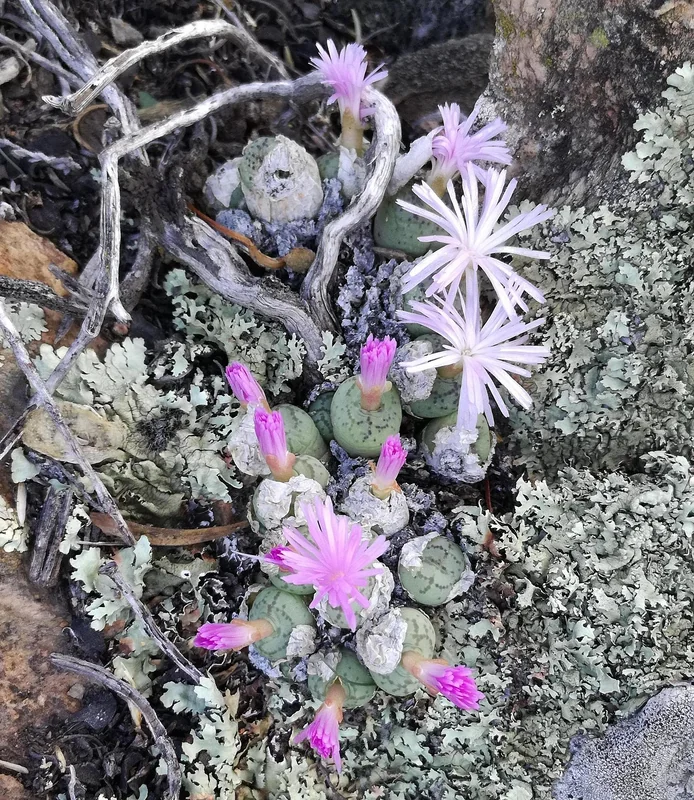
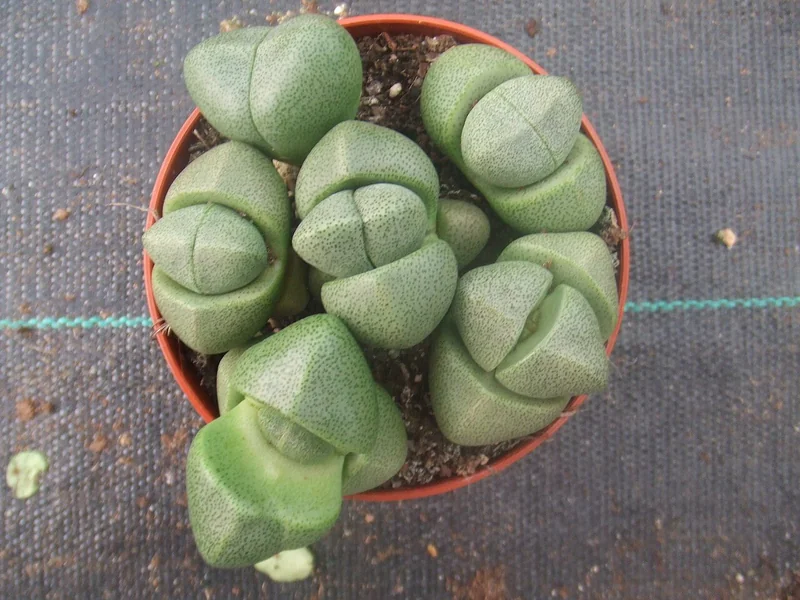
Lapidaria margaretae is the sole species in its genus — a specialist mesemb from the arid quartz fields of southern Namibia and South Africa's Northern Cape. It produces compact rosettes of 4–8 thick, chalky-white, irregular succulent leaf bodies that uncannily mimic the quartz pebbles of its habitat. In autumn it produces solitary, brilliant yellow flowers. It requires the same strict care as other mesembs: maximum sun, near-zero summer water, and exceptional drainage.
Care facts at a glance
- Light
- Bright indirect
- Water
- Water very sparingly in autumn and winter growing season only; once every 4–5 weeks. No water in summer.
- Humidity
- 10–35 %
- Temperature
- 5–42 °C
- Soil
- Highly mineral mix: 70–80% coarse quartz grit or pumice, 20–30% lean potting mix.
- Origin
- Quartz-gravel desert of southern Namibia and Northern Cape, South Africa.
- Mature size
- 3–6 cm diameter rosette; rarely exceeds 5 cm in height.
Overview
Lapidaria margaretae (Schwantes & Jacobsen) N.E.Br. was described in 1927 and was named in honour of Margarete Schwantes. The monotypic genus (a single species in its genus) is closely related to Lithops but differs in producing a larger number of leaf bodies per growth point — up to 8 per rosette — and in having a less perfectly fused pair of leaves. The white to chalky-grey colour of the leaf bodies results from high calcium oxalate content in the cells, which both reflects UV radiation and contributes to the quartz-mimicry effect.
Care Priorities
- Maximum direct sun is non-negotiable — at least 5–6 hours of direct light per day in the growing season.
- Strict summer dormancy: absolutely no water from May to August in the northern hemisphere.
- Plant in a very shallow, small terracotta pot (7–9 cm) with a deep gravel layer at the base.
- Top-dress with white quartz grit to keep moisture away from the leaf bases and simulate the natural habitat.
Common Problems
Etiolated, soft, greenish leaf bodies indicate insufficient light — move to maximum sun immediately. Root rot from any summer watering is almost always fatal; no recovery method is reliable once the root crown is affected. Very slow growth is completely normal — this is not a sign of a problem. Flowers that fail to open fully indicate that light levels are below the threshold needed for full petal expansion.
Sources & further reading (2)
- botanical-garden — accessed 2026-05-27
- encyclopedia — accessed 2026-05-27
Frequently asked questions
How do I know when to start watering in autumn?
Watch for the leaf bodies to begin firming up and developing a slightly more saturated colour after the summer heat breaks. In the northern hemisphere, early to mid-September is typically when watering can cautiously resume. One very light watering to test response is safer than a full watering at the first sign of autumn.
Is it harder than Lithops?
Comparable in difficulty. Lapidaria requires the same strict summer drought, maximum light, and lean soil as Lithops. It may be slightly more heat-tolerant, being native to southern Namibia which has even hotter summers than the Lithops-growing regions.
Can I grow it in a terrarium?
No — a terrarium creates the opposite of what Lapidaria needs. The high humidity, restricted airflow, and reduced light intensity of a closed terrarium will cause rapid death. It requires an open position in maximum direct sun with excellent ventilation.