Argyroderma delaetii
Argyroderma delaetii Care Guide
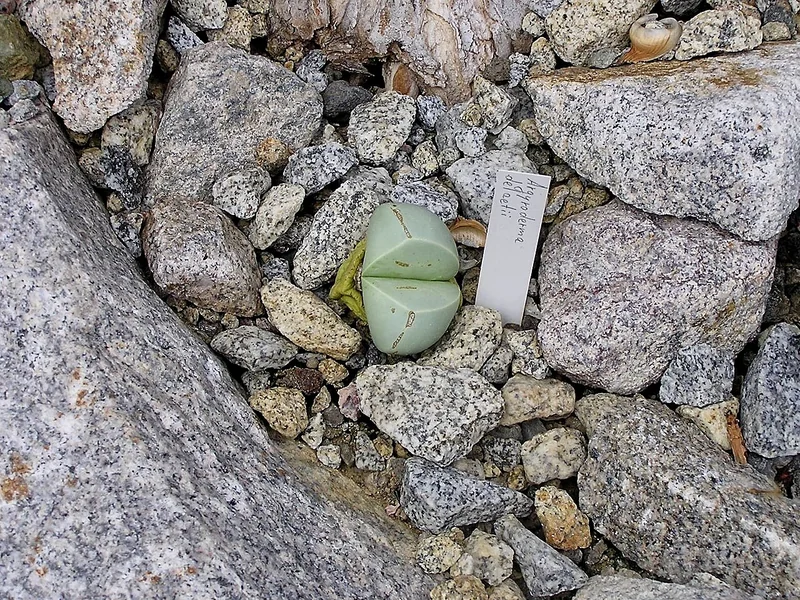 Featured photoargyroderma-delaetii.jpg
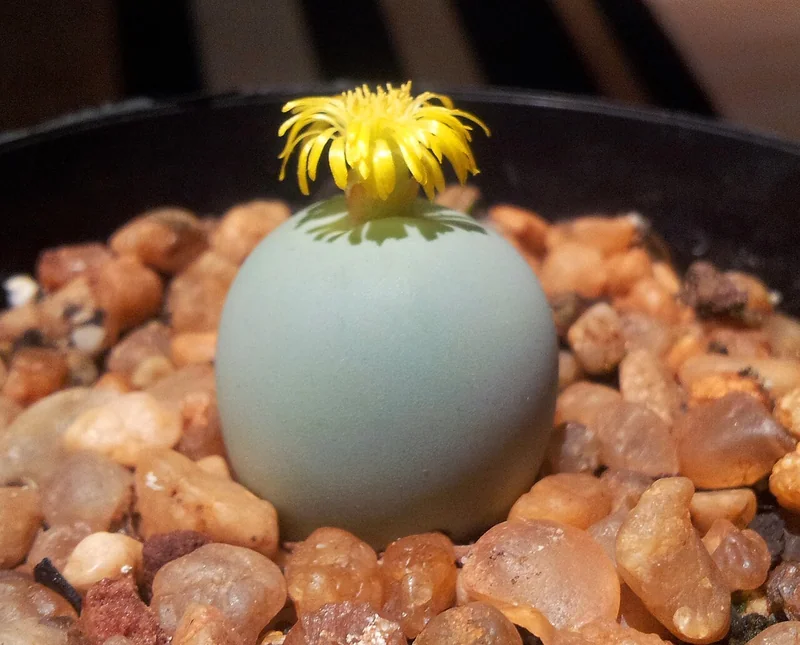
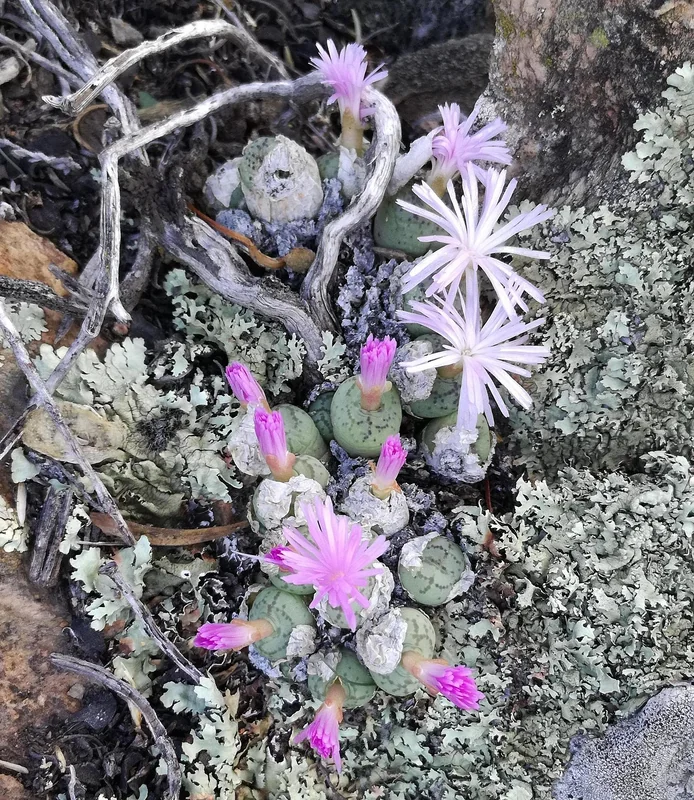
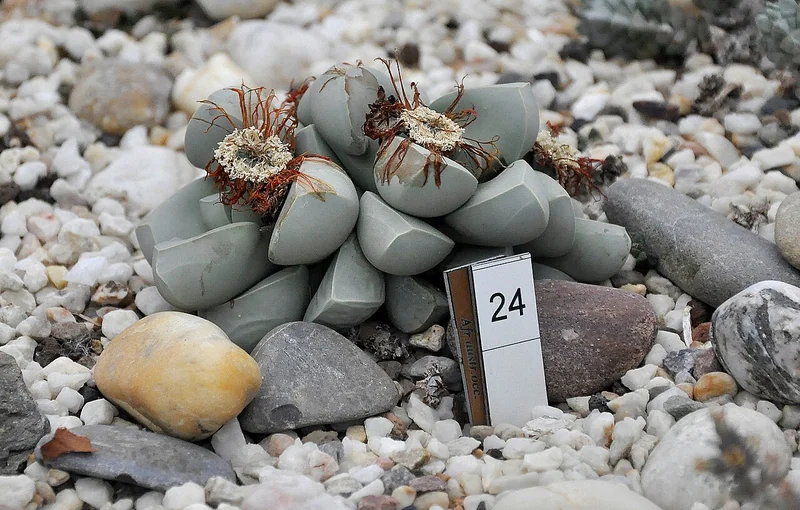
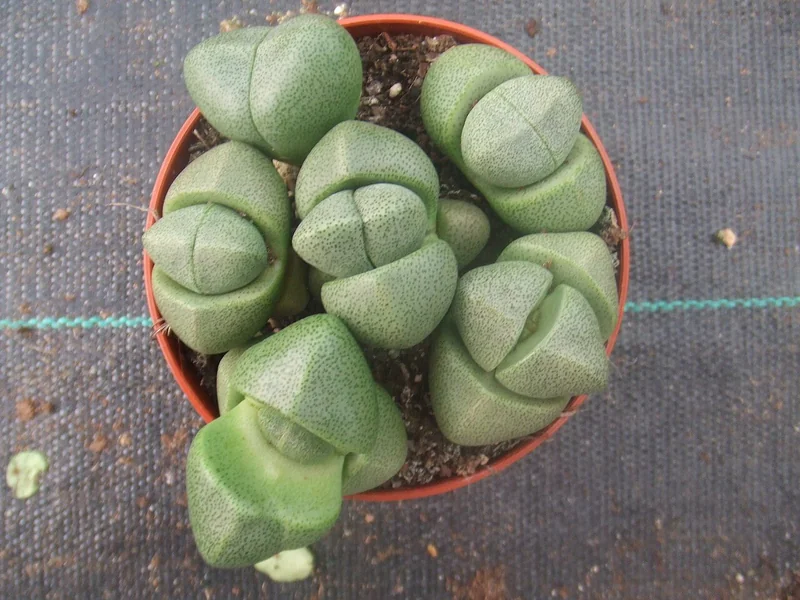
Argyroderma delaetii is a compact mesemb from the Little Karoo's quartz-field habitats in South Africa, forming one or two pairs of swollen, smooth, silvery-green egg-shaped leaf bodies from which large, showy pink or white daisy-like flowers emerge in autumn. The genus name 'Argyroderma' means 'silver skin', describing the smooth, reflective surface of the leaf bodies. It is one of the largest-flowered mesembs relative to plant body size, creating a disproportionately spectacular display.
Care facts at a glance
- Light
- Bright indirect
- Water
- Water only in autumn growing season; once every 3–4 weeks. Keep completely dry from late spring through summer.
- Humidity
- 10–35 %
- Temperature
- 5–40 °C
- Soil
- Extremely gritty mineral mix: 70% coarse quartz grit or pumice, 30% lean potting mix.
- Origin
- White quartz-gravel fields of the Little Karoo, Western Cape, South Africa.
- Mature size
- 3–5 cm tall; single or paired clumps.
Overview
Argyroderma delaetii Maass was described in 1922 and is one of approximately 50 Argyroderma species, most of which are endemic to the quartz-pebble habitats of the Knersvlakte and Little Karoo. The smooth, silver-green leaf surface acts as a perfect camouflage among the white quartz gravel, making the plant nearly invisible except when in flower. The flowers are disproportionately large for the plant body — a single flower can exceed the diameter of the entire leaf cluster — and open fully only in strong afternoon sunlight.
Care Priorities
- Maximum, direct sun is essential — this species grows in one of the sunniest, driest environments on earth and cannot be kept in lower light.
- Observe strict summer dormancy: no water from April to August (northern hemisphere).
- A top-dressing of white quartz grit or pale pumice around the plant body keeps moisture off the leaf surface and mimics the natural habitat.
- Plant in a very small pot (7–10 cm) — the minimal root system does not need space and a large pot encourages overwatering.
Common Problems
Summer watering causes rapid and irreversible rot — the silver leaf bodies turn transparent, mushy, and collapse within days. Flowers that fail to open indicate insufficient light; they are photonastic and open only above a certain light intensity threshold. If only one leaf body remains after winter ecdysis, this is normal in single-body plants; continue care as usual. Multiple leaf pairs from a single growth point indicate over-watering; reduce frequency significantly.
Sources & further reading (2)
- botanical-garden — accessed 2026-05-27
- encyclopedia — accessed 2026-05-27
Frequently asked questions
The flowers only open in the afternoon — is something wrong?
No — this is the normal behaviour of Argyroderma flowers. They are photonastic (light-triggered) and require very high light intensity to open, typically between 1 pm and 5 pm when the light is strongest. In cloudy weather they may not open at all.
Can I grow it next to Lithops?
Yes — Argyroderma and Lithops share almost identical care requirements (autumn-winter growing season, summer dormancy, very gritty soil, maximum light). They make natural companions in a mesemb collection. The main difference is that Argyroderma generally tolerates slightly higher temperatures than the most cold-sensitive Lithops species.
How do I know when the new leaf pair is developing?
Watch for a slight split appearing at the top of the old leaf pair in early autumn. The new pair pushes from inside, and watering can resume once the split is visible. The old leaf pair will be absorbed by the new one over the following weeks.