Pilosocereus pachycladus
Pilosocereus pachycladus Care Guide
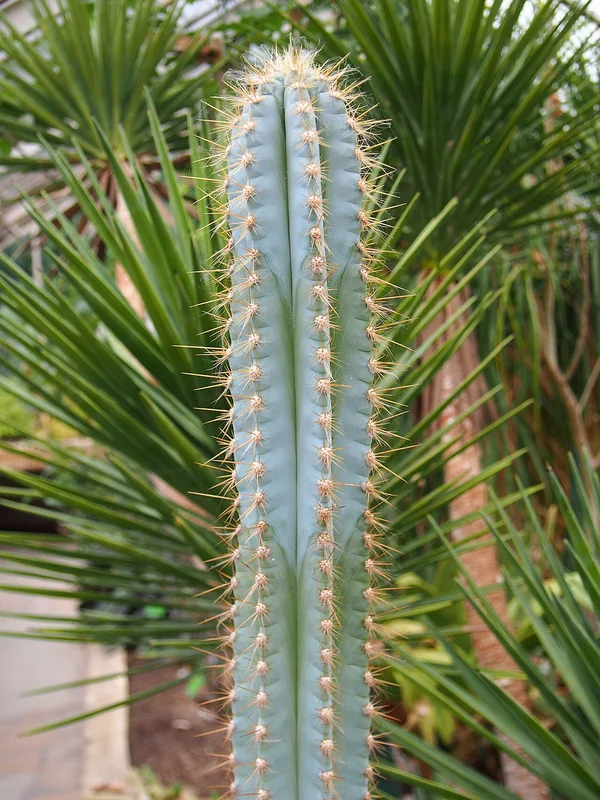 Featured photopilosocereus-pachycladus.jpg
Pilosocereus pachycladus is a striking columnar cactus from Brazil's semi-arid Caatinga biome, prized for its extraordinary intense blue to blue-green colouration — one of the most vivid blues of any cactus species. The thick, waxy cuticle producing this colour contrasts with dense orange-brown to golden spines emerging from large, white-woolly areoles. A fast-growing, resilient cactus for warm, bright positions, it makes a dramatic architectural specimen and is popular in desert-themed indoor and outdoor plantings.
Care facts at a glance
- Light
- Bright indirect
- Water
- Water every 14 to 21 days in summer; once every 4 to 6 weeks in winter.
- Humidity
- 20–50 %
- Temperature
- 10–45 °C
- Soil
- Very free-draining cactus mix: 50% coarse grit or perlite, 50% cactus compost.
- Origin
- Caatinga semi-arid scrubland of northeastern Brazil (Bahia, Pernambuco, Ceará states).
- Mature size
- Columnar; to 10 m tall in habitat. Indoor specimens reach 60–120 cm in 5–10 years under ideal conditions.
Overview
Pilosocereus pachycladus F.Ritter was described in 1979. It is one of the dominant cacti of Brazil's Caatinga — the vast semi-arid scrubland of the northeast — where it grows in dense stands on rocky hillsides, reaching 10 m tall. The intense blue-green colour results from a particularly thick epicuticular wax layer that reflects UV and short-wavelength visible light, creating the blue appearance while reducing solar radiation and water loss. The orange-brown spines provide additional contrast. The genus name Pilosocereus means 'hairy cereus' — referring to the woolly hair in the areoles and the pseudocephalium (a lateral woolly section) from which flowers emerge on adult plants.
Care Priorities
- Maximum available direct sunlight maintains the vivid blue colouration; in shade the blue fades to green and growth becomes elongated.
- Faster-growing than many columnar cacti — check annually whether the pot size is limiting growth.
- The blue waxy surface should not be touched or rubbed; fingerprints permanently mark the wax coating and reduce the ornamental effect.
- Handle with thick gloves; the spines are stout and can cause significant puncture wounds.
- A dry winter rest helps — though this warm-climate species is less strict about winter rest than cold-climate cacti.
Common Problems
Fading from blue to green-grey indicates insufficient light; move to a position with direct sunlight. Root rot from overwatering in cool conditions is the main failure mode; in winter ensure complete dryness if temperatures drop below 15 °C. Scale insects at the woolly areoles are difficult to remove; treat with horticultural oil applied with a brush to affected areoles. The blue waxy coating is easily scratched or marked — avoid placing near walls or other surfaces that might rub against the plant, and use cotton gloves for any handling.
Sources & further reading (2)
- botanical-garden — accessed 2026-05-27
- encyclopedia — accessed 2026-05-27
Frequently asked questions
Is the blue colour permanent?
The blue colouration is a permanent genetic feature of the wax coating — it will not change colour on healthy tissue. However, the wax can be physically damaged by touching, rubbing, or chemical contact, leaving permanently lighter patches. Once the wax bloom is removed, it does not regenerate on the same tissue. New growth always appears freshly blue.
Will it flower indoors?
Flowers develop on the pseudocephalium — a lateral woolly zone that forms on mature, tall specimens. Indoor plants rarely reach the 1.5–2 m height at which the pseudocephalium typically begins to form. In full outdoor conditions in a warm climate, flowering begins at 5–6 years. The flowers are nocturnal, white, and pollinated by bats in nature.
How fast does it grow?
Faster than most columnar cacti — in full sun with appropriate summer watering, indoor specimens can add 10–20 cm of height per year. This faster growth rate makes it easier to cultivate a substantial specimen within a normal plant collector's timescale.