Begonia obliqua
Begonia obliqua Care Guide
 Featured photobegonia-obliqua.jpg
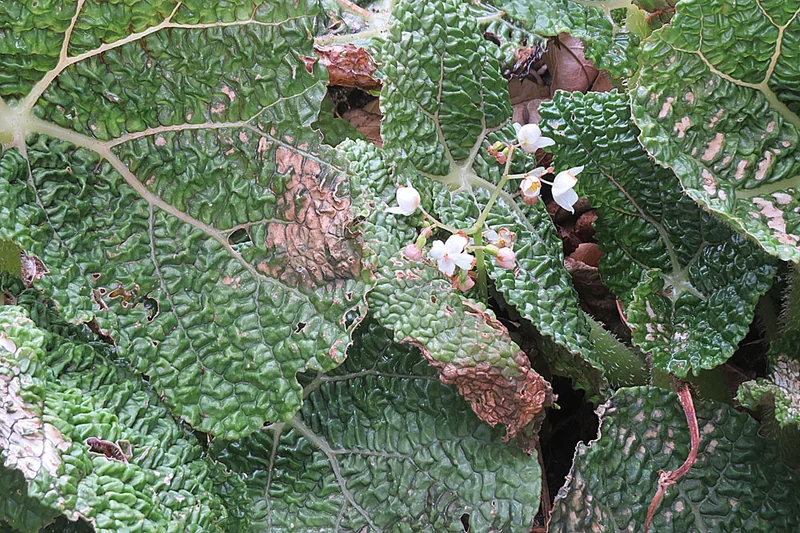
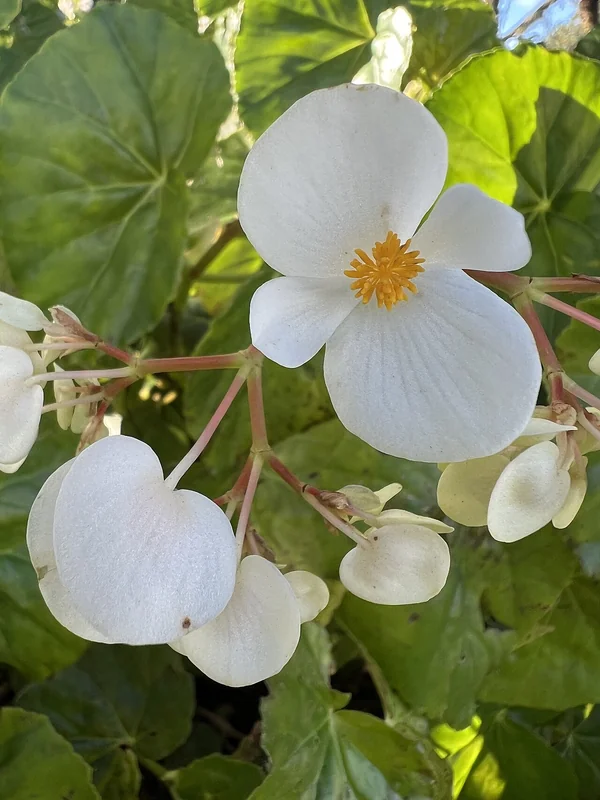
Begonia obliqua is a fibrous-rooted begonia native to the Caribbean islands and tropical South America, prized for its glossy, strongly oblique (asymmetric) leaves and free-flowering habit. It produces loose sprays of white to pale-pink flowers on upright stems and is notably more tolerant of typical indoor conditions than many ornamental begonias — more forgiving of humidity variation and temperature fluctuation. Its naturalised presence across tropical regions reflects its adaptability, making it an accessible choice for beginner begonia growers.
Care facts at a glance
- Light
- Bright indirect
- Water
- Water when the top 2 cm of medium dries; approximately every 7 days in the growing season.
- Humidity
- 45–70 %
- Temperature
- 15–32 °C
- Soil
- Free-draining potting mix with added perlite (20%). Standard multipurpose mix with grit works well.
- Origin
- Caribbean islands, Trinidad, and northern South America. Widely naturalised across tropical regions.
- Mature size
- Upright, bushy habit; 30–60 cm tall.
Overview
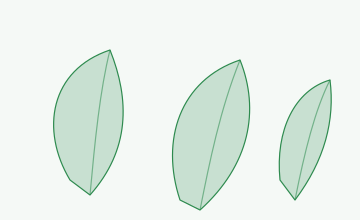
Begonia obliqua L. was described by Linnaeus in 1759, making it one of the earliest-described begonias in Western botanical literature. It is a fibrous-rooted species belonging to the large and taxonomically complex B. obliqua species group, which includes numerous related Caribbean and South American begonias. Its asymmetric leaf base — a feature shared by the entire Begonia genus — is particularly pronounced in this species, giving the leaf a strongly lopsided appearance. The Latin epithet obliqua directly refers to this asymmetry.
Care Priorities
- More tolerant of humidity variation than many ornamental begonias; suitable for standard living room conditions without supplemental humidity.
- Pinch stem tips regularly to maintain a bushy, full habit rather than a tall, sparse one.
- Bright, indirect light maximises both foliage quality and flowering; direct afternoon sun causes leaf scorch.
- Powdery mildew is the primary fungal risk; ensure good airflow around the plant.
- Repot in spring when roots emerge from drainage holes or the plant becomes top-heavy.
Common Problems
Powdery mildew appears as white powdery patches on the leaf surface, particularly in autumn and winter in poor ventilation; treat with diluted neem oil and improve airflow. Leggy, weak growth with few flowers indicates insufficient light — move to a brighter position close to a window. Spider mites in dry conditions produce fine webbing on the undersides of leaves; increase humidity and treat with horticultural oil. Stem rot at the base can develop in waterlogged conditions; ensure good drainage and avoid overwatering.
Sources & further reading (2)
- botanical-garden — accessed 2026-05-27
- encyclopedia — accessed 2026-05-27
Frequently asked questions
Why are begonia leaves always asymmetric?
The asymmetric leaf base is a defining characteristic of the entire Begonia genus and the family Begoniaceae. The evolutionary reason is not fully established, but the asymmetry may aid water channelling down the leaf toward the stem in rain, or may be related to structural reinforcement of the leaf blade. It is one of the most reliable identifiers of a begonia.
Is it the same as the common garden begonia?
No — the common bedding plant is B. semperflorens or hybrid wax begonias. B. obliqua is a distinct wild species from the Caribbean. It shares the asymmetric leaf and general begonia appearance but has a taller, upright habit and white-to-pale-pink flowers rather than the saturated red, pink, or white of bedding begonias.
Can it grow outside in summer?
Yes — in a sheltered, shaded spot outdoors above 15 °C it grows vigorously in summer. Bring inside before night temperatures drop below 12 °C in autumn. Outdoor summer growth is often more vigorous than indoor cultivation.