Anacampseros rufescens
Anacampseros rufescens Care Guide
 Featured photoanacampseros-rufescens.jpg
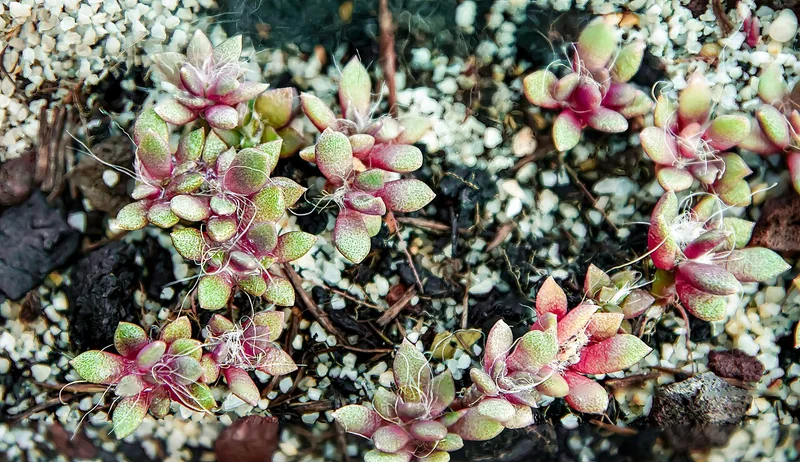
Anacampseros rufescens is a small, mat-forming succulent from South Africa that produces compact rosettes of thick, pointed leaves with a striking colour range: deep green in shade, intensifying through red-green to vivid magenta-purple under bright sunlight. Silky, hair-like fibres emerge from between the leaves at each axil, giving the plant a delicate, thread-laced appearance. It produces small, bright pink flowers in summer that open only in strong sunlight.
Care facts at a glance
- Light
- Bright indirect
- Water
- Water every 2–3 weeks in summer; once a month or less in winter. Allow complete drying between waterings.
- Humidity
- 10–40 %
- Temperature
- 7–38 °C
- Soil
- Very gritty cactus mix; 50–60% mineral component for fast drainage.
- Origin
- Dry, sandy and rocky habitats of South Africa.
- Mature size
- 5–10 cm tall; mat-forming, spreading to 15–20 cm.
Overview
Anacampseros rufescens (Haw.) Sweet is a member of the Portulacaceae family and native to the dry coastal and inland habitats of South Africa. The species name 'rufescens' means 'reddening', directly referencing the striking colour change the leaves undergo in full sun. The silky axillary fibres (stipules) are a distinctive feature of the genus and are thought to help retain moisture in the leaf axils in the plant's arid natural habitat. Despite its delicate appearance, it is surprisingly heat-tolerant.
Care Priorities
- Maximum light is key: the more sun it receives, the more vivid the purple-magenta colouration. A south-facing window with direct sun produces the best results.
- Slight, deliberate water stress between waterings intensifies leaf colour — consistently wet soil produces green, etiolated growth.
- Use a very shallow, wide pot; the plant spreads laterally and forms a low mat.
- Deadhead spent flowers to encourage new growth throughout the season.
Common Problems
Green, flat leaves with no purple colouration are caused by insufficient light. Move to a brighter, sunnier window immediately. Stretched, elongated rosettes reaching toward light indicate the same issue. Root rot from overwatering causes leaf drop and a soft, mushy base; repot in dry, fresh mix and allow to dry out completely before rewatering. Mealybugs can hide in the silky axillary fibres; inspect regularly and treat with diluted isopropyl alcohol.
Sources & further reading (2)
- botanical-garden — accessed 2026-05-27
- encyclopedia — accessed 2026-05-27
Frequently asked questions
Why does my plant look green rather than purple?
The purple colouration is a sun-stress response — the plant produces protective anthocyanin pigments when exposed to intense light. A green plant simply needs more sun. Move it to the brightest available windowsill and the colour should develop within 2–3 weeks.
What are the silky white threads?
These are modified stipules (leaf-base appendages) that are characteristic of Anacampseros species. They give the plant a distinctive fuzzy, interwoven appearance between the leaves and help capture condensation in the plant's native arid habitat.
Why do the pink flowers only open briefly?
Anacampseros rufescens flowers are ephemeral, opening for just 1–2 hours in the afternoon when light intensity is high. They close if clouds pass overhead and open again the next sunny day. This is a normal and fascinating trait of the species.