Parodia haselbergii
Parodia haselbergii Care Guide
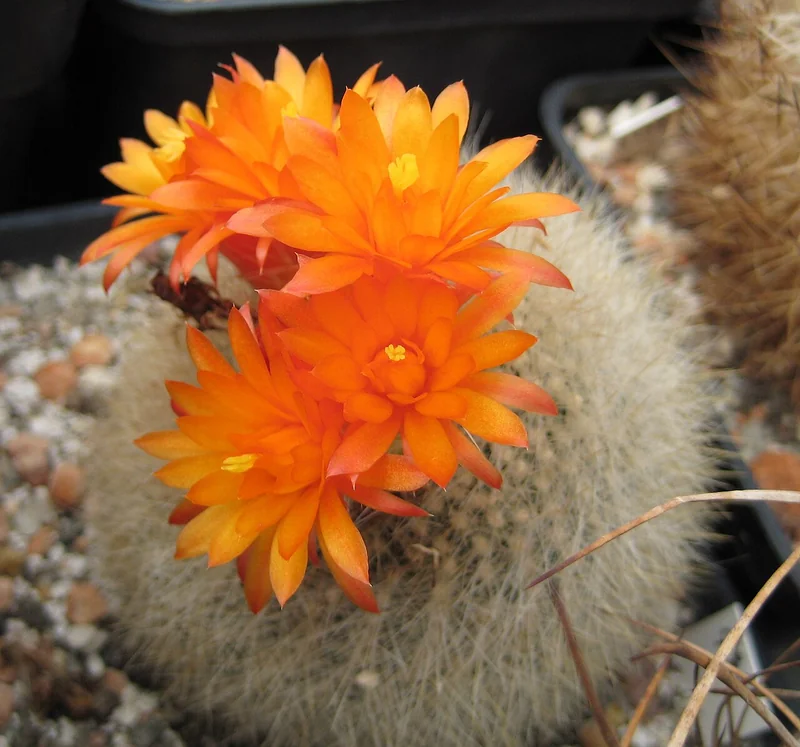 Featured photoparodia-haselbergii.jpg
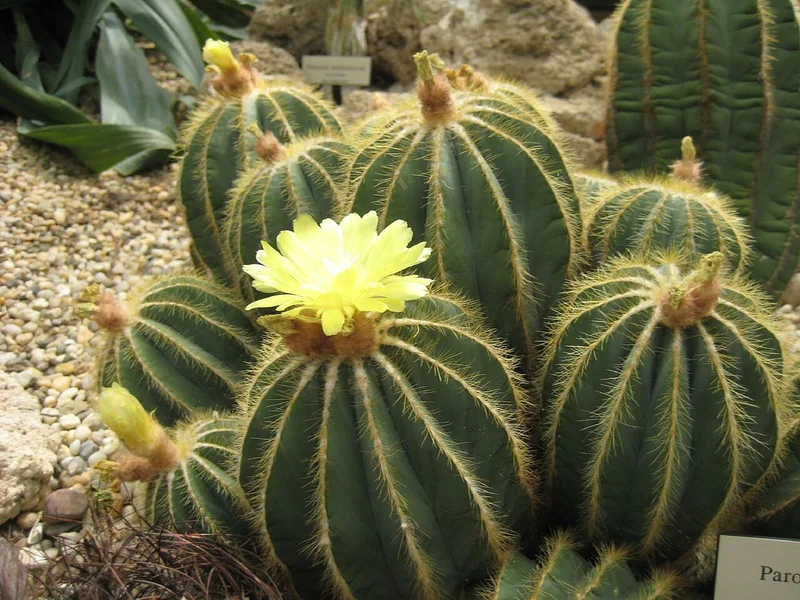
Parodia haselbergii (formerly Notocactus haselbergii) is a densely spined, perfectly spherical small cactus from southern Brazil, covered in fine white spines that give it a frosted silvery appearance. Its spectacular trait is flowering in late winter to early spring — producing vivid orange-red to scarlet flowers at the apex when most houseplants are dormant. The compact size, attractive silvery spination, and early, reliable flowering make it an excellent windowsill cactus for beginning and experienced collectors alike.
Care facts at a glance
- Light
- Bright indirect
- Water
- Water every 14 to 21 days in summer; withhold almost completely in winter (once every 6 weeks at most).
- Humidity
- 20–50 %
- Temperature
- 5–35 °C
- Soil
- Very free-draining cactus mix: 50% coarse grit or perlite, 50% cactus compost.
- Origin
- Rocky grasslands of Rio Grande do Sul state, southern Brazil.
- Mature size
- Flattened globe to short cylinder; 10–15 cm tall and 10–15 cm across.
Overview
Parodia haselbergii (F.Haage ex Rümpler) F.H.Brandt was formerly classified as Notocactus haselbergii and before that Echinocactus haselbergii. It is named for the German cactus grower H. Haselberg. Native to the campos grasslands of Brazil's far south, it grows in rocky terrain exposed to both intense summer sun and light winter frosts. The dense white spine covering of up to 60 radial spines per areole creates a silvery-white frosted appearance quite unlike most other globose cacti. Flowers are produced in late winter (February–March in the northern hemisphere) when indoor temperatures are still cool — the cool winter rest is what initiates the flowering.
Care Priorities
- The cool, dry winter rest (5–12 °C, near-zero watering from October to January) is the key to reliable late-winter blooming.
- Direct sunlight produces the densest, most attractive spine covering; in shade spines become sparse and growth elongates.
- Excellent drainage is critical; this small cactus is more susceptible to root rot than large barrel cacti due to its smaller root system.
- The flattened shape means the apex is vulnerable to rotting if water pools there; ensure the growing point remains dry.
- Never fertilize in winter; the dormant root system cannot process nutrients and salt accumulation causes root damage.
Common Problems
Failure to flower is almost always caused by a warm or wet winter — ensure a genuine cool rest at under 15 °C nights for at least 6–8 weeks. Root rot from any watering in cool conditions can rapidly kill the small root system; when in doubt, do not water in winter. Mealybugs hiding between the dense spines and at the root collar are difficult to detect; inspect monthly with a hand lens. The dense white spines collect dust and airborne particulate over time, reducing the frosted silvery appearance — very gently blow with a hairdryer on cool setting or use a soft brush.
Sources & further reading (2)
- botanical-garden — accessed 2026-05-27
- encyclopedia — accessed 2026-05-27
Frequently asked questions
Why does it flower in winter?
The late-winter bloom (February–March) is an adaptation to the seasonal climate of its native southern Brazil, where growth and flowering precede the hottest summer period. In cultivation, the cool winter rest mimics the natural cue. The flowers appear when outdoor temperatures are still cold — a welcome burst of orange-red colour during the houseplant doldrums of late winter.
Can I grow it from seed?
Yes — P. haselbergii seeds germinate reliably at 22–25 °C and seedlings grow slowly but steadily. It takes 3–5 years to reach flowering size from seed. The slow growth and difficulty of making offsets (it rarely produces them) means buying established nursery plants is the most common route.
Is there colour variation in the flowers?
Yes — flowers range from bright orange-red to near-scarlet and occasionally soft orange. The most vivid scarlet forms are particularly sought by collectors. All flower colours are genuine expressions of the species' natural range.