Melocactus matanzanus
Melocactus matanzanus Care Guide
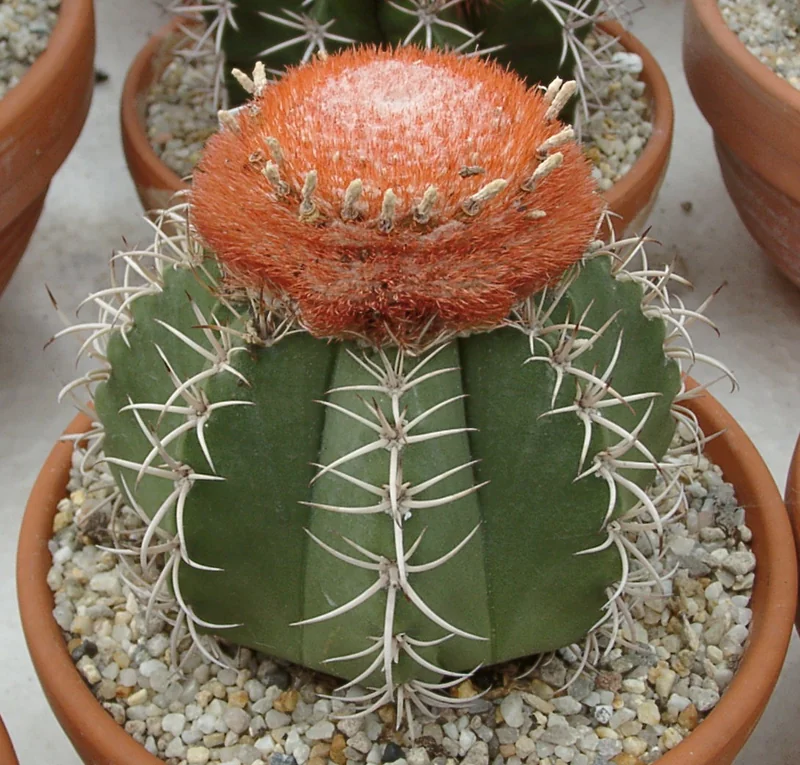 Featured photomelocactus-matanzanus.jpg
Melocactus matanzanus is a Cuban cactus of exceptional character — a globe-shaped cactus that, upon reaching maturity, develops a distinct woolly cephalium at its apex: a cushion-like cap of dense white wool and reddish-orange bristles from which tiny pink flowers and red fruits emerge in a near-continuous cycle. The cephalium is the plant's permanent reproductive structure; the cactus body stops growing once it forms. It requires warm temperatures year-round (above 12 °C strictly) and free drainage, making it more demanding than many cacti but exceptionally rewarding.
Care facts at a glance
- Light
- Bright indirect
- Water
- Water every 10 to 14 days in summer; reduce to every 3 to 4 weeks in winter.
- Humidity
- 30–60 %
- Temperature
- 12–40 °C
- Soil
- Very free-draining cactus mix: 50% coarse grit or perlite, 50% cactus compost. Terracotta pot strongly recommended.
- Origin
- Coastal limestone hills and rocky outcrops of Matanzas province, Cuba.
- Mature size
- Globe cactus body to 15 cm tall and 15 cm across; cephalium adds 5–15 cm of height.
Overview
Melocactus matanzanus León was described in 1958 and is endemic to the Matanzas province of Cuba. The genus name means 'melon cactus' (from Latin melonis), referring to the ribbed, rounded shape. M. matanzanus is the most compact commonly cultivated Melocactus species, making it better suited to indoor cultivation than the larger M. azureus or M. intortus. The cephalium development is the defining event of its life history — once formed, the cactus body stops growing and all energy goes into the continuous production of flowers and seeds from the cephalium. A plant with a large, well-developed cephalium is an old and robust individual — typically 5–10 years from seed.
Care Priorities
- Never allow temperatures below 12 °C; unlike many cacti, Melocactus does not tolerate cold and will decline rapidly at low temperatures.
- The cephalium must NEVER be wetted when watering; water at soil level only. Wet cephalium wool rots rapidly.
- Maximum direct light ensures compact growth and early cephalium development.
- Do not repot unnecessarily — the deep root system is disrupted by repotting, and Melocactus dislikes root disturbance. Repot only when rootbound.
- From the time the cephalium begins forming, reduce nitrogen fertilisation; phosphorus supports flowering.
Common Problems
Cephalium browning or rotting is usually caused by overhead watering, high humidity trapped in the wool, or cold temperatures; improve conditions immediately and carefully remove any rotting wool sections with fine scissors. Root rot from cold, wet conditions is the most common death cause; maintain temperature above 12 °C strictly in winter. Mealybugs in the cephalium wool are very difficult to access; use systemic insecticide drench as a preventive measure. The cactus body losing vigour and not growing after the cephalium forms is normal — all growth energy has transferred to the reproductive cephalium.
Sources & further reading (2)
- botanical-garden — accessed 2026-05-27
- encyclopedia — accessed 2026-05-27
Frequently asked questions
What is the cephalium?
The cephalium is a specialised reproductive structure that forms at the apex of the cactus when it reaches maturity. It is composed of dense white wool and coloured bristle-like spines. All flowers and fruits are produced from within the cephalium rather than from the body of the cactus. Once formed, the cephalium grows taller over time as the plant flowers repeatedly, while the cactus body remains the same size.
How long before the cephalium forms?
In optimal conditions (maximum light, warm temperatures, good care) approximately 5–8 years from seed. In suboptimal indoor conditions it may take 10–15 years or may never form if conditions are too poor. Commercially sold plants with cephaliums already formed are older, established specimens that represent significant investment in growing time.
Does it flower?
Yes — once the cephalium forms, it produces small pink flowers daily over a very long season, with red berries following. The flowers are tiny (1–1.5 cm) but produced nearly continuously, and the contrast between the red-and-white cephalium and the spiny green body below is striking.