Oncidium sphacelatum
Oncidium sphacelatum Care Guide
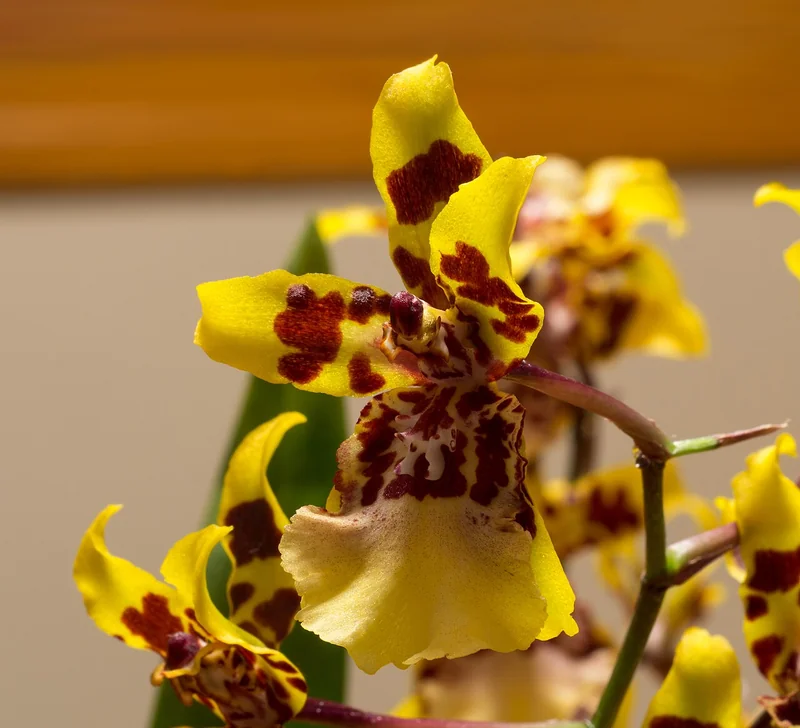 Featured photooncidium-sphacelatum.jpg
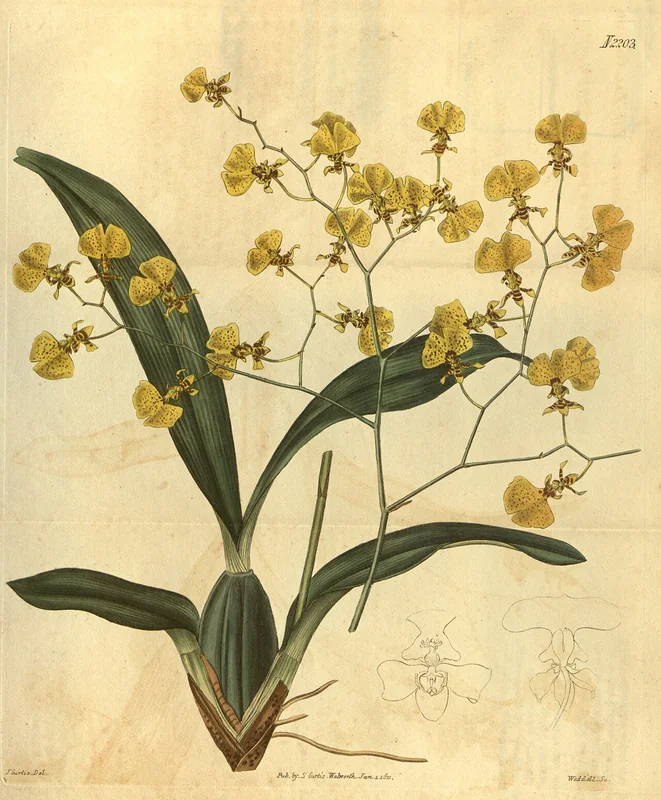
Oncidium sphacelatum is a large, vigorous oncidium from Mexico and Central America that produces impressive, tall, branching flower panicles reaching 90 to 150 cm, clothed in numerous bright yellow flowers with chestnut-brown markings. Known as the 'golden shower orchid', it is a common sight in botanical gardens and is one of the most robust oncidiums available for indoor growing, tolerating a range of conditions with reasonable grace. Its large size, spectacular flower display, and adaptability make it popular with orchid growers who have sufficient space.
Care facts at a glance
- Light
- Bright indirect
- Water
- Water thoroughly when the bark substrate dries; every 7 to 10 days in summer, every 14 to 21 days in winter.
- Humidity
- 50–75 %
- Temperature
- 13–32 °C
- Soil
- Coarse bark chips in a large, free-draining pot; needs a substantial pot to anchor the large plant.
- Origin
- Tropical and subtropical forests from Mexico through Central America to Venezuela.
- Mature size
- Pseudobulbs 15 to 25 cm; flower panicles 90 to 150 cm tall.
Overview
Oncidium sphacelatum was described by Lindley in 1841. The species name refers to the spotted or blemished appearance of parts of the plant rather than a negative trait. It is native to the seasonal dry and cloud forests of Mexico and Central America, where it grows as an epiphyte on large trees at moderate to high altitude. The large, flattened pseudobulbs — each carrying two elongated leaves — produce a single tall, much-branched panicle in spring to early summer that towers above the foliage. The bright yellow flowers with brown markings and the sheer abundance of blooms have earned it a reputation as one of the showiest oncidiums for garden and conservatory display.
Care Priorities
- Its large size means it needs a heavy, stable pot to avoid tipping when in spike; stake the flower spike early as it elongates.
- Bright, indirect light with some morning sun promotes robust pseudobulb development and reliable annual flowering.
- A mild dry rest in winter combined with cooler night temperatures triggers spike initiation; do not keep warm and wet year-round.
- Repot every 2 to 3 years in spring as the rhizome extends beyond the pot edge; use a wide shallow container rather than a deep one.
Common Problems
Pseudobulbs that shrivel persistently despite regular watering indicate root loss from rot or physical damage; unpot, remove dead roots, and repot in fresh bark. Spider mites establish rapidly in dry conditions and the large leaf surface provides extensive habitat for colonies; inspect and treat early with neem oil. Scale insects on the undersides of the large pseudobulbs are easily overlooked; inspect monthly and treat with isopropyl alcohol swabs. Bacterial brown rot from splash-watering creates rapidly spreading dark lesions on leaves; keep leaves dry when watering and improve air circulation.
Sources & further reading (2)
- botanical-garden — accessed 2026-05-08
- encyclopedia — accessed 2026-05-08
Frequently asked questions
Is O. sphacelatum suitable for a bright windowsill?
Its large mature size makes windowsill growing challenging; it is better suited to a conservatory, greenhouse bench, or a dedicated plant stand with adequate light and head room for the tall flower spikes.
How does it compare to O. flexuosum?
Sphacelatum is significantly larger — both in plant size and spike height — and has larger individual flowers. Flexuosum is more compact and produces more densely clustered smaller flowers. Both are prolific bloomers.
Can I grow it in the same conditions as Phalaenopsis?
Similar humidity is fine, but it needs more light than Phalaenopsis and a more distinct seasonal dry period. Growing them side by side usually results in one or the other being in suboptimal conditions.