Neoregelia carolinae
Neoregelia carolinae Care Guide
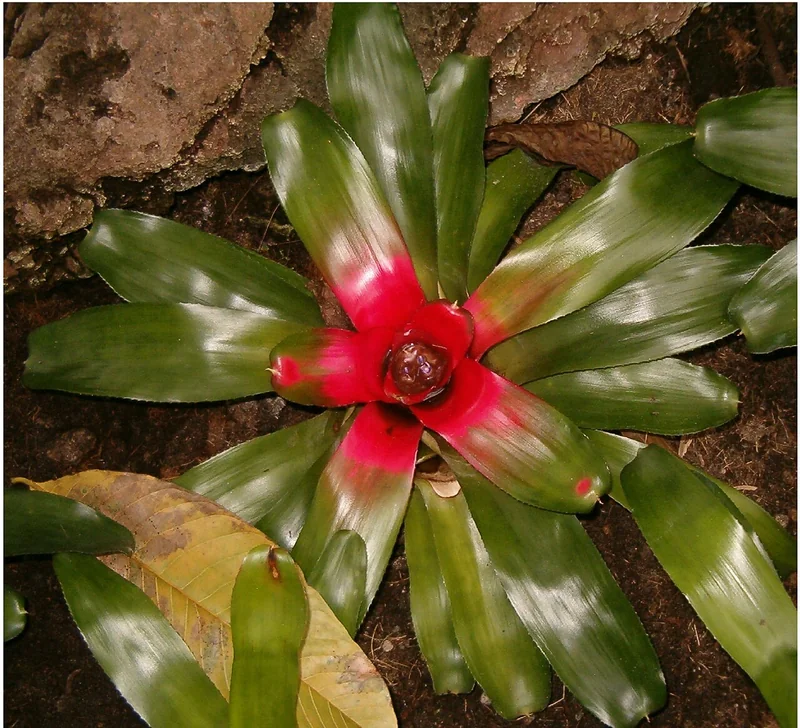 Featured photoneoregelia-carolinae.jpg
Neoregelia carolinae, the Blushing Bromeliad, is a popular epiphytic bromeliad from Brazil whose flat, spreading rosette of glossy green leaves turns a brilliant crimson-scarlet in the innermost centre around its water-retaining cup at flowering time. The tiny true flowers emerge from the cup and are modest, but the flaming central leaves create a weeks-long display that rivals any flower. It is one of the easiest and most rewarding bromeliads for indoor cultivation.
Care facts at a glance
- Light
- Bright indirect
- Water
- Keep the central cup filled with water at all times; top up weekly. Water the soil every 10–14 days only to keep it barely moist.
- Humidity
- 50–75 %
- Temperature
- 15–32 °C
- Soil
- Well-draining, open bromeliad or orchid bark mix; the roots serve primarily for anchorage.
- Origin
- Tropical Atlantic rainforests of southeastern Brazil.
- Mature size
- 20–35 cm tall; rosette spreading 30–50 cm across.
Overview
Neoregelia carolinae (Beer) L.B.Sm. was described in its current combination in 1955. The genus contains around 100 species, all epiphytic and native to Brazil. The dramatic colour change in the central leaves ('blushing') is triggered by the onset of flowering and is mediated by changes in anthocyanin concentration — the same process that turns autumn leaves red. The central cup (tank) is a specialised structure unique to tank bromeliads, functioning as a water and nutrient reservoir in the epiphytic canopy habitat.
Care Priorities
- Keep the central cup filled with water at all times — this is the main drinking source for the plant.
- Flush the cup completely once a month with fresh water to remove accumulated bacteria, algae, and mineral deposits.
- Bright, indirect light induces and maintains the brightest central leaf colouration.
- After the main rosette flowers, it will slowly decline over 1–2 years but produce pups (offsets) at the base; pot these up for the next generation.
Common Problems
Stagnant water in the cup causes bacterial rot and a foul smell; increase flushing frequency to twice monthly. Brown leaf tips indicate low humidity or fluoride in tap water — use filtered or rainwater. The parent rosette dying after flowering is completely normal and expected behaviour for monocarpic bromeliads; redirect attention to the developing pups. Scale insects may cluster at the base of leaves inside the cup; treat with diluted horticultural oil, emptying and rinsing the cup after treatment.
Sources & further reading (2)
- botanical-garden — accessed 2026-05-27
- encyclopedia — accessed 2026-05-27
Frequently asked questions
Why are the inner leaves turning red?
This is the 'blushing' that gives the plant its common name — a natural anthocyanin response triggered by the plant preparing to flower. It is entirely normal and indicates a healthy, mature plant approaching its flowering stage. The red colour may last for several months.
What do I do after the plant flowers and starts to die?
Allow the parent rosette to continue producing offsets (pups) at its base — typically 2–4 per rosette. Once pups are at least one-third the size of the parent plant, separate them with a clean knife and pot into fresh bromeliad mix. They will grow into flowering size in 2–3 years.
What water should I use for the cup?
Rainwater or filtered water is ideal — bromeliads are sensitive to fluoride and high mineral content in tap water, which causes brown leaf tips. If only tap water is available, allow it to stand overnight to allow chlorine to off-gas before filling the cup.