Medinilla magnifica
Medinilla magnifica Care Guide
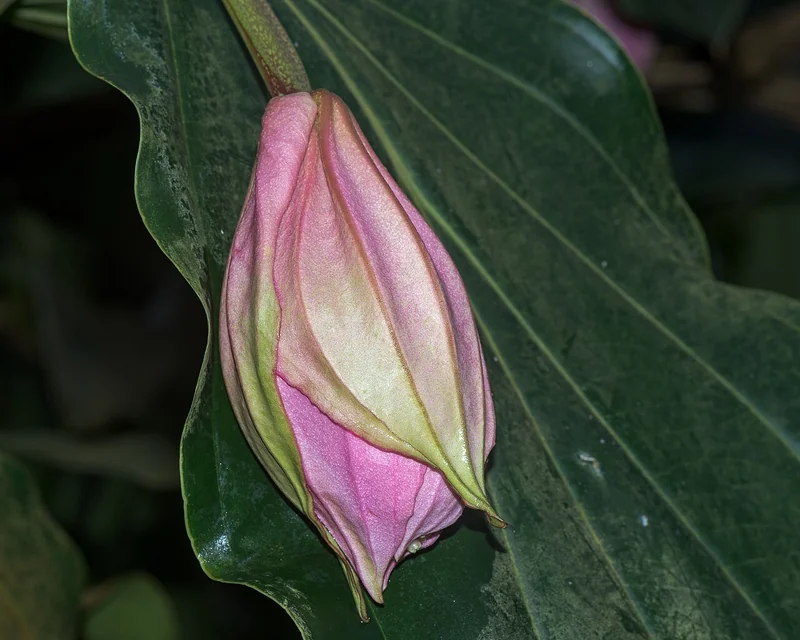 Featured photomedinilla-magnifica.jpg
Medinilla magnifica is one of the most spectacular flowering houseplants available — a large shrub from the Philippine rainforests whose pendant flower panicles are architectural works: enormous, multi-branched clusters of rose-pink flowers hanging from coral-pink primary bracts, the whole structure reaching 30–50 cm in length and resembling an elaborate floral chandelier. The large, ribbed, deep-green leaves and strong, square stems add substantial foliage presence. It requires warmth, high humidity, and patience, but a blooming specimen is among the most dramatic sights in indoor horticul...
Care facts at a glance
- Light
- Bright indirect
- Water
- Water every 7 to 10 days in the growing season; reduce to every 14 days in winter.
- Humidity
- 60–85 %
- Temperature
- 15–30 °C
- Soil
- Rich, free-draining mix: peat-free potting compost with 20% perlite and 10% fine orchid bark.
- Origin
- Humid epiphytic forests of the Philippines, particularly Luzon.
- Mature size
- Shrubby; 60–120 cm tall in a container. Large pendant panicles 30–50 cm long.
Overview
Medinilla magnifica Lindl. was described in 1848 and introduced to European cultivation from the Philippines. It is a member of the family Melastomataceae and is an epiphytic shrub in its native Philippine rainforest habitat, growing on the branches and trunks of large trees where it is exposed to filtered light and consistent humidity. The pendant flower panicles appear in spring to summer and are the largest inflorescences of any commonly cultivated indoor plant. The primary bracts (the large pink wings beneath the flower cluster) are persistent and remain attractive even as individual flowers drop.
Care Priorities
- A cool, drier winter rest (15–18 °C, reduced watering for 6–8 weeks from November to January) is the key trigger for flower bud initiation; without it the plant grows vegetatively but does not flower.
- Bright indirect light with some morning direct sun in a south-east or east-facing window is ideal.
- High humidity (60%+) is essential for preventing leaf edge browning and for the large flower panicles to develop properly.
- After flowering, cut the spent panicles back to healthy leaf nodes to encourage branching and future flowering stems.
- Large specimens in 25–30 cm pots are the most reliable flowerers; small plants rarely produce the full pendant panicles.
Common Problems
Failure to flower is the most common frustration — it almost always results from insufficient winter cool-dry rest. Many growers in heated homes never see the required 15–18 °C temperatures; placing the plant in a cool spare room or unheated conservatory for 6–8 weeks in winter makes a significant difference. Leaf edge browning indicates insufficient humidity; group with other plants or use a humidifier. Mealybugs in the dense stems and leaf axils of large plants can be difficult to treat; use a systemic insecticide drench. Botrytis on fallen flower petals in humid, still conditions can progress to stem tissue; remove spent flowers and ensure airflow.
Sources & further reading (2)
- botanical-garden — accessed 2026-05-27
- encyclopedia — accessed 2026-05-27
Frequently asked questions
How large does the flower panicle get?
On an established specimen in good health, the pendant panicles can reach 30–50 cm in length and 20–25 cm in width at the widest point. A large plant with multiple simultaneous panicles is genuinely spectacular — the coral-pink primary bracts and rose-pink flower clusters create a layered, chandelier-like effect that draws attention across a room.
Is it difficult to grow?
Moderate difficulty — more demanding than typical houseplants but not as difficult as many orchids. The keys are: high humidity, a genuine winter rest, and bright light. In a conservatory or heated greenhouse with controlled humidity, it is quite manageable. In a standard dry heated living room without additional humidity, it struggles.
How do I induce flowering?
Provide a clear cool-dry rest: maintain at 15–18 °C with reduced watering for 6–8 weeks in winter (November–January). Then move to bright, warm conditions and resume normal watering and feeding. Flower buds should appear within 4–8 weeks of resuming growth. This cycle mimics the Philippine dry season.