Euphorbia trigona
Euphorbia trigona Care Guide
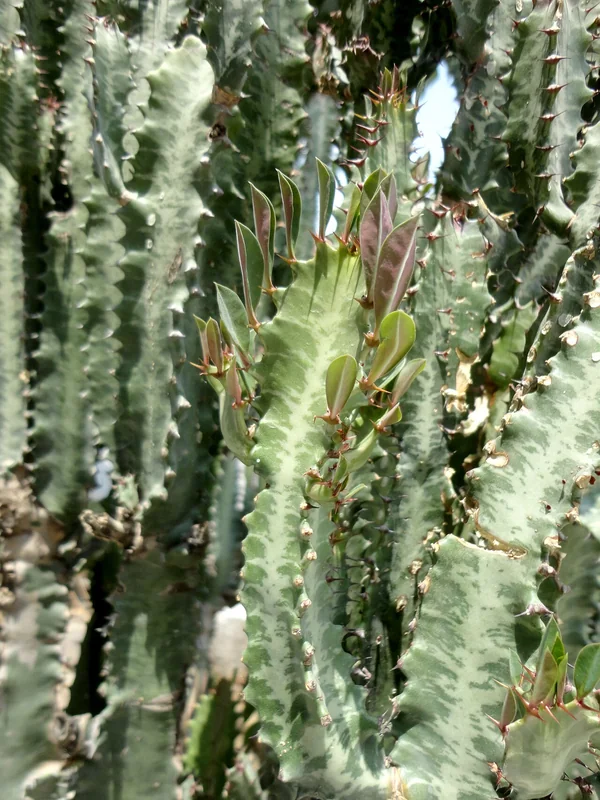 Featured photoeuphorbia-trigona.jpg
Euphorbia trigona, the African Milk Tree, is a columnar, multi-branching succulent from central Africa that grows into an impressive candelabra-like structure indoors, reaching 1.5 m or more. Its three-angled, deep-green or red-purple stems are lined with paired thorns and produce small, deciduous leaves along the ridges during the growing season. The cultivar 'Rubra' (Red), with deep burgundy-purple stems, is particularly popular for its dramatic foliage colour in modern interior spaces.
Care facts at a glance
- Light
- Bright indirect
- Water
- Water every 2–3 weeks in summer when the top 5 cm of soil has dried. Water monthly or not at all in winter.
- Humidity
- 10–50 %
- Temperature
- 10–38 °C
- Soil
- Gritty, well-draining cactus mix with added perlite; heavy soils cause stem base rot.
- Origin
- Dry bush and scrubland of west-central Africa.
- Mature size
- 1.2–1.8 m tall as a houseplant; multiple upright branching stems.
Overview
Euphorbia trigona Haw. was described in 1812. Despite resembling a cactus, it is a spurge (family Euphorbiaceae) with no relationship to true cacti. The 'Rubra' cultivar gained popularity in interior design circles for its deep burgundy stem colour, which intensifies under bright light. Like all Euphorbias, the plant produces a milky latex sap when cut; this sap is caustic and can cause skin and eye irritation — always handle with gloves and wash hands thoroughly after any contact. The small, oval leaves produced along the stem margins are a reminder of its non-succulent ancestry.
Care Priorities
- Position in bright light; the 'Rubra' cultivar requires maximum indirect light to maintain deep red stem colouration.
- Use a heavy, stable pot — mature plants are top-heavy and can topple if the pot is too light.
- Water conservatively throughout the year; reduce to once a month in winter.
- Wear gloves when pruning or taking cuttings — the latex sap causes skin irritation and is particularly dangerous near the eyes.
Common Problems
Stem base rot creates a soft, yellowing zone at soil level — the most common cause is overwatering or compacted soil. Remove the plant from the pot, trim all affected tissue, dust with fungicide, and allow to dry for 24 hours before replanting in fresh, dry, very gritty compost. The 'Rubra' form losing red colouration is caused by insufficient light. Leaf drop at the beginning of winter is normal; the leaves are deciduous and will return in spring. Mealybugs hide in the stem crevices near the thorns.
Sources & further reading (2)
- botanical-garden — accessed 2026-05-27
- encyclopedia — accessed 2026-05-27
Frequently asked questions
Is it a cactus?
No — E. trigona is a Euphorbia (spurge family), which is a completely different plant family from Cactaceae. The most reliable way to tell the difference is the sap: Euphorbias produce a white milky latex; cacti do not. The overall care needs overlap significantly, but Euphorbias cannot be grafted onto cactus rootstocks.
Can I take cuttings?
Yes. Wear gloves, cut a stem section 15–20 cm long, rinse the cut end under running water to remove latex, then allow to callus in a warm, dry place for 24–48 hours before planting in dry, gritty compost. Do not water for the first 2 weeks after planting.
The 'Rubra' cultivar — does the red colour ever fade?
Yes. In insufficient light, the anthocyanin-based red pigmentation fades and stems revert to green. Bright, direct-ish light is needed to maintain the deep burgundy colour. Move to a sunnier position to restore the colour in new growth.