Maxillaria tenuifolia
Maxillaria tenuifolia Care Guide
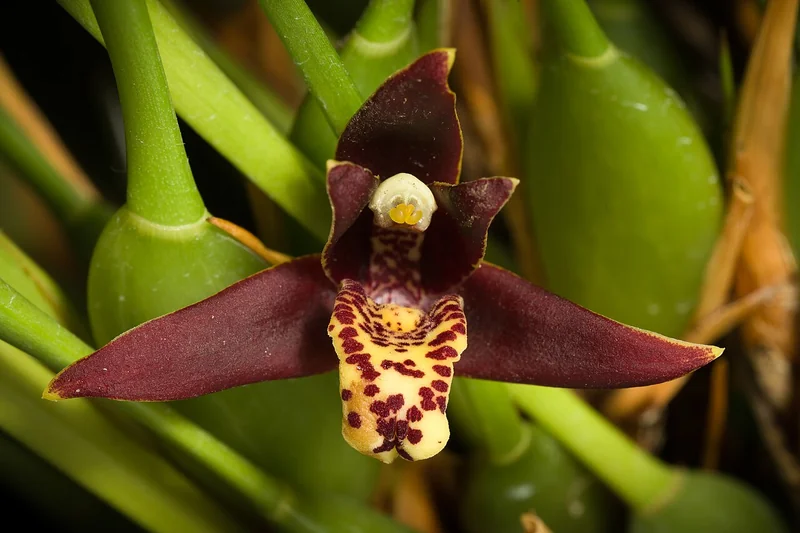 Featured photomaxillaria-tenuifolia.jpg
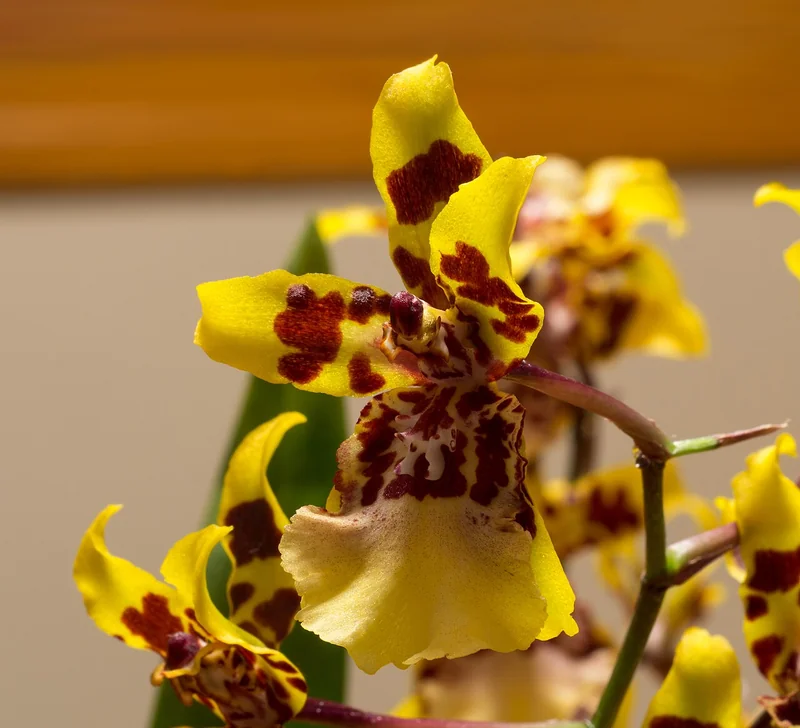
Maxillaria tenuifolia is a delightfully fragrant Central American orchid nicknamed the 'Coconut Orchid' for its extraordinary fresh coconut fragrance — one of the most surprising and appealing scents in the orchid world. It produces small, dark-red and yellow flowers partially hidden among narrow, grass-like leaves on a spreading, creeping rhizome. The compact size and easy temperament make it one of the most popular fragrant orchids for hobbyists; it requires minimal care and rewards growers with reliable annual blooming and a fragrance that genuinely evokes fresh coconut.
Care facts at a glance
- Light
- Bright indirect
- Water
- Water every 5 to 7 days in the growing season; allow the medium to partially dry between waterings. Reduce to every 10 days in winter.
- Humidity
- 50–75 %
- Temperature
- 10–30 °C
- Soil
- Coarse orchid bark with perlite. Or mount on cork bark; the creeping rhizome spreads well on a mount.
- Origin
- Montane cloud forests of Mexico, Guatemala, Honduras, El Salvador, and Costa Rica at 500–1,800 m elevation.
- Mature size
- Creeping rhizome; pseudobulbs 3–5 cm spaced irregularly. Leaves to 30 cm, narrow and grass-like.
Overview
Maxillaria tenuifolia Lindl. was described in 1837. The genus name refers to the jaw-like structure of the flower's column and lip (maxilla = jaw in Latin). The species name means 'narrow-leaved' — the fine, grass-like foliage is distinctive and gives the plant a graceful, unusual appearance for an orchid. The extraordinary coconut fragrance is produced by methyl salicylate and a complex mix of terpenoid and ester compounds — a fragrance genuinely indistinguishable from fresh coconut cream in the right conditions. The small flowers are mostly hidden among the dense narrow leaves, which adds to the surprise when the scent is first noticed.
Care Priorities
- Bright indirect light is required for reliable blooming; deep shade results in vegetative growth but no flowers.
- The creeping rhizome expands rapidly; mount on a cork board or provide a wide, shallow container to accommodate growth without repotting too frequently.
- A mild winter rest (reduce watering, allow slightly cooler temperatures: 12–15 °C nights) helps initiate spring flowering.
- The narrow leaves are prone to dehydration in very dry indoor air; maintain humidity at 50%+.
- Flowers are short-lived (1–2 weeks) but appear reliably each spring on established plants.
Common Problems
Root rot from overwatering or poor drainage is the most common failure; ensure the bark mix is very coarse and the pot has excellent drainage. Shrivelled pseudobulbs with upright, firm plants indicate insufficient watering; increase frequency and ensure roots are not damaged. Scale insects on pseudobulbs are frequent; treat with horticultural oil. The creeping rhizome growing over the pot edge is not a problem — allow it to grow and root onto adjacent surfaces, or remount on a larger cork board rather than repotting repeatedly.
Sources & further reading (2)
- botanical-garden — accessed 2026-05-27
- encyclopedia — accessed 2026-05-27
Frequently asked questions
Does it really smell like coconut?
Yes — the resemblance to fresh coconut is remarkable and unmistakable. On a warm, sunny morning with several flowers open, the scent is distinct and fills a small room. Many growers describe it as one of the most pleasant surprises in their collection — the small, partly-hidden flowers give no visual cue for the intensity and character of the fragrance.
How fast does it spread?
The creeping rhizome is quite vigorous; on a cork bark mount in good conditions it adds several new pseudobulbs per growing season and can cover 20–30 cm of bark surface in 2–3 years. A large, established plant on a substantial bark mount with cascading narrow leaves and dozens of flowers in spring is a spectacular specimen.
Can I grow it in a pot?
Yes — in a wide, shallow pot (pan-style) with coarse bark. The pot-bound situation slows the rhizome's advance and means more frequent repotting. Cork bark mounting is preferred for the long term, but pots work well for beginners.