Hoya imbricata
Hoya imbricata Care Guide
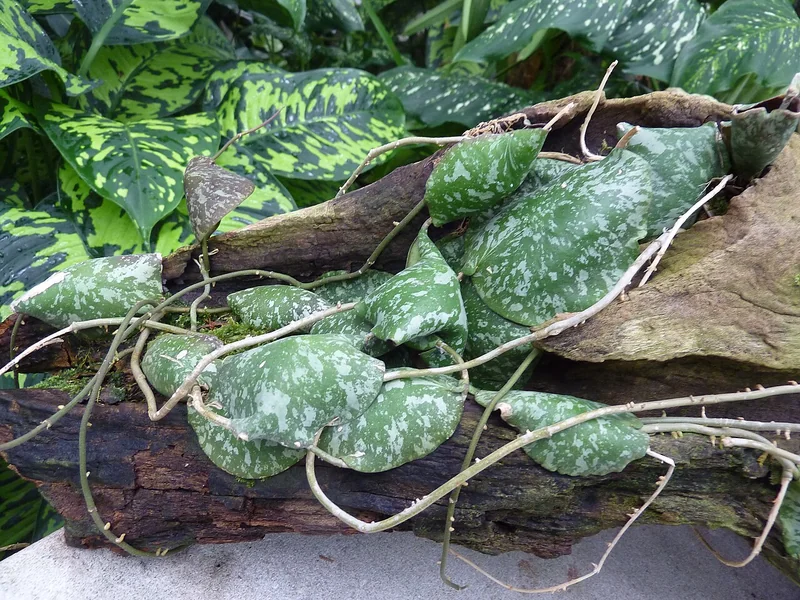 Featured photohoya-imbricata.jpg
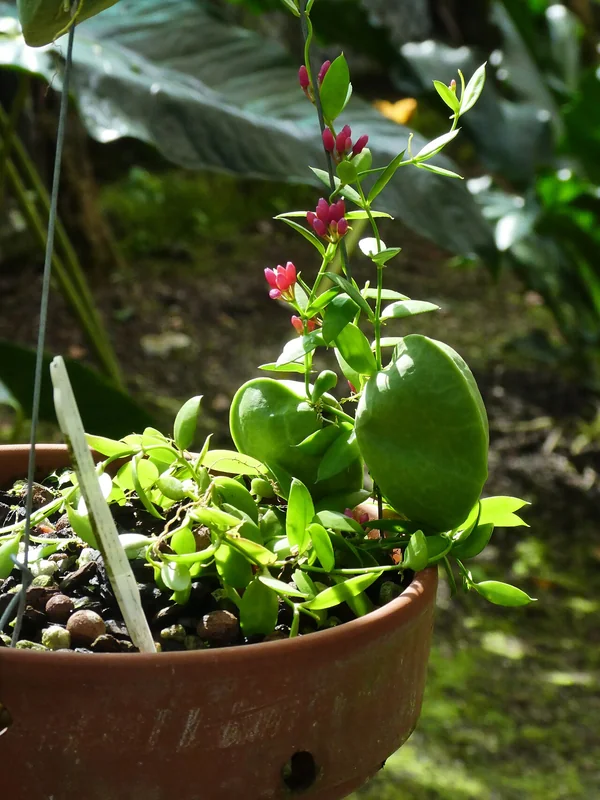
Hoya imbricata is one of the most architecturally bizarre plants in cultivation — a Philippine epiphyte whose large, round, paddle-shaped leaves press so flat against the surface they grow on that they overlap like shingles or roof tiles, each leaf forming a sealed pouch against the bark. In nature these pouches are colonised by ants, which nest inside while the plant benefits from the nutrients their activity provides — a genuine myrmecophyte. The pale-green to pinkish nodding umbels of flowers appear on long peduncles emerging from the gap between the leaf and the host surface.
Care facts at a glance
- Light
- Bright indirect
- Water
- Mist the substrate or backing board daily to every other day; do not water at the soil/mount surface in large quantities.
- Humidity
- 65–90 %
- Temperature
- 18–32 °C
- Soil
- Mount on cork bark, tree fern slab, or rough bark board; attach with sphagnum moss at the roots only. Not suitable for traditional pot culture.
- Origin
- Lowland and montane rainforests of the Philippines.
- Mature size
- Spreading mat of overlapping leaves; individual leaves 10–25 cm across. Plant may cover 30–60 cm of backing surface when established.
Overview
Hoya imbricata Decne. was described in 1844. The species is a classic shingle plant — an epiphytic growth form where the leaves adhere tightly to a vertical surface and grow in overlapping horizontal rows (imbricate means 'arranged like overlapping tiles'). The sealed pouch beneath each leaf is the defining feature: it serves as a microclimate shelter for ant colonies in the wild. This myrmecophytic (ant-plant) association is facultative, meaning the plant does not strictly require ants, though the ant colony provides a constant supply of organic matter inside the leaf pouches. In cultivation the plant presses its leaves against whatever surface it is mounted on, even if no ants are present.
Care Priorities
- Mount the cutting on cork bark or similar rough surface immediately — the plant will not develop properly in a pot; it needs a vertical surface to adhere to.
- High humidity (65%+) is essential; the shingle growth form evolved in humid tropical forests.
- Bright, indirect light — the flat leaf arrangement is optimised for diffuse light in a forest understorey.
- Do not force the leaves away from the mounting surface; they adhere naturally by root pressure and the leaf pouch structure.
- Never waterlog the mount; mist to dampen without saturation.
Common Problems
Leaves refusing to adhere flat to the mount usually indicate insufficient humidity — increase misting frequency and place in a more enclosed, humid spot. The hidden pouch beneath each leaf is a perfect shelter for scale insects and mealybugs, which are very difficult to detect and treat; check the edges of each leaf regularly and treat with systemic insecticide if infestation is found. Yellowing leaves at the base of the plant as it extends upward are normal — old leaves die as the climbing front advances. Failure to flower is usually a matter of patience; it may take 3–5 years on a mount before the first peduncles appear.
Sources & further reading (2)
- botanical-garden — accessed 2026-05-27
- encyclopedia — accessed 2026-05-27
Frequently asked questions
Does it need ants to survive in cultivation?
No — the ant association is beneficial in nature but not required in cultivation. The plant functions perfectly well without ants; the leaf pouches simply remain empty. The plant uses regular photosynthesis and root absorption for nutrition without ant assistance.
Can I grow it in a terrarium?
Yes — a humid, tall terrarium with a cork bark or rough background panel is an ideal cultivation environment. The plant will creep up the background, adhering its leaves flat, and the enclosed humidity greatly benefits growth. Ensure good airflow to prevent fungal issues.
What do the flowers look like?
The flowers emerge on long pendulous peduncles from the gap between the leaf and the mount surface — they appear to emerge from nowhere when the leaf is against bark. The individual flowers are small, pale green-cream with pink tones, in umbels of 10–20 flowers. They are more modest than the dramatic leaf form.