Alocasia princeps
Alocasia princeps Care Guide
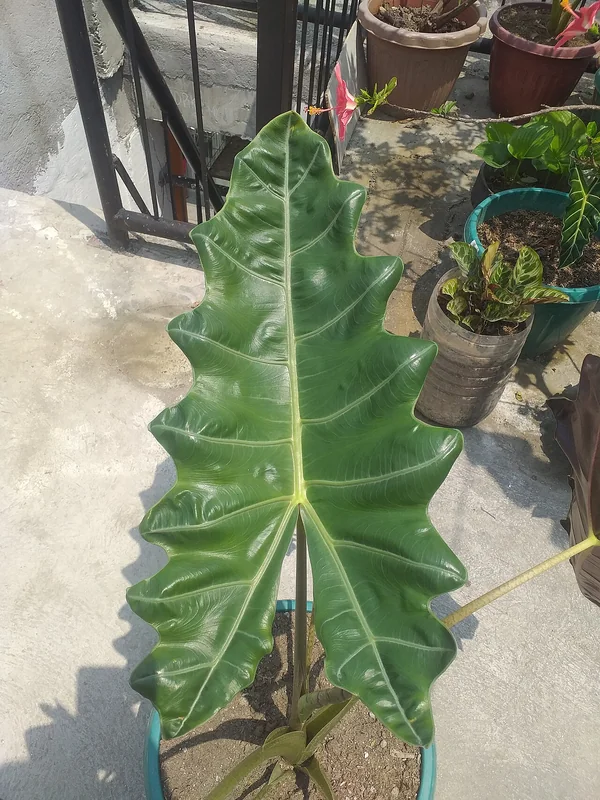 Featured photoalocasia-princeps.jpg
Alocasia princeps is a Bornean species that develops a short but sturdy trunk over time, giving it a distinctly statuesque appearance among aroids. The large leaves are deeply ribbed and display a silver-green surface with darker veins. It thrives in warm, humid conditions and rewards careful attention with an impressive architectural presence indoors.
Care facts at a glance
- Light
- Bright indirect
- Water
- Water thoroughly when the top 3 to 4 cm of soil dries; cut back in cooler months.
- Humidity
- 60–80 %
- Temperature
- 18–30 °C
- Soil
- Chunky aroid mix combining bark, perlite, and a small portion of coarse sand.
- Origin
- Rainforests of Borneo.
- Mature size
- 60 to 100 cm tall with a developing trunk; leaves 30 to 50 cm.
Overview
Alocasia princeps belongs to the section Princeps within the genus, a grouping of trunk-forming alocasias from Borneo. Its trunk develops slowly over years and marks clearly how long the plant has been in cultivation. The silvery leaf sheen comes from tiny papillae on the leaf surface that scatter light.
Care Priorities
- Provide very bright, filtered light — insufficient light prevents trunk development and produces weak stems.
- Maintain humidity at or above 60 percent consistently.
- Never let the substrate stay wet for prolonged periods; chunky mixes drain quickly and reduce rot risk.
- Temperature stability matters; sudden cold drafts cause leaf drop.
Common Problems
Yellowing lower leaves are normal ageing as the plant adds height and sheds older foliage. Yellowing in young leaves combined with soft stems indicates overwatering. Powdery or sticky deposits on leaves may indicate scale insects; wipe leaves with neem oil solution and isolate the plant. Leaf browning at the edges is a humidity problem — increase ambient moisture.
Sources & further reading (2)
- botanical-garden — accessed 2026-05-08
- encyclopedia — accessed 2026-05-08
Frequently asked questions
Why does my A. princeps have a trunk?
As the plant grows taller, old leaf bases leave scars on the stem, gradually forming a visible trunk. This is a normal and desirable characteristic of this section of alocasias.
Is A. princeps rare in cultivation?
It is less common than popular hybrids but is available from specialty aroid nurseries. Its slow growth means prices tend to be higher than more vigorous alocasias.
Can I put it outside in summer?
Yes, in a shaded, sheltered spot with high humidity. Avoid direct rain and ensure temperatures stay above 18 °C.