Euphorbia milii
Euphorbia milii Care Guide
 Featured photoeuphorbia-milii.jpg
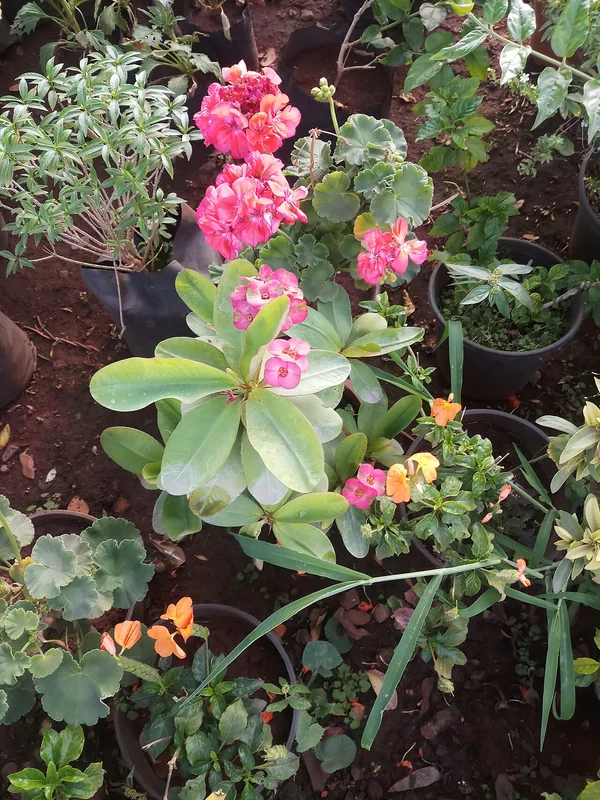
Euphorbia milii, the Crown of Thorns, is a spiny, semi-succulent shrub from Madagascar that produces clusters of tiny true flowers surrounded by eye-catching, brightly coloured bracts in red, pink, salmon, or yellow throughout most of the year. It is among the most floriferous houseplants available, continuing to bloom with minimal intervention in bright indoor positions. The thick, spiny stems and waxy leaves allow it to tolerate irregular watering and dry room conditions exceptionally well.
Care facts at a glance
- Light
- Bright indirect
- Water
- Water when the top 3–5 cm of soil has dried, approximately every 10 to 14 days. Reduce to monthly in winter.
- Humidity
- 20–60 %
- Temperature
- 12–35 °C
- Soil
- Well-draining cactus or succulent mix with added perlite; fast-draining is essential.
- Origin
- Dry, semi-arid scrubland of Madagascar.
- Mature size
- 60–120 cm tall as a houseplant; spreading and branching.
Overview
Euphorbia milii Des Moul. was described in 1826 and named for Baron Milius, once Governor of the island of Réunion. The colourful 'petals' are not petals at all but modified bracts (cyathophylls) that surround the tiny, inconspicuous true flowers in the centre. Modern cultivars have been bred for dramatically enlarged bracts in a wider range of colours, and some Thai hybrids produce flowers almost continuously throughout the year. Like all Euphorbias, it contains a milky white latex sap — handle with care and wash hands after any contact.
Care Priorities
- Maximum indirect light with some direct sun promotes the most continuous flowering. A south-facing window is ideal.
- Allow the soil to dry significantly between waterings — the thorny stems store water and the plant recovers from drought more easily than from root rot.
- A slight winter rest (cooler temperatures and less water) often triggers a flush of new blooms in spring.
- Wear gloves when pruning or repotting — the thorns are sharp and the latex sap can irritate skin and eyes.
Common Problems
Leaf drop in autumn is normal, particularly in response to temperature changes or reduced light as seasons change. The plant will releaf when conditions improve. Failure to bloom despite adequate light usually means the plant needs repotting into fresh compost, or has been over-fertilised with nitrogen (which promotes leaves over flowers). Root rot causes the entire stem base to turn yellow and mushy; cuttings from healthy upper stems can be taken to save the plant. Mealybugs appear in leaf axils; treat with diluted isopropyl alcohol.
Sources & further reading (2)
- botanical-garden — accessed 2026-05-27
- encyclopedia — accessed 2026-05-27
Frequently asked questions
How do I take cuttings safely?
Wear gloves and eye protection. Cut a healthy stem 10–15 cm long with clean, sharp secateurs. Immediately rinse the cut end under running water to remove latex sap, then allow to callus in a warm, dry place for at least 24 hours before planting in dry, gritty mix.
Why does it drop leaves suddenly?
Sudden leaf drop is usually triggered by temperature shock, draughts, repotting stress, or significant light changes. As long as the remaining stems are firm and healthy, the plant will produce new leaves within 2–4 weeks. Avoid moving it unnecessarily.
Can it flower year-round?
In good conditions — maximum light, correct watering, and room temperatures above 15 °C — E. milii will flower almost continuously. The natural flowering peak is spring and summer, but modern cultivars often bloom for 10+ months per year.