Dischidia vidalii
Dischidia vidalii Care Guide
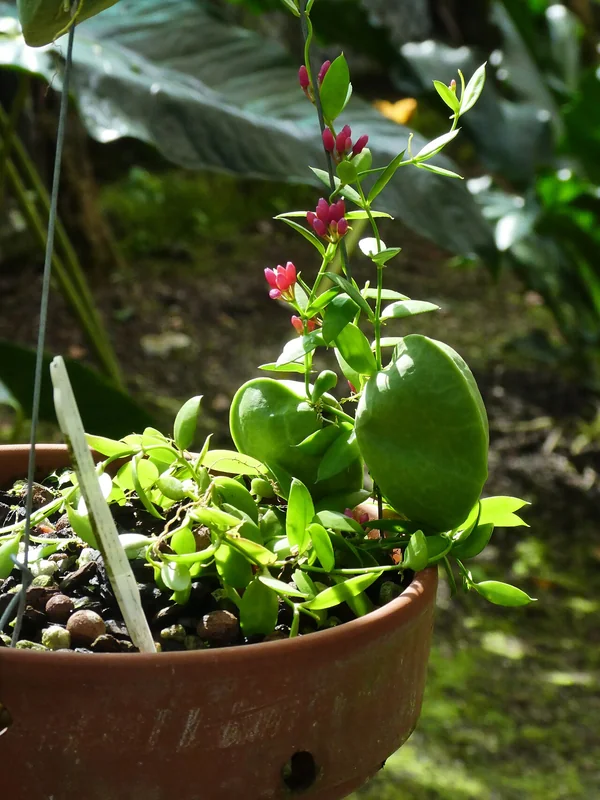 Featured photodischidia-vidalii.jpg
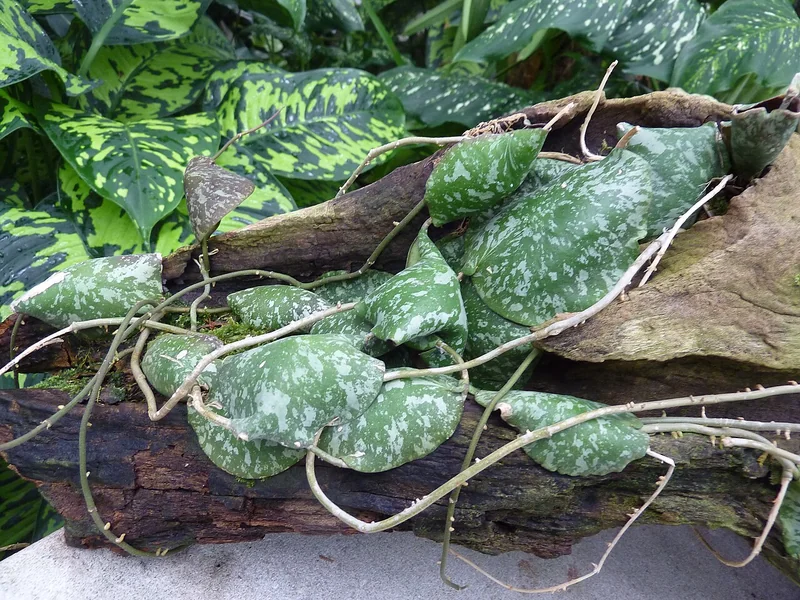
Dischidia vidalii is a remarkable Philippine epiphyte related to hoyas, producing two distinct leaf types: small, flat, oval leaves for photosynthesis and swollen, hollow, pouch-shaped leaves that in nature are colonised by ants. The plant's own roots grow into these pouches to absorb the organic material the ants accumulate inside — a sophisticated and elegant mutualism. In cultivation the pouches form normally without ants. The small red or orange tubular flowers appear seasonally, attractive but secondary to the plant's extraordinary architectural interest.
Care facts at a glance
- Light
- Bright indirect
- Water
- Mist the sphagnum moss mount or substrate daily in warm weather; every other day in cooler conditions. Keep the mount consistently damp but never waterlogged.
- Humidity
- 60–85 %
- Temperature
- 18–32 °C
- Soil
- Sphagnum moss on a cork or bark mount; or a basket filled with sphagnum. Standard potting mix is unsuitable.
- Origin
- Lowland forests of the Philippines.
- Mature size
- Pendant or spreading stems to 60–90 cm; pouches 3–5 cm long.
Overview
Dischidia vidalii Becc. was described in 1877 and is one of the most celebrated myrmecophytic (ant-associated) plants in cultivation. The inflated, hollow leaves — technically modified into pouches — develop adventitious roots inside them, which in nature absorb nutrients from ant waste and debris deposited by the resident colony. The plant therefore has a double root system: normal soil roots for water and mineral uptake, and internal roots inside its own pouches for organic nutrient absorption from the ants. In cultivation the pouches form normally even without ants, and the internal roots can be observed growing inside if a pouch is gently opened.
Care Priorities
- Never let the roots dry completely; mount on sphagnum that stays consistently damp.
- High humidity is essential for normal pouch development — below 55% the pouches may abort or fail to inflate properly.
- Bright, indirect light is optimal; avoid harsh direct sun, which scorches the thin flat leaves.
- Do not remove the inflated pouches or probe them repeatedly; the internal root system needs to develop undisturbed.
- Provide a hanging position; the pendant stems and pouches display beautifully from elevation.
Common Problems
Pouches failing to form or remaining very small indicates low humidity or insufficient warmth; the pouches are moisture-dependent structures. If the flat leaves start dropping while the pouches remain, the medium may be too dry at the root zone — increase misting. Mealybugs sheltering inside the hollow pouches are the most troubling pest issue; they are very difficult to reach and may require systemic insecticide treatment. Yellowing of the flat photosynthetic leaves often indicates overwatering of the mount substrate — damp is correct, waterlogged is fatal.
Sources & further reading (2)
- botanical-garden — accessed 2026-05-27
- encyclopedia — accessed 2026-05-27
Frequently asked questions
Can I grow it without ants?
Yes — the plant forms pouches and grows normally without any ants in cultivation. The pouch structure develops as a genetic expression regardless of ant presence. The plant will lack the nutritional benefit that ant debris provides in nature, so slightly more diluted fertiliser applied by misting helps compensate.
What is inside the pouches?
In cultivation, adventitious roots grow into the hollow interior. The roots can be seen if a pouch is carefully opened. The interior cavity is otherwise empty in cultivation (in nature it would contain ant debris, eggs, and organic material).
Is it related to hoyas?
Yes — Dischidia is in the subfamily Asclepiadoideae, closely related to Hoya. Both genera belong to the family Apocynaceae. The care requirements are similar, though Dischidia generally requires higher humidity and mounted culture rather than potted soil.