Gymnocalycium mihanovichii
Gymnocalycium mihanovichii Care Guide
 Featured photogymnocalycium-mihanovichii.jpg
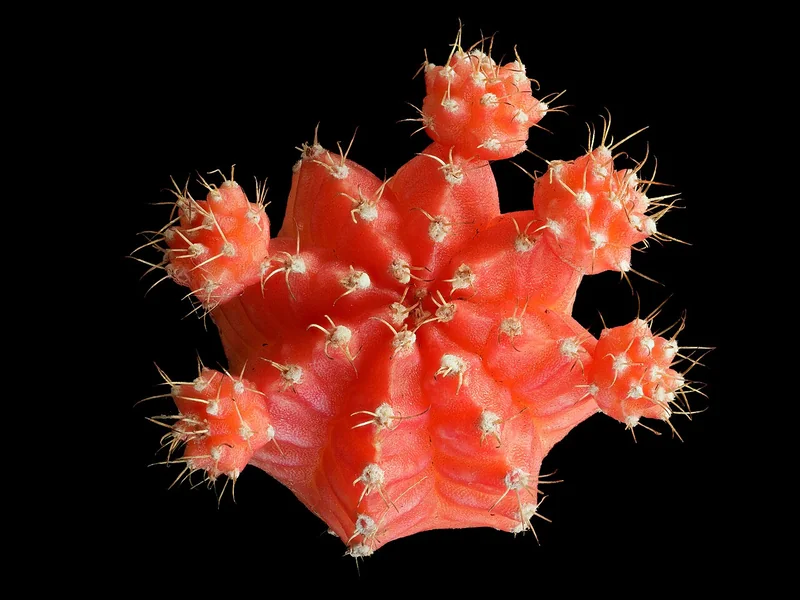
Gymnocalycium mihanovichii is a small, attractively ribbed South American cactus from Paraguay and Argentina with a distinctly banded, reddish-grey body and relatively undemanding care requirements. It is the species from which the famous coloured 'moon cactus' (lacking chlorophyll mutant forms in red, yellow, and orange) are derived; those are grafted onto Hylocereus rootstocks to survive. The normal green-bodied species is an attractive plant in its own right — compact, slow-growing, and producing repeat pink-white flowers from a young age.
Care facts at a glance
- Light
- Medium light
- Water
- Water when the substrate is fully dry; every 14 to 21 days in summer, once every 6 to 8 weeks in winter.
- Humidity
- 20–55 %
- Temperature
- 8–32 °C
- Soil
- Free-draining cactus mix with added perlite or coarse sand; avoid heavy composts.
- Origin
- Dry scrubland and rocky hillsides of Paraguay and northwestern Argentina.
- Mature size
- Globe to 8 to 12 cm diameter.
Overview
Gymnocalycium mihanovichii was described by Fric and Gürke in 1905 and named for Nicholas Mihanovich, an Argentine shipping magnate who funded botanical expeditions. The genus name means 'naked calyx' — the flower sepals lack the hairs and spines found on many other cactus genera, giving the flowers a smooth, clean appearance. In the wild it grows in the dry Chaco scrubland of Paraguay, often in partial shade under thorn scrub, which explains its greater shade tolerance compared to most cacti. The reddish-grey horizontal banding that gives it the 'plaid' common name is caused by alternating zones of photosynthetic and non-photosynthetic tissue.
Care Priorities
- Bright indirect to diffused light suits it better than full direct sun; it is one of the few cacti that thrives without direct sunlight, making it more versatile for indoor settings.
- Allow thorough drying between waterings; the small root system is highly susceptible to root rot from overwatering.
- A cool winter rest period with reduced watering promotes reliable spring and summer flowering; it produces flowers readily relative to other cacti.
- Small pots are appropriate; the plant does not need repotting frequently due to its slow growth rate.
Common Problems
Root mealybugs as white cottony masses among the roots can cause mysterious decline without visible external symptoms; unpot and inspect annually. Root rot from overwatering in the small root system develops quickly; always ensure the substrate is completely dry before watering. The body of the plant can turn red or purple in excess direct sun — this is stress colouration rather than its normal banded pattern; move to less intense light. Mealybugs in spine axils on the body are treated with isopropyl alcohol applied with a fine brush.
Sources & further reading (2)
- botanical-garden — accessed 2026-05-08
- encyclopedia — accessed 2026-05-08
Frequently asked questions
What is the difference between the species and the moon cactus?
Moon cacti are chlorophyll-free mutant forms of G. mihanovichii (in red, yellow, or orange) that cannot photosynthesise and survive only when grafted onto a green cactus rootstock. The normal species is entirely green and can grow on its own roots.
How many times per year does it flower?
In good conditions it can produce two to three rounds of flowers from spring through early autumn. The pale pink to greenish-white flowers emerge from the growing apex and last several days each.
Does it produce offsets?
It can produce small offsets at the base when mature. These are slower to appear than in offsetting species like Mammillaria, and some specimens remain solitary for many years.