Goeppertia leopardina
Goeppertia leopardina Care Guide
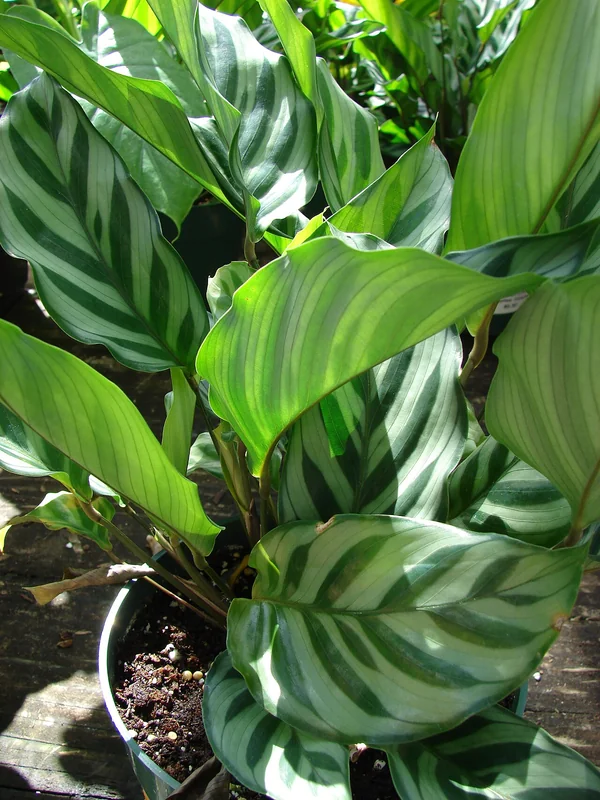 Featured photogoeppertia-leopardina.jpg
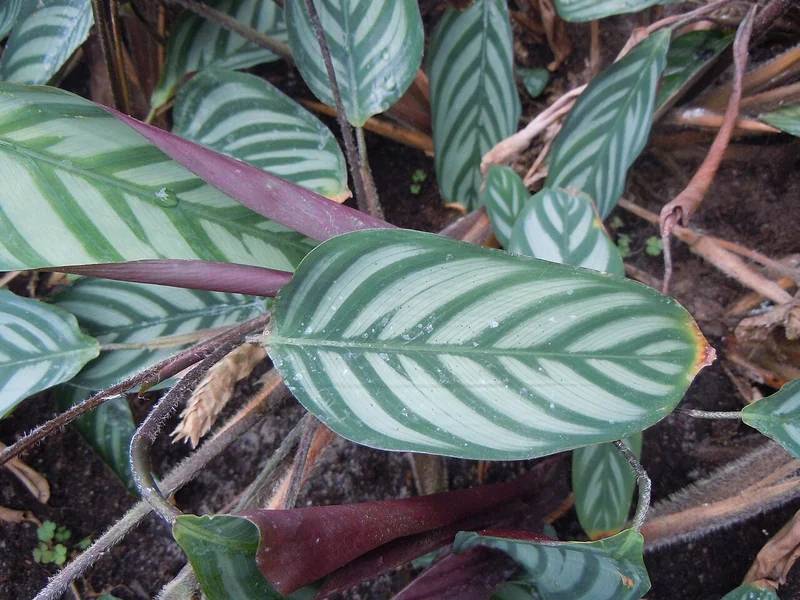
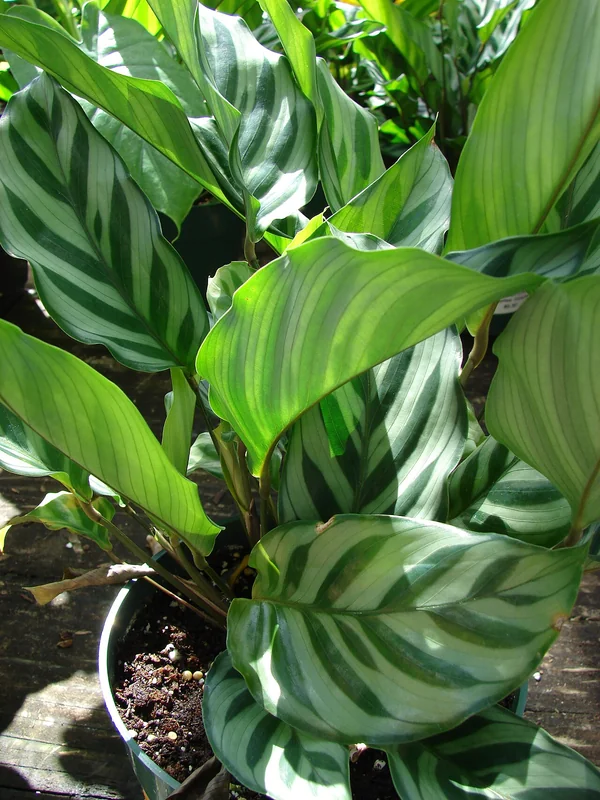
Goeppertia leopardina, formerly classified as Calathea leopardina, is a compact, clump-forming prayer plant from Brazil with attractively striped narrow leaves — bright green with darker green oval markings running along the midrib. Like all prayer plants in the Marantaceae family, it moves its leaves diurnally, folding them upward at night and reopening them in the morning. Its compact size, restrained pattern, and tolerance of standard indoor humidity make it a more forgiving calathea relative for households that struggle to maintain high humidity.
Care facts at a glance
- Light
- Medium light
- Water
- Water when the top 2 to 3 cm of the substrate has dried; roughly every 7 to 10 days in summer.
- Humidity
- 55–80 %
- Temperature
- 18–30 °C
- Soil
- Well-draining, moisture-retentive mix: peat or coir, perlite, and a small amount of compost.
- Origin
- Humid forest floors of Brazil.
- Mature size
- 30 to 50 cm tall; leaves 15 to 25 cm long.
Overview
Goeppertia leopardina was reclassified from Calathea to Goeppertia following molecular phylogenetic studies published in 2012, though it continues to be sold under the Calathea name in most markets. It is native to the humid Atlantic Forest floor of Brazil, where it grows in low-light, high-humidity conditions beneath dense canopy cover. The diurnal leaf movement — folding upward at night and spreading flat by day — is driven by changes in light intensity and is controlled by specialised cells at the base of the leaf stalk called pulvini. The striped pattern provides natural camouflage in the dappled forest light.
Care Priorities
- Medium to bright indirect light is optimal; avoid direct sunlight, which fades the stripe pattern and causes leaf curl.
- Water quality matters significantly — filtered, distilled, or rainwater prevents brown leaf tips caused by fluoride and salt accumulation.
- Consistent moderate moisture is preferred; allow the surface to dry slightly but never allow the rootball to dry completely.
- Warm, stable temperatures are essential; cold draughts from windows or air-conditioning vents cause leaf roll and browning.
Common Problems
Brown leaf tips are the most common complaint and result from low humidity, fluoride in tap water, or salt build-up in the substrate; flush the pot thoroughly with distilled water occasionally. Spider mites thrive in the dry indoor conditions that calathea relatives dislike; increase humidity and treat with neem oil. Yellowing leaves and a general decline often indicate root rot from overwatering; check the roots and repot if roots are brown and mushy. Thrips cause silvery scarring on leaf surfaces; treat with insecticidal soap.
Sources & further reading (2)
- botanical-garden — accessed 2026-05-08
- encyclopedia — accessed 2026-05-08
Frequently asked questions
Is G. leopardina easier than other calatheas?
It is generally considered one of the more forgiving Goeppertia species. Its smaller size and moderate humidity tolerance make it more adaptable to typical indoor conditions than species like G. ornata or G. warscewiczii.
Why do the leaves curl at the edges?
Leaf curling is a stress response to low humidity, cold temperatures, or inconsistent watering. It usually reverses once conditions improve, though severely curled leaves may not fully flatten.
Does it flower indoors?
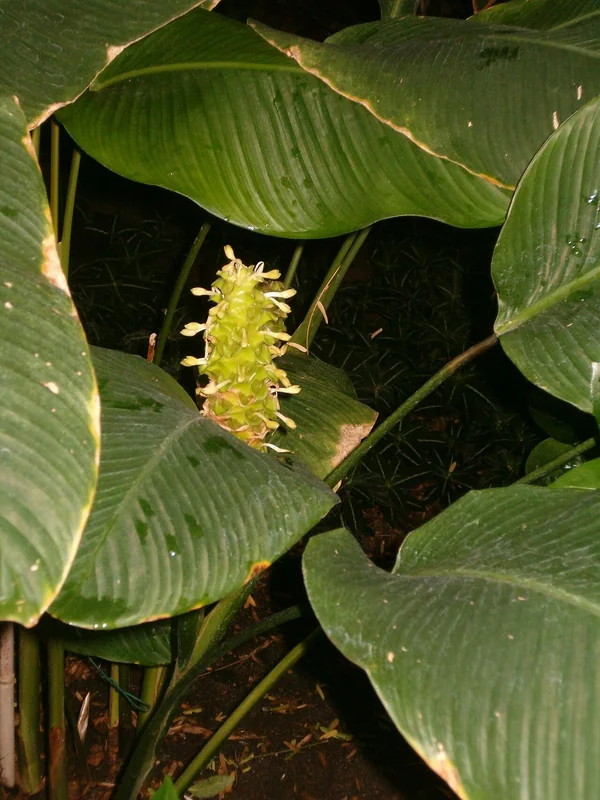
Occasionally — small, inconspicuous white flowers may appear in summer in good conditions, but the foliage is the primary ornamental feature. Many growers never see it flower indoors.