Ctenanthe setosa
Ctenanthe setosa Care Guide
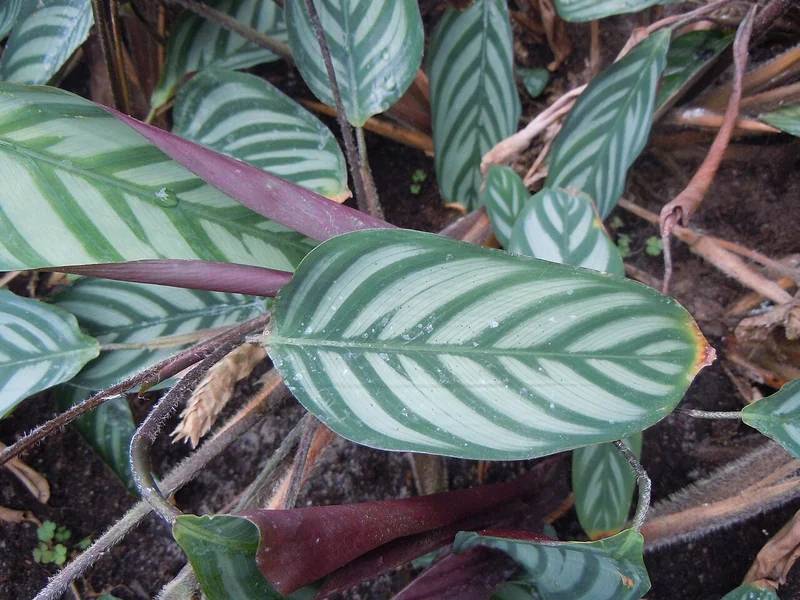 Featured photoctenanthe-setosa.jpg
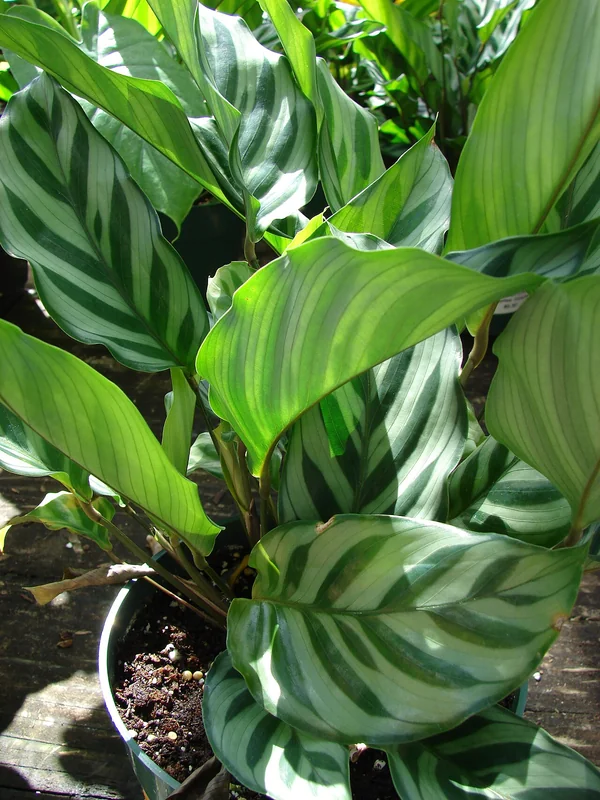
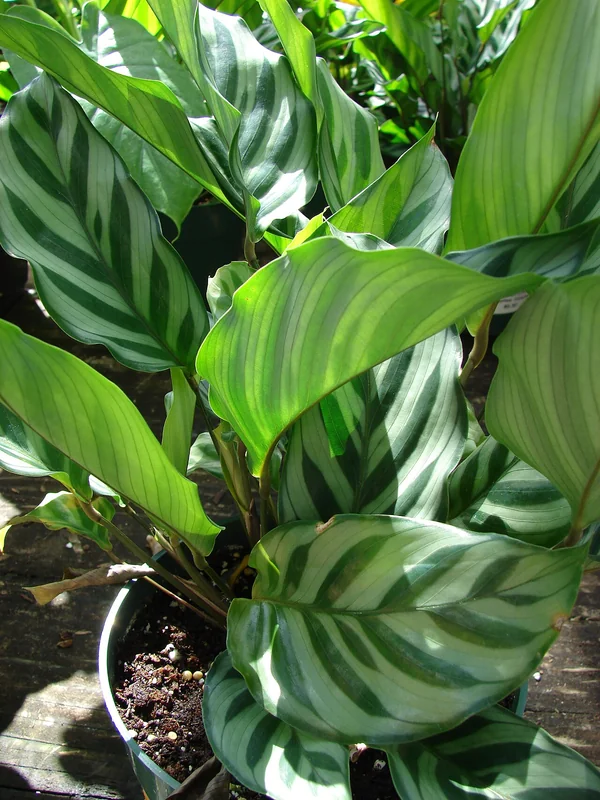
Ctenanthe setosa, commonly sold as 'Grey Star', is a striking Brazilian member of the Marantaceae family with boldly striped leaves — alternating bands of light silver-green and darker green — and dramatic purple-red undersides that flash when the leaves fold upward in the classic prayer plant movement. It grows in compact clumps and reaches 60 to 90 cm in good conditions. More robust than many of its Goeppertia relatives, it tolerates a wider humidity range and is considered one of the easier prayer plants to cultivate successfully indoors.
Care facts at a glance
- Light
- Medium light
- Water
- Water when the top 2 to 3 cm of the substrate has dried; roughly every 7 to 10 days in summer.
- Humidity
- 50–75 %
- Temperature
- 16–30 °C
- Soil
- Well-draining, moisture-retentive mix: coir or peat, perlite, and compost.
- Origin
- Humid forests of Brazil.
- Mature size
- 60 to 90 cm tall; leaves 30 to 45 cm long.
Overview
Ctenanthe setosa is native to the humid Atlantic Forest floor of Brazil and belongs to the diverse Marantaceae family alongside Goeppertia, Maranta, and Stromanthe. The genus Ctenanthe is distinguished from Goeppertia primarily by floral structure rather than vegetative appearance, and the plants share the same cultural requirements. The silver-green striped leaf pattern and striking purple-red undersides make it immediately recognisable, and the diurnal leaf movement — folding the purple undersides upward at night — creates an impressive visual contrast. The common name 'Grey Star' reflects the silvery leaf surface colour.
Care Priorities
- Medium indirect light preserves the silvery stripe intensity; too little light reduces contrast, while direct sun bleaches and curls the leaves.
- Consistent moisture without waterlogging is important; the plant is more forgiving of brief dry periods than Goeppertia ornata or G. warscewiczii.
- Stable temperatures above 16 °C; it tolerates slightly cooler conditions than some tropical relatives.
- Increase humidity above 50 percent to maintain leaf health; a pebble tray or regular misting helps in dry indoor air.
Common Problems
Brown leaf tips and margins are common with tap water containing fluoride or chlorine; switching to filtered or distilled water resolves the issue over time. Spider mites are the most significant pest — they establish quickly in dry conditions and cause stippling on the striped leaf surface, which becomes obvious against the pale silver background; increase humidity and treat with neem oil. Yellowing leaves and root rot from overwatering are the most serious decline risk; ensure the pot has adequate drainage. Leaf roll without browning is a temporary response to temperature stress and reverses once conditions stabilise.
Sources & further reading (2)
- botanical-garden — accessed 2026-05-08
- encyclopedia — accessed 2026-05-08
Frequently asked questions
Is C. setosa easier than calatheas?
Generally yes — Ctenanthe setosa is considered one of the most tolerant prayer plants for indoor cultivation, handling average household humidity better than many Goeppertia species. It is often recommended as a starting point for the prayer plant family.
Why are the leaf undersides purple?
The purple-red colouration from anthocyanin pigments is a family-wide trait in Marantaceae. It is thought to capture reflected light from the forest floor and may also provide some UV protection.
How do I divide it?
When repotting in spring, the clump can be gently separated into sections, each with roots attached. Plant each section in fresh substrate and keep warm and slightly humid until established, typically within 2 to 3 weeks.