Goeppertia concinna
Goeppertia concinna Care Guide
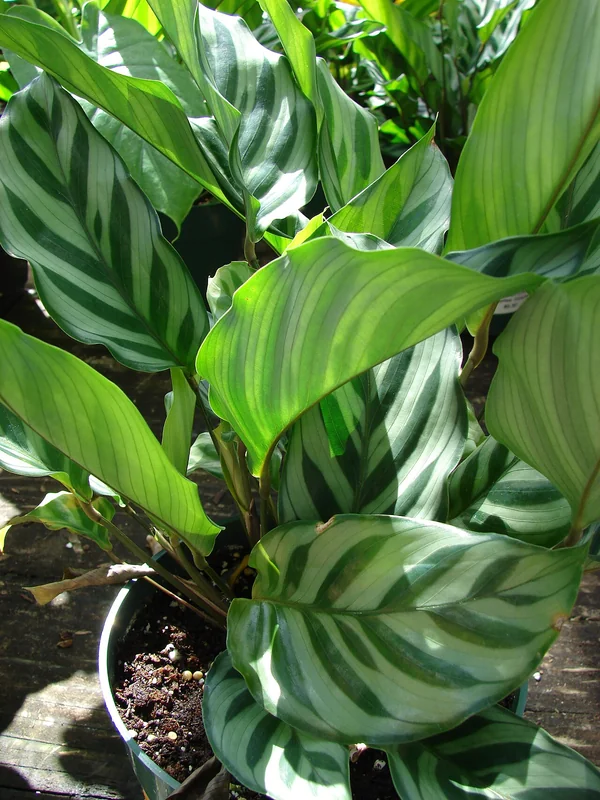 Featured photogoeppertia-concinna.jpg
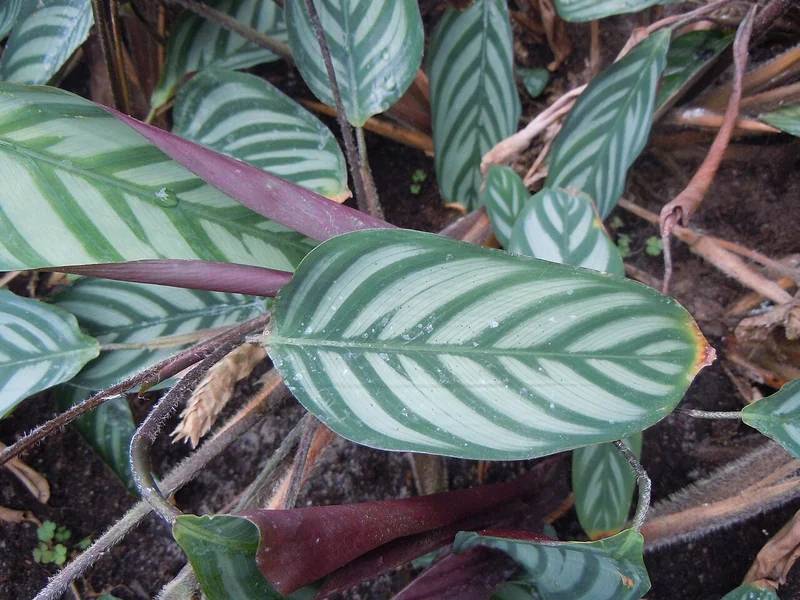
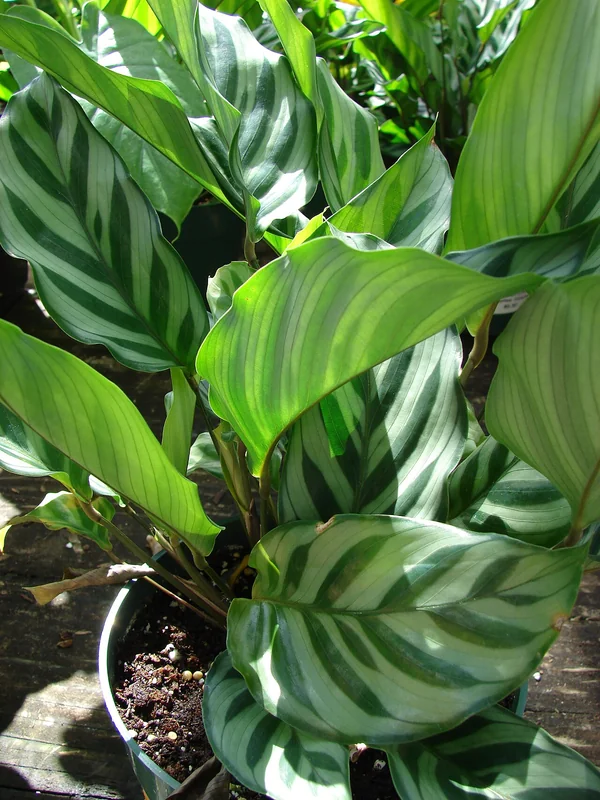
Goeppertia concinna, widely sold under the trade name Calathea 'Freddie' or Calathea concinna, is a compact Brazilian prayer plant with attractively patterned oval leaves — light green with darker feathered stripes and a pale silvery-green centre. Its neat, rounded growth habit and relatively robust constitution compared to other calathea relatives have made it one of the most popular Marantaceae houseplants. It moves its leaves diurnally and responds clearly to light and humidity quality.
Care facts at a glance
- Light
- Medium light
- Water
- Water when the top 2 cm of the substrate has dried; roughly every 7 days in summer.
- Humidity
- 55–80 %
- Temperature
- 18–30 °C
- Soil
- Well-draining, moisture-retentive mix: coir or peat, perlite, and compost.
- Origin
- Humid forest floors of Brazil.
- Mature size
- 30 to 50 cm tall; leaves 15 to 25 cm long.
Overview
Goeppertia concinna is native to the Atlantic Forest of Brazil and belongs to the Marantaceae family. The species was reclassified from Calathea following molecular studies, but is still universally marketed as Calathea 'Freddie'. The leaf pattern — light green with darker green feathered markings and a paler central zone — is caused by differences in mesophyll cell density across the leaf blade. The diurnal leaf movement, which gives the common name 'prayer plant' to the whole family, is controlled by turgor changes in pulvini cells at the base of each leaf stalk.
Care Priorities
- Medium, consistent indirect light produces the best leaf patterning; direct sun causes fading and leaf curl.
- Water quality is critical — fluoride and heavy mineral content in tap water cause brown, papery leaf margins; use filtered or distilled water.
- Stable warmth above 18 °C year-round; cold draughts from windows or air conditioning cause leaf roll and browning.
- Maintain humidity above 55 percent; a pebble tray or nearby humidifier significantly improves leaf health.
Common Problems
Brown, crispy leaf margins and tips are the most commonly reported issue and almost always result from low humidity, fluoride in water, or salt accumulation; address all three simultaneously. Spider mites are a significant threat in low-humidity indoor environments — increase humidity and apply neem oil at the first sign of webbing or stippling. Yellow leaves generally indicate overwatering; check roots and ensure the substrate drains freely. Leaf curl without browning is a temporary response to cold draught or dry air and usually reverses once conditions improve.
Sources & further reading (2)
- botanical-garden — accessed 2026-05-08
- encyclopedia — accessed 2026-05-08
Frequently asked questions
Is 'Calathea Freddie' the same as G. concinna?
Yes — the trade name 'Freddie' refers to Goeppertia concinna (formerly Calathea concinna). The name Freddie is used for commercial purposes and you will rarely see the botanical name on plant labels.
Why do its leaves close at night?
The diurnal leaf movement is a family-wide adaptation in Marantaceae. Light-sensitive pulvini cells at the leaf stalk base change turgor pressure in response to light intensity, causing the leaves to fold upward at dusk and reopen at dawn.
How large does it grow?
Typically 30 to 50 cm tall — making it compact enough for desks, shelves, and small spaces. It does not grow as large as some calathea relatives such as G. orbifolia or G. lutea.