Adiantum peruvianum
Adiantum peruvianum Care Guide
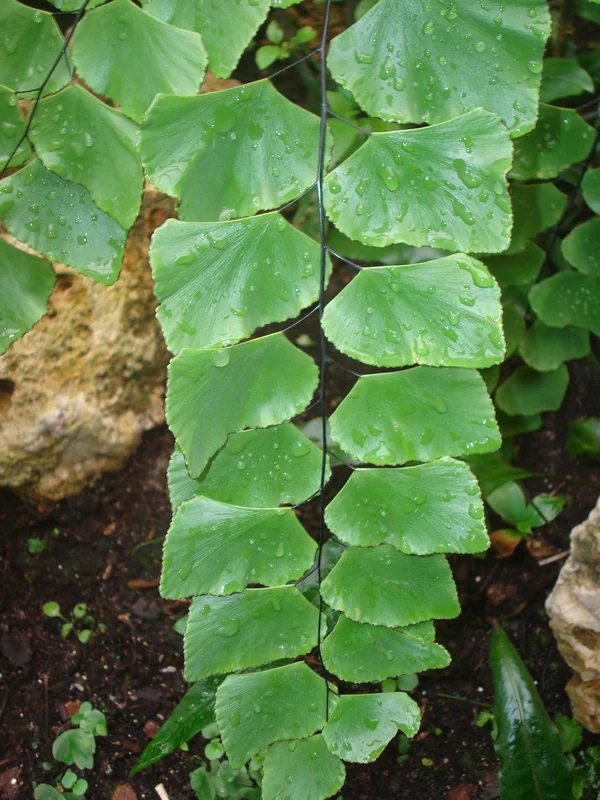 Featured photoadiantum-peruvianum.jpg
Adiantum peruvianum, the silver dollar maidenhair fern, stands apart from other adiantums by its unusually large, broad, and nearly circular pinnae — sometimes exceeding 5 cm across — on the characteristic dark, wiry stems shared by all maidenhair ferns. Native to humid Peruvian and Andean forests, it demands consistently high humidity and indirect light. Its oversized pinnae make it the most dramatic maidenhair in cultivation and a prized collector piece among fern enthusiasts.
Care facts at a glance
- Light
- Medium light
- Water
- Keep constantly and evenly moist; water every 2 to 4 days in summer.
- Humidity
- 65–90 %
- Temperature
- 15–26 °C
- Soil
- Very moisture-retentive yet well-draining mix: equal parts peat-free compost, perlite, and sphagnum moss.
- Origin
- Humid cloud forests and moist slopes of Peru and Ecuador.
- Mature size
- 40 to 70 cm tall; arching, wide-spreading fronds.
Overview
Adiantum peruvianum was described by Klotzsch and is the largest-pinnae species in the Adiantum genus. The wiry, polished black stems (stipes) that give maidenhair ferns their distinctive look are actually a specialised rachis adapted to repel water — the hydrophobic surface causes water to bead and run off rather than wetting the frond. Despite this the plant requires consistently high humidity in the air around it.
Care Priorities
- Constant humidity above 65 percent is the single most important requirement; a humid enclosure, terrarium, or pebble tray is strongly recommended.
- Never allow the soil to dry — even brief drought causes the delicate fronds to brown and collapse.
- Protect from direct sun, which instantly scorches the thin pinnae.
- Repot in spring every 2 years into a slightly larger pot with fresh, moist mix.
Common Problems
Fronds wilting and browning rapidly is almost always either drought stress or low humidity — a common occurrence with maidenhairs. Cut back all dead fronds to the soil, water thoroughly, and maintain very high humidity; the plant usually regrows from the rhizome. Spider mites thrive in dry conditions; increasing humidity prevents them. Root rot is less common but can occur in dense, poorly draining substrate.
Sources & further reading (2)
- botanical-garden — accessed 2026-05-08
- encyclopedia — accessed 2026-05-08
Frequently asked questions
My maidenhair fern collapsed overnight — is it dead?
Probably not — Adiantum fronds collapse extremely rapidly in response to drought or low humidity. Cut back all dead fronds, water thoroughly, place in a high-humidity spot, and new growth typically emerges within 2 to 4 weeks.
How does A. peruvianum differ from A. raddianum?
A. peruvianum has much larger, rounder pinnae (to 5 cm) compared to the small, fan-shaped pinnae (0.5 to 1.5 cm) of A. raddianum. It is a more striking but slightly more demanding species.
Is it good for a bathroom?
An ideal bathroom fern if there is adequate natural or artificial light. The consistent humidity from bathing exactly meets its high moisture needs.