Gasteria glomerata
Gasteria glomerata Care Guide
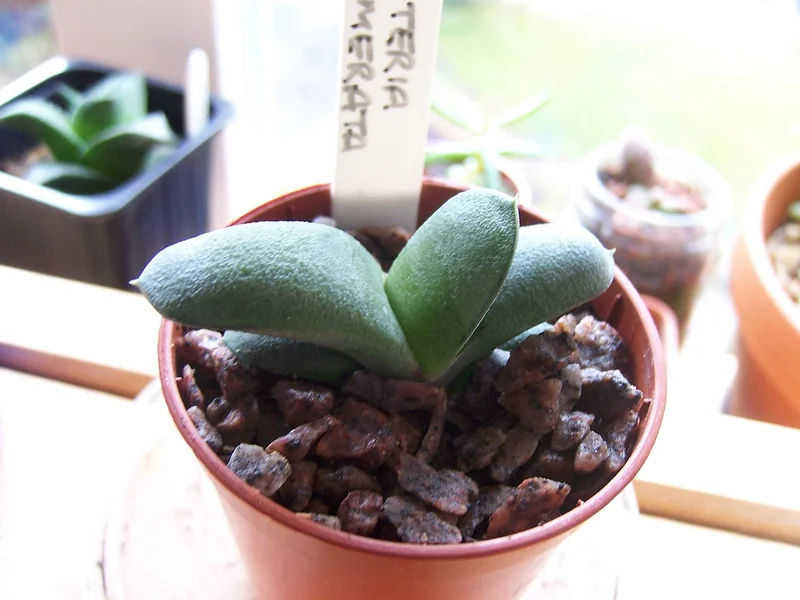 Featured photogasteria-glomerata.jpg
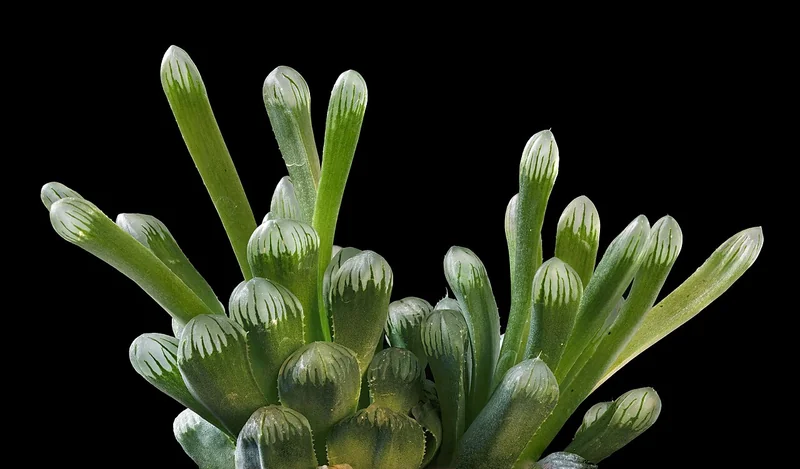
Gasteria glomerata is one of the smallest gasteria species, forming dense mounds of tiny, rough-textured, dark-green leaves. Native to the Eastern Cape of South Africa, it thrives in rocky quartz fields with minimal soil. Under cultivation it is prized for its compact habit and vigorous clumping, producing numerous offsets that fill a pot attractively over time. Like other gasterias, it is more shade-tolerant than typical succulents and can be grown on north-facing windowsills.
Care facts at a glance
- Light
- Bright indirect
- Water
- Water when the soil is fully dry — every 2 to 3 weeks in summer, less frequently in winter.
- Humidity
- 30–60 %
- Temperature
- 8–35 °C
- Soil
- Sharp succulent mix with coarse sand and perlite.
- Origin
- Quartz fields and rocky habitats of the Eastern Cape, South Africa.
- Mature size
- 5 to 10 cm tall per rosette; clumps spread to 20 to 30 cm.
Overview
Gasteria glomerata was described by van Jaarsveld in 1992 from specimens collected in the Baviaanskloof area of the Eastern Cape. It is one of the more recently described and most compact gasteria species. Its natural quartz-field habitat means it is adapted to nutrient-poor, extremely free-draining soils with periods of intense sun and complete drought. In cultivation it is considerably more forgiving and makes an ideal windowsill or terrarium specimen.
Care Priorities
- Bright, indirect light or filtered sun is ideal; the rough leaf surface is less sensitive to direct sun than window-leaved species.
- Minimal watering — the dense clumping habit can trap moisture; avoid wetting the rosette crowns.
- Use the most free-draining mix practical, with terracotta pots to wick away moisture.
- Repot every 3 to 4 years when the clump fills the container.
Common Problems
Leaves becoming soft and pale at the base usually mean water has accumulated between leaves or root rot has begun. Remove from the pot, gently separate the clump, trim any mushy material, and let dry before replanting. Root mealybugs are small and white and are often found when repotting; apply a systemic drench if discovered. Correct drainage usually prevents both issues.
Sources & further reading (2)
- botanical-garden — accessed 2026-05-08
- encyclopedia — accessed 2026-05-08
Frequently asked questions
Does G. glomerata flower?
Yes — it produces the characteristic gasteria flower spike with pink-red tubular blooms, usually in late winter to spring. The plant must be mature (several years old) to flower reliably.
How quickly does it form a clump?
It offsets slowly — expect a modest clump of 5 to 10 rosettes after 3 to 4 years. The tight, mounded habit makes even small specimens attractive.
Can I grow it in a terrarium?
Only in an open terrarium with excellent drainage and good airflow. Closed terrariums are too humid and warm for this species.