Drynaria quercifolia
Drynaria quercifolia Care Guide
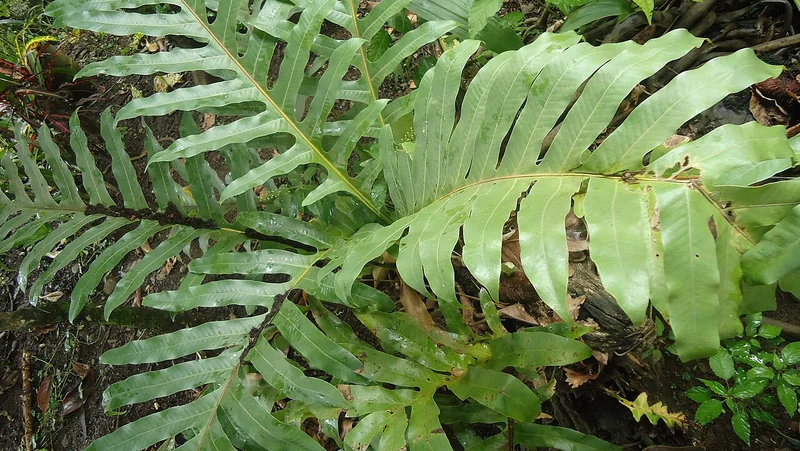 Featured photodrynaria-quercifolia.jpg
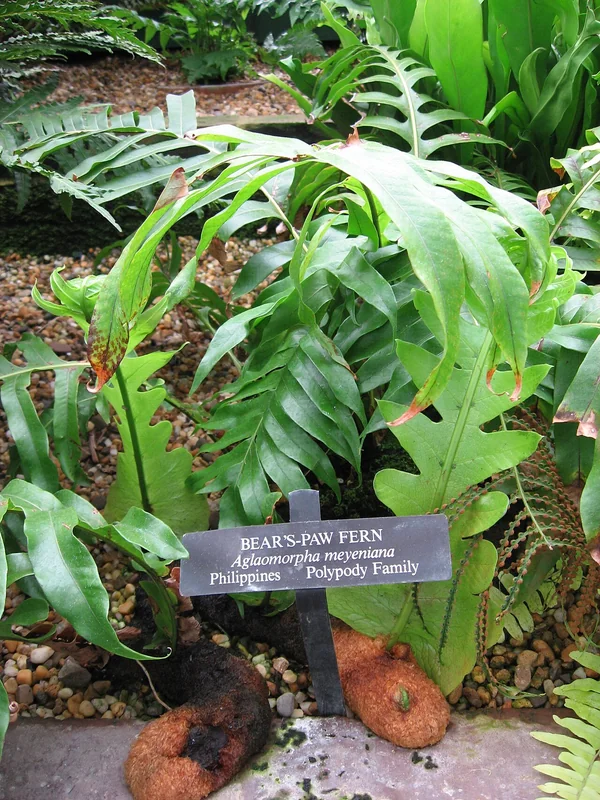
Drynaria quercifolia, the Oak Leaf Fern or Basket Fern, is a spectacular epiphytic fern from the tropical forests of South and Southeast Asia, producing two completely different frond types from the same rhizome: hard, brown, persistent 'nest fronds' that clasp tree trunks and accumulate leaf litter, and large, bright-green, deeply pinnately lobed 'foliage fronds' up to 90 cm long that arch gracefully above. This dimorphism makes it one of the most architecturally fascinating ferns for large indoor spaces.
Care facts at a glance
- Light
- Bright indirect
- Water
- Water generously every 3–5 days in summer; reduce to every 10 days in winter. The nest fronds can be misted separately.
- Humidity
- 55–80 %
- Temperature
- 15–32 °C
- Soil
- Well-draining epiphytic mix: orchid bark, perlite, and coco coir; or mounted directly on cork board with sphagnum.
- Origin
- Tropical forests, tree trunks, and rock faces of South and Southeast Asia, northern Australia.
- Mature size
- Foliage fronds 60–90 cm; nest fronds 15–25 cm; rhizome spreads laterally.
Overview
Drynaria quercifolia (L.) J.Sm. was described in 1841. The genus name derives from the Greek for 'oak', and the species name 'quercifolia' also means 'oak-leaved', both referencing the deeply lobed, pinnate foliage fronds that resemble oak leaves. The nest fronds are a remarkable evolutionary adaptation: they are dry, papery, and clasp the support, intercepting falling leaf litter and other organic material which accumulates within them and is gradually decomposed by the rhizome's roots — an internal composting system that provides nutrients in otherwise nutrient-poor epiphytic habitats.
Care Priorities
- Mount on a large cork board or grow in a wide, shallow basket to accommodate the spreading rhizome.
- Do not remove the brown nest fronds — they are a functional part of the plant's nutrient-gathering system.
- Bright, indirect light is important for the full development of the large foliage fronds.
- Maintain humidity above 55% for best growth; below 50% the foliage frond tips brown progressively.
Common Problems
Loss of foliage fronds in winter is partly normal — the plant may go through a rest period where it loses some or all of its foliage fronds, retaining only the nest fronds. The rhizome remains alive and will produce new fronds in spring. If foliage fronds brown and die in summer, check for insufficient humidity or root rot. Scale insects cluster on frond midribs; treat with horticultural oil or neem. Do not allow water to pool in the nest fronds long-term as this can cause Botrytis.
Sources & further reading (2)
- botanical-garden — accessed 2026-05-27
- encyclopedia — accessed 2026-05-27
Frequently asked questions
What are the brown, papery fronds?
These are 'nest fronds' or 'humus-collecting fronds' — specialised, non-photosynthetic fronds that clasp the mounting surface and accumulate debris. They are completely normal and functional. Never remove them; they provide nutrients to the plant as they decompose.
Can I grow it in a pot?
Yes, but a wide, shallow pot works better than a deep one, as the rhizome runs horizontally. Use an open, bark-based mix and repot annually in spring to keep fresh organic material available around the rhizome.
Why do foliage fronds die in winter?
In temperatures below 18 °C or in shorter day-length conditions, D. quercifolia may go partially or fully dormant, losing its foliage fronds. This is not a problem — the rhizome survives on the nest fronds and will regenerate new fronds when conditions improve.