Dendrobium kingianum
Dendrobium kingianum Care Guide
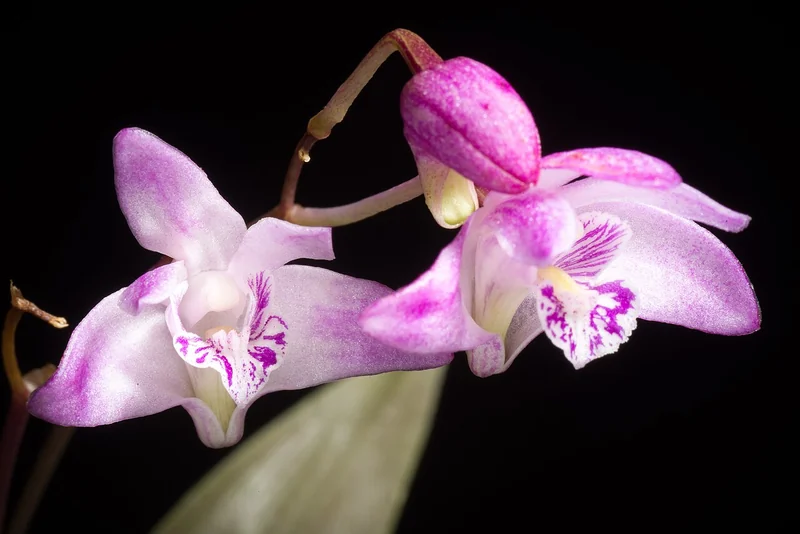 Featured photodendrobium-kingianum.jpg
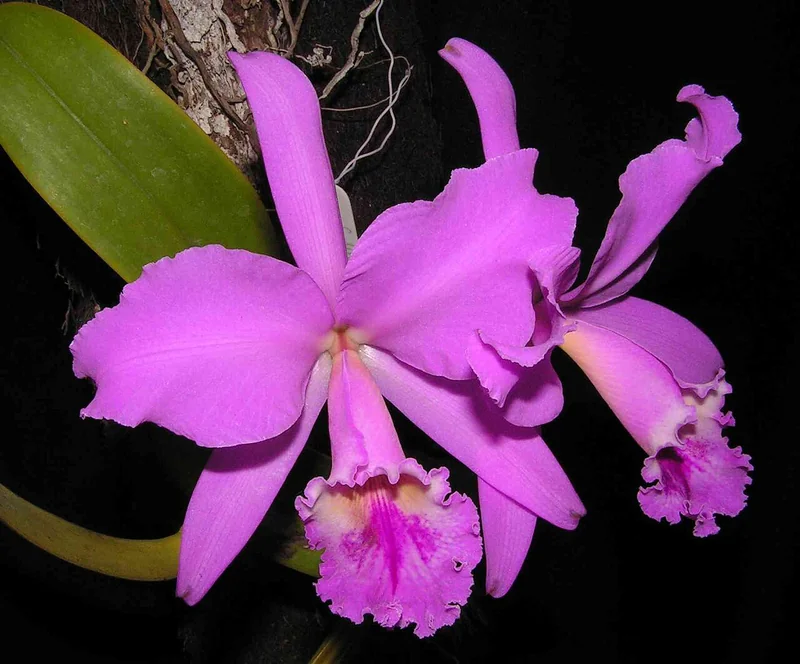
Dendrobium kingianum is a small, exceptionally tough lithophytic and epiphytic orchid native to the rocky ranges of eastern Australia. It produces dense clusters of small, sweetly fragrant flowers in shades of white through deep pink-purple in late winter to spring, borne on short spikes above compact, club-shaped pseudobulbs. Its cold tolerance, small footprint, drought resistance, and reliable annual flowering make it one of the most highly recommended orchids for beginners and experienced growers who want a plant that requires minimal intervention to perform well.
Care facts at a glance
- Light
- Bright indirect
- Water
- Water when the bark or rock surface dries completely; weekly in summer, once every 2 to 3 weeks in winter.
- Humidity
- 40–70 %
- Temperature
- 5–30 °C
- Soil
- Very coarse bark or mounted on a rock or cork bark; excellent drainage is essential.
- Origin
- Rocky ranges and coastal escarpments of eastern Australia (Queensland and New South Wales).
- Mature size
- 15 to 35 cm tall in clump; flowers 2 to 3 cm across, clustered on short spikes.
Overview
Dendrobium kingianum was described by Bidwill in 1844 and named for Philip Gidley King, Governor of New South Wales. It is one of the hardiest Australian native orchids, growing on exposed rock faces, cliff ledges, and rough-barked trees from sea level to 1600 m altitude, where it experiences significant temperature variation between seasons and between day and night. The club-shaped pseudobulbs taper toward their apex, and each carries two to five narrow leaves. The fragrant flowers — individually small but numerous — appear on short spikes in late winter and the scent is strongest in morning sunlight.
Care Priorities
- Strong light, including some morning direct sun, is beneficial; it is more light-tolerant than forest-dwelling orchids due to its exposed rocky habitat.
- Cold winter temperatures — including brief frost if necessary — actually promote more prolific flowering; a cool period below 10 °C in winter is beneficial.
- Its drought tolerance means it is far more forgiving of occasional missed waterings than other orchids; err on the dry side.
- Mounting on cork bark or a flat rock replicates its natural lithophytic habit and produces the best long-term results.
Common Problems
Root rot is the most common problem and occurs when the plant is grown in a too-fine, water-retaining substrate; only use very coarse bark or mount on cork. Scale insects colonise the pseudobulbs and leaf undersides; inspect regularly as they blend with the plant surface and treat with neem oil or systemic insecticide. Keiki plantlets on the spikes are common — allow them to develop three pseudobulbs and roots before detaching and potting separately. Failure to flower usually means insufficient light or absence of a cool winter period.
Sources & further reading (2)
- botanical-garden — accessed 2026-05-08
- encyclopedia — accessed 2026-05-08
Frequently asked questions
Is D. kingianum frost-tolerant?
It tolerates brief light frost — down to about minus 2 to 3 °C — provided the pseudobulbs are reasonably dry. It is among the most cold-tolerant of all cultivated orchids, which makes it excellent for cool conservatories and unheated glasshouses.
How often does it produce keikis?
It is one of the most keiki-prone orchids. In conditions with high nitrogen or warm winters it produces plantlets prolifically. Allow each keiki to develop roots at least 2 cm long before removal.
Can I grow it outdoors?
In temperate climates it can be grown outdoors in summer and brought in before the first hard frost. In USDA zones 9 and above it can remain outdoors year-round on a sheltered wall or under a lean-to.