Cattleya labiata
Cattleya labiata Care Guide
 Featured photocattleya-labiata.jpg
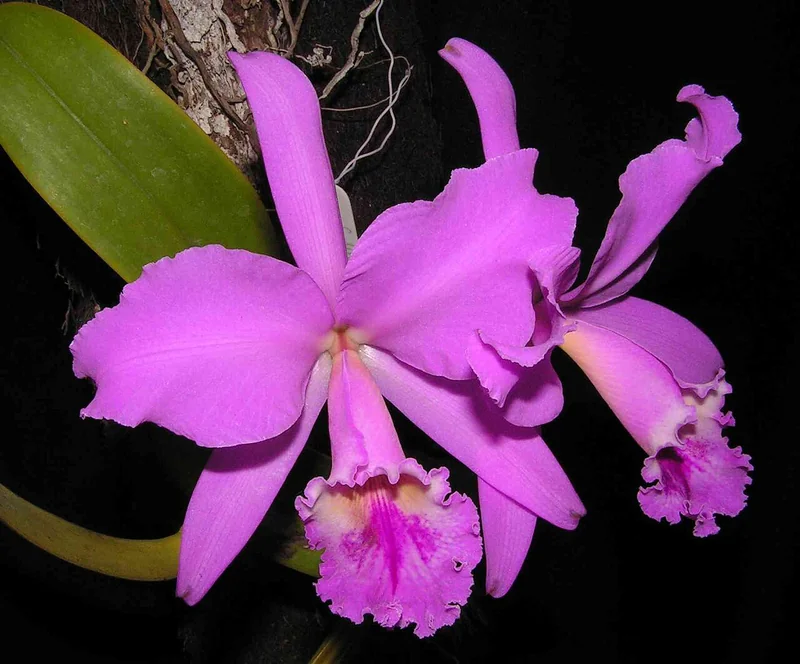
Cattleya labiata is the type species of the Cattleya genus and one of the most historically significant orchids in cultivation — it sparked the great Victorian orchid mania of the nineteenth century when the first specimens bloomed in England in 1818. Native to the coastal Atlantic Forest of Brazil, it produces large, showy flowers in shades of rosy pink to crimson-purple, with a magnificently ruffled, deeper-coloured lip and a strong, sweet fragrance. It is the ancestor of the 'corsage orchid' hybrid group and remains a prized species for its authentic tropical splendour.
Care facts at a glance
- Light
- Bright indirect
- Water
- Water thoroughly when the bark mix has dried out completely; every 7 to 14 days depending on conditions.
- Humidity
- 50–75 %
- Temperature
- 15–30 °C
- Soil
- Coarse bark chips or a bark-based orchid mix with excellent drainage; clay or net pots aid air circulation around roots.
- Origin
- Atlantic Forest of Pernambuco, Brazil (coastal mountainous regions).
- Mature size
- 30 to 50 cm tall with pseudobulbs; flowers 12 to 18 cm across.
Overview
Cattleya labiata was described by Lindley in 1824 from specimens collected in Pernambuco, Brazil in 1818 by William Swainson, who used the plants as packing material not knowing what they were. When the plants were identified and flowered in cultivation, they caused a sensation and launched the Victorian orchid craze. The species is now considered vulnerable in its native habitat due to over-collection and Atlantic Forest destruction. Each pseudobulb carries a single leathery leaf and produces one to three large, fragrant flowers in autumn. The large, ruffled lip is the defining characteristic referenced in the species name (labiata = lipped).
Care Priorities
- Bright, indirect light — more than Phalaenopsis requires — is essential; some morning sun is beneficial. Insufficient light is the main reason for failure to flower.
- The dry-down period between waterings is critical; the pseudobulbs must dry out fully before the next watering to avoid root rot.
- A seasonal temperature differential is needed to trigger blooming; cooler nights (5 to 8 °C drop) in late summer initiate bud formation.
- Good air movement around the roots is important; terracotta or net pots promote the aeration that epiphytic roots require.
Common Problems
Shrivelled pseudobulbs indicate chronic underwatering or severe root loss; water more frequently if roots are healthy, or repot and remove dead roots if root loss is the cause. Scale insects on pseudobulbs and leaves are difficult to see; inspect regularly and treat with neem oil or systemic insecticide. Fusarium wilt causes sudden purple-brown discolouration of a single pseudobulb; it spreads rapidly and the affected growth must be removed with sterile tools. Failure to bloom after the pseudobulb matures usually means insufficient light or the absence of a cool-night temperature differential.
Sources & further reading (2)
- botanical-garden — accessed 2026-05-08
- encyclopedia — accessed 2026-05-08
Frequently asked questions
When does C. labiata flower?
It is the 'autumn cattleya' — it typically flowers in September to November in the Northern Hemisphere, with blooms lasting 3 to 4 weeks. Each spike carries one to three flowers.
How do I divide a Cattleya?
Divide in spring just after new growth begins, ensuring each division has at least three pseudobulbs. Use sterile cutting tools and dust cut surfaces with cinnamon or fungicide before repotting.
Do I need a greenhouse to grow it?
No — it grows well on a bright windowsill or under supplemental grow lights, provided the temperature differential in autumn can be achieved. A cool spare room or unheated but frost-free space helps trigger blooms.