Aloe brevifolia
Aloe brevifolia Care Guide
 Featured photoaloe-brevifolia.jpg
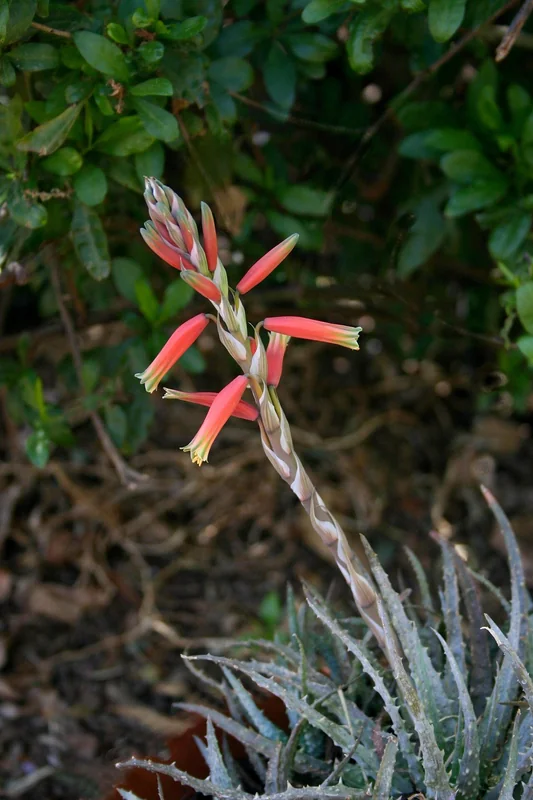
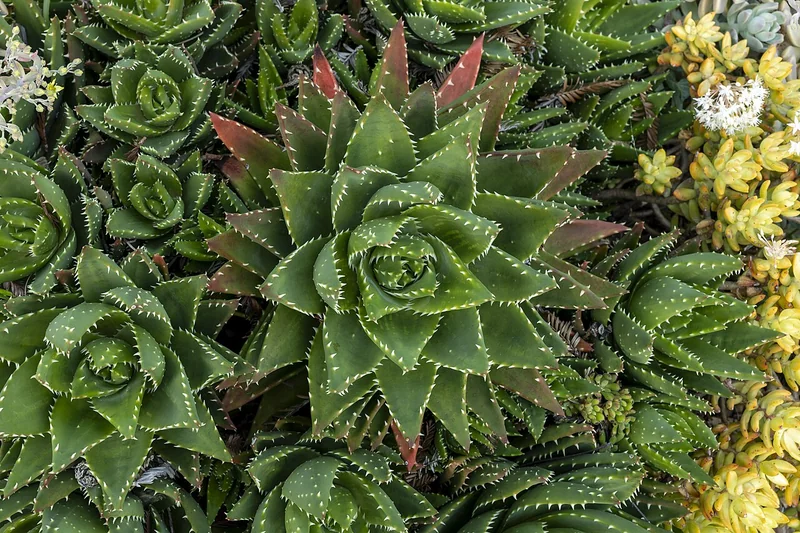
Aloe brevifolia, the short-leaved aloe, is a dwarf clump-forming succulent from the Western Cape of South Africa. Its small, compact rosettes of blue-green to grey-green leaves are edged with small cream-coloured teeth. The species spreads freely through offsets to form wide colonies and produces striking orange flower spikes in spring and summer. Its compact size and tolerance for bright indoor conditions make it one of the best miniature aloes for container gardening.
Care facts at a glance
- Light
- Bright indirect
- Water
- Water when the soil is completely dry; roughly every 2 to 3 weeks in summer.
- Humidity
- 30–60 %
- Temperature
- 5–35 °C
- Soil
- Very free-draining succulent mix with added coarse sand or perlite.
- Origin
- Western Cape, South Africa.
- Mature size
- 10 to 15 cm tall per rosette; spreads to 30 to 40 cm through offsets.
Overview
Aloe brevifolia was described by Miller in 1768. Its blue-green colouration is caused by a waxy cuticle that reflects excess light and reduces water loss — an adaptation to the hot, dry fynbos habitats of the Western Cape. The species is closely related to A. perfoliata and sometimes hybridises with it where ranges overlap. In cultivation it is reliably compact and rarely needs repotting more than every three to four years.
Care Priorities
- Full sun or very bright indirect light brings out the best blue-grey leaf colour.
- Allow soil to dry completely between waterings — the compact rosettes hold reserves.
- Grow in very porous substrate; terracotta pots encourage optimal drying.
- Winter drought rest encourages flowering the following season.
Common Problems
Pale, stretched rosettes or loss of the blue-green colouration indicate insufficient light — move to a sunnier spot. Soft tissue at the base combined with discolouration is root or crown rot; remove, trim, and dry before repotting in fresh dry mix. Scale insects can appear on leaves in dry, warm conditions; treat with isopropyl alcohol or horticultural oil.
Sources & further reading (2)
- botanical-garden — accessed 2026-05-08
- encyclopedia — accessed 2026-05-08
Frequently asked questions
Does A. brevifolia flower indoors?
Yes, with plenty of light and a cool, dry winter rest. Flower spikes emerge in spring on plants receiving at least 4 to 6 hours of bright light daily.
How do I keep it compact?
Compact growth is its natural habit when given adequate light. Insufficient light causes stretching; keep it at a sunny windowsill or under a grow light.
The leaves are turning reddish — is that a problem?
Reddish or pinkish tones in the leaves are a normal stress response to intense light or warmth and are not harmful. The blue-green colour returns in less intense conditions.