Cephalocereus senilis
Cephalocereus senilis Care Guide
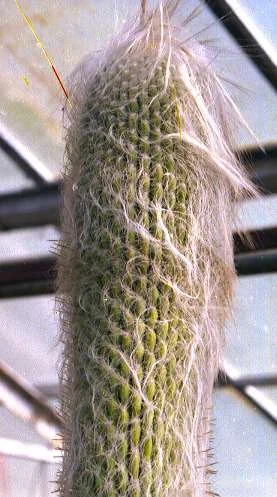 Featured photocephalocereus-senilis.jpg
Cephalocereus senilis is the celebrated Old Man Cactus from Mexico, a slow-growing columnar cactus covered from tip to base in a cascade of long, white, silky-looking hair. The 'hair' is actually modified spines — thick-based but hair-like in texture — that serve to reflect intense sunlight and insulate the cactus against temperature extremes. Hidden beneath the white hair are sharp yellow spines. In habitat it grows to 10 m tall over centuries; as an indoor plant it makes a charming, conversation-stopping specimen that grows slowly and requires minimal care.
Care facts at a glance
- Light
- Bright indirect
- Water
- Water every 14 to 21 days in summer; once every 6 weeks in winter or withhold entirely.
- Humidity
- 20–40 %
- Temperature
- 5–40 °C
- Soil
- Very free-draining cactus mix: 60% coarse grit or perlite, 40% cactus compost. Mineral-dominant mix is best.
- Origin
- Semi-arid hillsides of Guanajuato and Hidalgo states, Mexico.
- Mature size
- Columnar; to 10 m tall over centuries in habitat. Indoor specimens: 15–60 cm in 10–20 years.
Overview
Cephalocereus senilis (Haw.) Pfeiff. was described in 1838. The genus name means 'head cereus' (from Greek kephale, head) — referring to the woolly cephalium, the dense mass of hair and bristles that forms at the apex of mature specimens and from which flowers emerge. The species name senilis means 'aged' or 'old man' — a reference to the white hair covering. In its native Mexican habitat the cactus grows on rocky hillsides in very dry conditions, reaching 10–15 m tall over centuries. The long white 'hairs' reduce solar radiation hitting the stem and insulate against temperature fluctuations — temperatures in its native habitat can exceed 50 °C in summer and drop to near 0 °C in winter.
Care Priorities
- Maximum direct sunlight is essential for compact, tight growth and maintaining the hair quality; in shade the cactus elongates and the hair becomes sparse.
- Keep the hair clean and dry; wet hair against the stem encourages fungal stem rot. Never mist the plant.
- The low humidity requirement (below 50%) is unusual among houseplants but reflects the arid Mexican habitat.
- Handle carefully — the long white hair conceals very sharp yellow spines underneath. Use thick gloves.
- In winter, withhold water entirely; the very low humidity of heated homes in winter is beneficial.
Common Problems
Hair turning yellow or brown at the base indicates water or humidity damage to the stem epidermis; allow to dry completely and assess whether stem rot is developing. Stem rot appears as softening or discolouration of the cactus body beneath the hair; at early stages remove the affected area with a sterile knife, dust with fungicide, and allow to callous. Mealybugs hiding in the hair at the stem base are the most challenging pest — they are very difficult to spot and treat; use a systemic insecticide soil drench. Excessive leaning toward light indicates insufficient overall light intensity; rotate the pot regularly to ensure even development.
Sources & further reading (2)
- botanical-garden — accessed 2026-05-27
- encyclopedia — accessed 2026-05-27
Frequently asked questions
Can I wash the hair?
Avoid wetting the hair; it holds moisture against the stem and can encourage rot. Dry dust can be removed by very gently brushing with a soft toothbrush or a dry paintbrush. If the hair must be cleaned, allow the plant to dry completely in a warm, well-ventilated position afterwards and do not water until fully dry.
Will it ever flower indoors?
Extremely unlikely — flowers are produced only at the cephalium (woolly apex) of specimens that are decades old and several metres tall. Indoor specimens rarely approach the size required. The plant is grown for its extraordinary hair-covered appearance, not for flowering.
How do I encourage good hair growth?
Maximum direct sunlight, excellent drainage, dry air, and minimal watering in winter. The hair quality is directly linked to growing conditions — plants grown in good light with proper dry winters develop dense, silky, long hair. Neglected or over-watered specimens develop thin, scraggly, discoloured hair that loses the decorative appeal.