Athyrium niponicum
Athyrium niponicum Care Guide
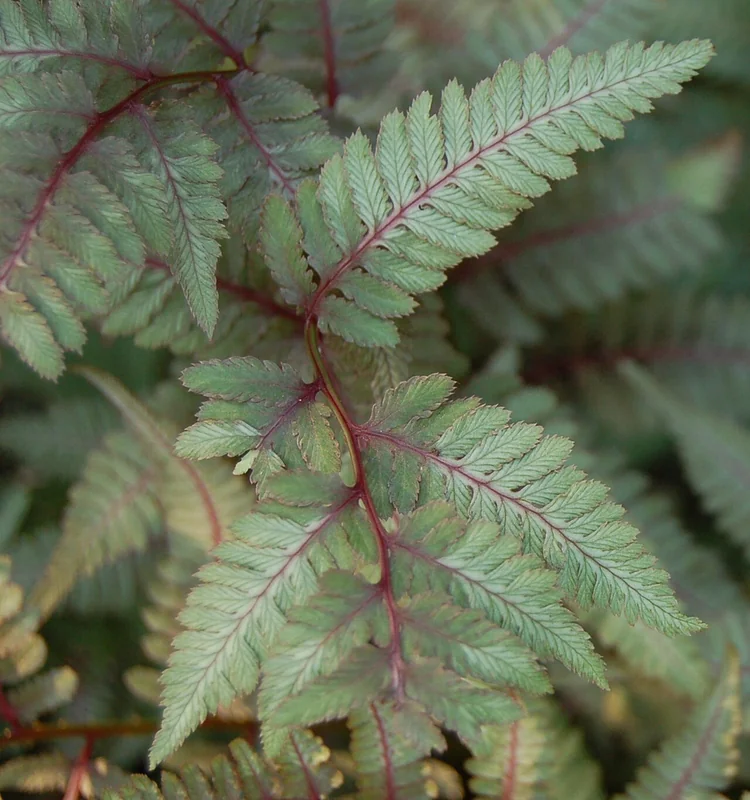 Featured photoathyrium-niponicum.jpg
Athyrium niponicum, the Japanese painted fern, is native to Asia and is famous for its highly ornamental fronds, which are brushed in silver, grey, and purple in popular cultivated forms such as 'Pictum' (Metallicum). The silvery central band contrasts with the burgundy to violet rachis and stems, creating a jewel-like effect unmatched among ferns. It is a deciduous, cold-hardy species that dies back in winter and returns vigorously in spring, making it a relatively low-maintenance indoor and outdoor fern.
Care facts at a glance
- Light
- Medium light
- Water
- Keep evenly moist; water every 5 to 7 days in summer. Reduce significantly in winter when the plant is dormant.
- Humidity
- 45–70 %
- Temperature
- -15–24 °C
- Soil
- Humus-rich, moisture-retentive but well-draining mix; add organic matter and perlite.
- Origin
- Shaded woodland slopes and streamsides of Japan, China, Korea, and Taiwan.
- Mature size
- 30 to 50 cm tall; spreading clump to 60 cm wide.
Overview
Athyrium niponicum var. pictum, the 'painted' form, is the most widely sold variety in cultivation and was named Perennial Plant of the Year in 2004. The silver colouration is caused by reduced chlorophyll in the upper frond surface revealing the reflective cell layer beneath, while the burgundy stems contain anthocyanin pigments. Unlike most ferns, the colour is most vivid in bright (not low) indirect light — deep shade causes the silver to fade to plain green.
Care Priorities
- Bright, indirect light (not deep shade) produces the best silver-purple colouration.
- Consistent moisture is essential during the growing season; allow the fronds to dry in dormancy.
- Protect the crown from freezing wet conditions; deep frost in waterlogged soil can kill the crown.
- Divide the clump every 3 to 4 years to rejuvenate growth and maintain vigour.
Common Problems
Loss of silver colouration and all-green fronds indicate that the plant is in too much shade; move to a brighter indirect position. Frond collapse in autumn is simply dormancy — do not discard the plant. Cut back dead fronds in late winter before new growth resumes. Slugs can damage new spring growth; use slug traps or copper tape around pots.
Sources & further reading (2)
- botanical-garden — accessed 2026-05-08
- encyclopedia — accessed 2026-05-08
Frequently asked questions
Does it die in winter?
Yes — it is deciduous and completely loses its fronds in autumn. This is normal. The crown remains alive and will produce fresh, colourful fronds the following spring.
How do I maintain the silver colour?
Grow in bright indirect light rather than deep shade. Also, cooler growing conditions and slightly drier soil during early growth phases tend to intensify the pigmentation.
Can I grow it as a houseplant year-round?
Yes, though it will go dormant in winter regardless of indoor temperatures. Providing a cool rest period mimics its natural cycle and produces more vigorous spring growth.