Arisaema triphyllum
Arisaema triphyllum Care Guide
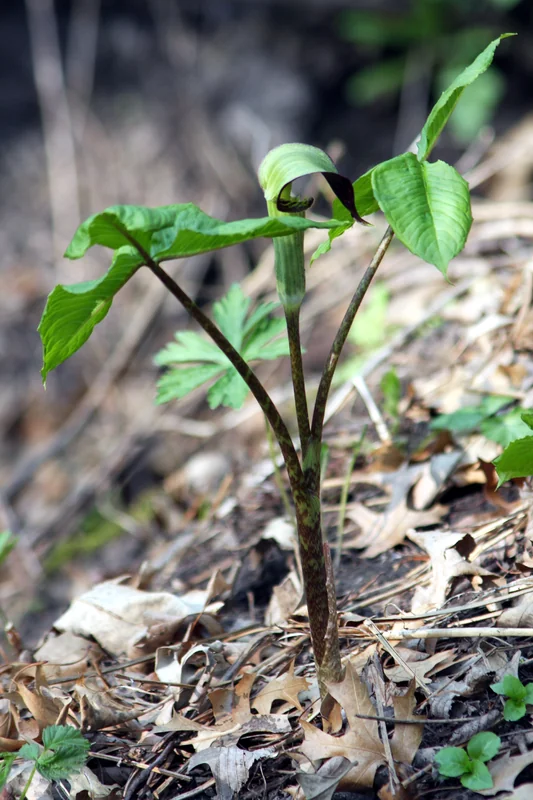 Featured photoarisaema-triphyllum.jpg
Arisaema triphyllum, the Jack-in-the-Pulpit, is a tuberous aroid native to the woodland floors of eastern North America. Its distinctive striped, hooded spathe (the 'pulpit') enclosing a spadix ('Jack') emerges above one or two trifoliate leaves in spring. It requires a cool, moist, shaded environment and a distinct winter dormancy period, making it an unusual but rewarding subject for cool rooms, conservatories, or shaded outdoor containers brought indoors in summer.
Care facts at a glance
- Light
- Low light
- Water
- Keep the medium consistently moist but not waterlogged during the growing season. Stop watering in autumn as leaves die back.
- Humidity
- 50–80 %
- Temperature
- 2–24 °C
- Soil
- Humus-rich, moist, well-draining woodland potting mix; slightly acidic pH 5.5–6.5.
- Origin
- Rich woodland floors and moist thickets of eastern North America.
- Mature size
- 30 to 60 cm tall; single or paired trifoliate leaves.
Overview
Arisaema triphyllum was formally described by Schott in 1832 but has been a part of eastern North American flora long recognised by indigenous peoples. It is unusual among aroids in being adapted to a temperate climate, requiring a genuine cold winter dormancy. Plants can change sex from year to year — a well-fed plant typically produces female flowers, while a stressed plant reverts to male flowering, an adaptation that allows the plant to conserve resources. After pollination, the spathe shrivels to reveal a bright red berry cluster by late summer.
Care Priorities
- Cool temperatures are essential: this species dislikes warm centrally heated rooms and thrives in unheated conservatories or cool bedrooms.
- Plant the corm 8–10 cm deep in humus-rich compost and maintain consistently moist conditions throughout the growing season.
- Allow complete cold dormancy (even brief below-zero temperatures are tolerated) for at least 10–12 weeks in winter.
- Avoid over-fertilising — woodland aroids are adapted to nutrient-poor soils.
Common Problems
Failure to emerge in spring often means insufficient cold stratification during winter. If grown indoors in a warm room, move the pot to a cold space (near 0 °C) for at least 8 weeks before bringing back to warmth in late winter. Corm rot typically results from poor drainage combined with cold temperatures; ensure the compost drains well even when moisture levels are maintained. Slugs are the primary pest if grown outdoors; use grit around the pot or biological slug controls.
Sources & further reading (2)
- botanical-garden — accessed 2026-05-27
- encyclopedia — accessed 2026-05-27
Frequently asked questions
Does Jack-in-the-Pulpit need a cold winter?
Yes — this is a temperate woodland species that requires a cold dormancy period of at least 8–12 weeks at near-freezing temperatures to reset its flowering cycle. Without adequate cold, it will fail to emerge or flower properly.
Will it produce berries?
Only female plants produce the spectacular cluster of scarlet berries in late summer. As the plant matures and builds up its corm, it typically produces female flowers that, if pollinated (outdoors), develop into berries. Indoor plants often produce male or sterile flowers.
Can it grow in a pot permanently?
Yes, with the right care. Use a deep pot (at least 20 cm), allow full dormancy each winter, and repot every 2–3 years in fresh compost. Divide offsets when repotting to increase your collection.