Aloe humilis
Aloe humilis Care Guide
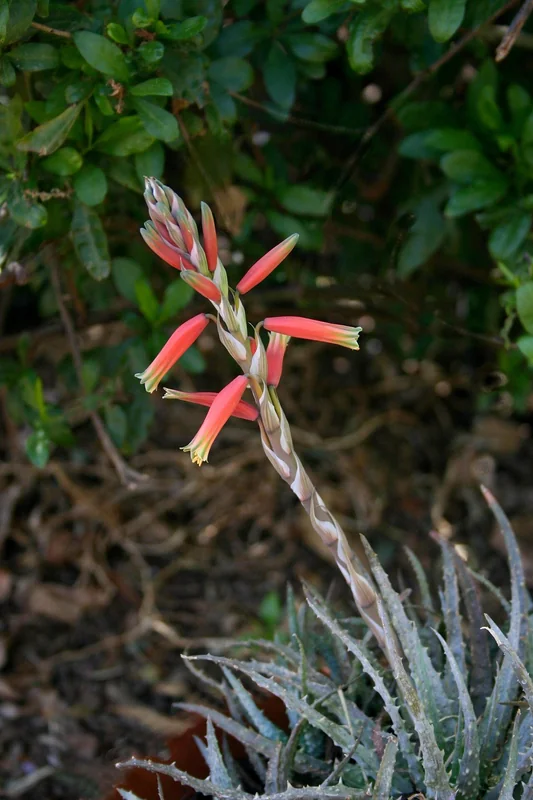 Featured photoaloe-humilis.jpg
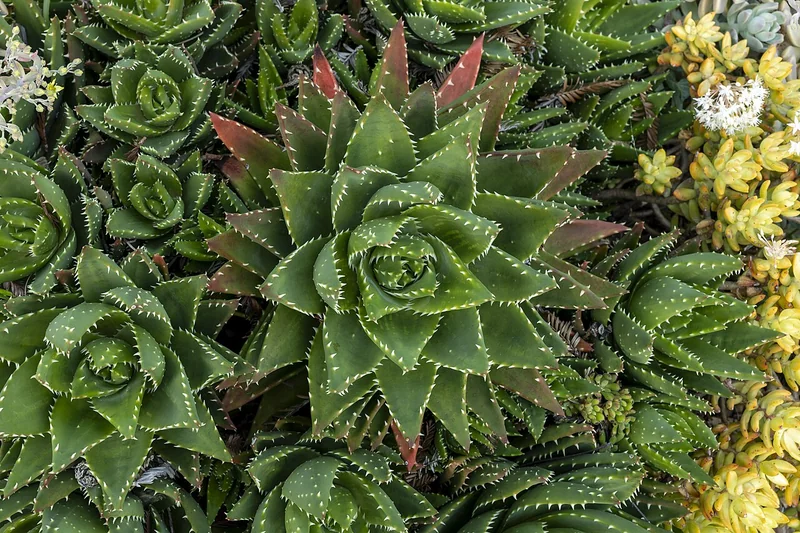
Aloe humilis, the Spider Aloe, is a dwarf succulent from South Africa's Cape Province that forms tightly packed rosettes of stiff, blue-green to grey-green leaves densely armed with pale teeth along both margins and leaf surface. It offsets freely, quickly forming attractive multi-headed clumps, and produces tall spikes of tubular orange-red flowers in late winter or spring. Its compact size and tolerance of dry conditions make it an ideal windowsill specimen.
Care facts at a glance
- Light
- Bright indirect
- Water
- Water every 2–3 weeks in summer; once a month in winter. Allow complete drying between waterings.
- Humidity
- 10–50 %
- Temperature
- 5–35 °C
- Soil
- Gritty, fast-draining cactus or aloe mix with extra perlite.
- Origin
- Rocky slopes and scrubland of the Western and Eastern Cape, South Africa.
- Mature size
- 15–25 cm tall; offsets to form clumps 30–40 cm across.
Overview
Aloe humilis (L.) Mill. was described in 1768 and is one of the most compact aloe species suitable for windowsill cultivation. The species name 'humilis' means 'low-growing' in Latin. It produces abundant offsets from the base, which is how it naturally spreads over rocky ground in its native habitat. The blue-grey colouration of the leaves results from a thin waxy coating that helps reduce water loss in the semi-arid Cape environment. The flowers are pollinated by sunbirds in nature.
Care Priorities
- Bright light with some direct morning sun is ideal; avoid harsh afternoon sun that bleaches the leaves.
- Separate offsets every 2–3 years to prevent overcrowding that can lead to moisture accumulation and rot in the centre of the clump.
- Use a terracotta pot for the best drainage; plastic pots retain moisture and can lead to root rot in winter.
- Allow complete drying between waterings, especially in the cooler, shorter-day months.
Common Problems
Brown, shrivelled leaf tips indicate drought stress combined with low humidity; water more frequently in summer. Soft, yellowing leaves from the base outward indicate overwatering and root rot; repot in dry, fresh gritty mix immediately. Aloe rust (orange or brown pustules on leaf surfaces) is a fungal disease that spreads in humid conditions; improve airflow and avoid wetting the foliage. Mealybugs hide deep in the leaf rosette; use a diluted isopropyl alcohol solution applied with a cotton bud.
Sources & further reading (2)
- botanical-garden — accessed 2026-05-27
- encyclopedia — accessed 2026-05-27
Frequently asked questions
How is A. humilis different from Aloe vera?
A. humilis is much smaller and more compact than Aloe vera, with shorter, more densely toothed leaves and a blue-grey colouration. It offsets more freely and is better suited to windowsill collections. Aloe vera is a larger, single-rosette species best grown in a medium-to-large pot.
When does it flower?
Typically in late winter to early spring (January–March in the northern hemisphere). Mature, well-lit plants produce tall, unbranched stems bearing dense spikes of narrow, tubular orange-red flowers. Cooler winter temperatures and slightly drier conditions help trigger flowering.
Should I remove the offsets?
You can leave them to form a decorative clump or remove them in spring when they are large enough to have their own roots. Use a clean knife, allow the wound to callus for a day, then pot in dry gritty mix.