Aeonium percarneum
Aeonium percarneum Care Guide
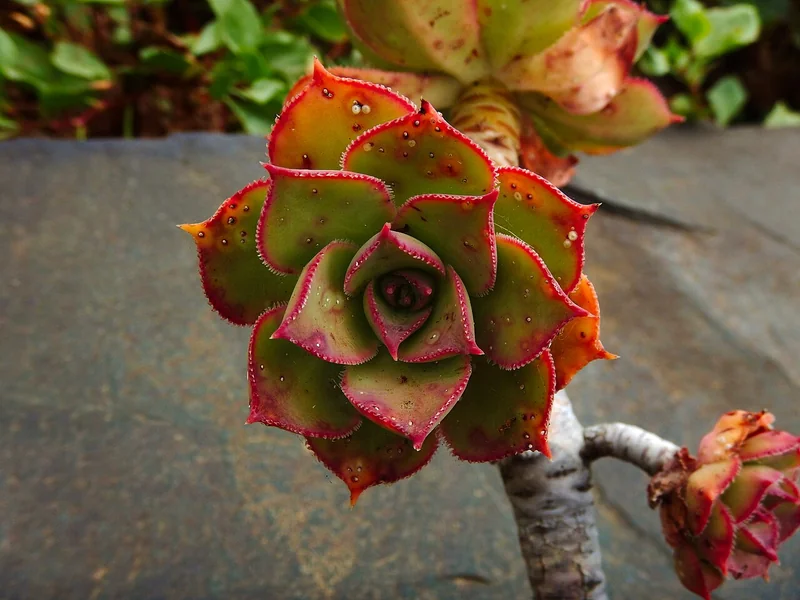 Featured photoaeonium-percarneum.jpg
Aeonium percarneum is a robust aeonium native to Gran Canaria in the Canary Islands, forming large, flat rosettes of silvery to glaucous-green leaves with a distinctive pinkish blush at the margins. It grows into a branched shrub over time, each stem topped by an impressive rosette up to 30 cm across. Like most aeoniums, it is winter-growing and summer-dormant, which makes it an excellent choice for cool, bright indoor spaces where other succulents might struggle in winter.
Care facts at a glance
- Light
- Bright indirect
- Water
- Water actively in autumn through spring when the plant is growing; reduce to very infrequent watering in summer dormancy.
- Humidity
- 40–70 %
- Temperature
- 5–28 °C
- Soil
- Moderately free-draining mix — slightly more moisture-retentive than for desert succulents.
- Origin
- Rocky coastal slopes and cliffs of Gran Canaria, Canary Islands.
- Mature size
- 60 to 120 cm tall; rosettes to 30 cm across.
Overview
Aeonium percarneum is endemic to Gran Canaria and has been in cultivation since at least the 19th century. It is sometimes confused with A. canariense and A. decorum, but percarneum has notably larger rosettes and a more pronounced pink leaf margin. Like all aeoniums it is monocarpic at the rosette level, though the plant as a whole survives because branching produces multiple rosettes, only some of which flower at any given time.
Care Priorities
- Water actively in autumn, winter, and spring when the plant is growing; reduce to near zero in summer when leaves cup inward and growth stops.
- Bright, indirect light suits it well in winter; summer semi-dormancy can be outdoors in partial shade.
- Cool temperatures (5 to 15 °C) in winter promote the most vigorous growth.
- Remove spent rosettes after flowering to direct energy to growing branches.
Common Problems
Leaves closing into a tight, cupped rosette in summer are a sign of summer dormancy — this is normal; reduce watering significantly and the plant will open again in autumn. Root rot can occur if the plant is watered heavily during dormancy; treat as for any succulent rot. Aphids frequently infest the soft new growth in spring; inspect new leaves and treat early.
Sources & further reading (2)
- botanical-garden — accessed 2026-05-08
- encyclopedia — accessed 2026-05-08
Frequently asked questions
Why did my aeonium's rosette flower and die?
Rosette monocarpy is normal — each individual rosette flowers once and then dies. The plant continues through side branches. Encourage branching by allowing the plant to grow unpinched.
Should I water in summer?
Very sparingly — just enough to prevent the stem from desiccating. The leaves curling inward is a visual cue that dormancy has begun; resume normal watering when they open in early autumn.
Can it survive outdoors in temperate climates?
It tolerates light frost briefly but is damaged below -3 to -5 °C. In mild maritime climates (UK south, Pacific Northwest, New Zealand) it grows vigorously outdoors year-round.