Adromischus maculatus
Adromischus maculatus Care Guide
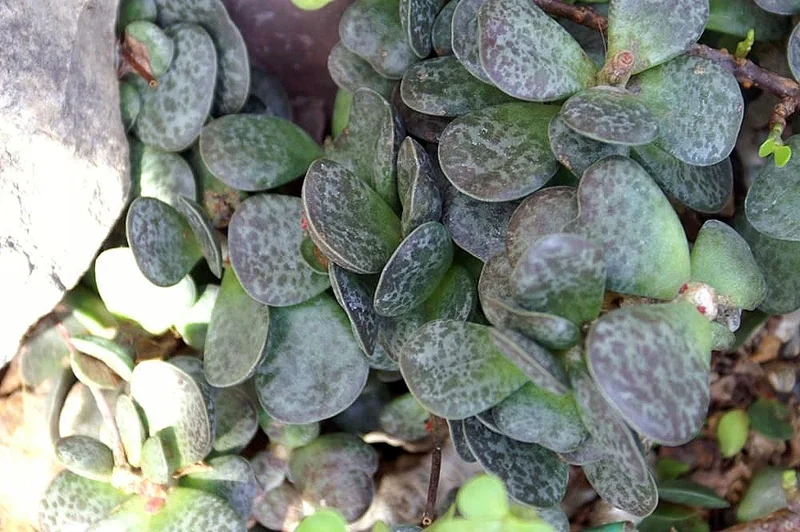 Featured photoadromischus-maculatus.jpg
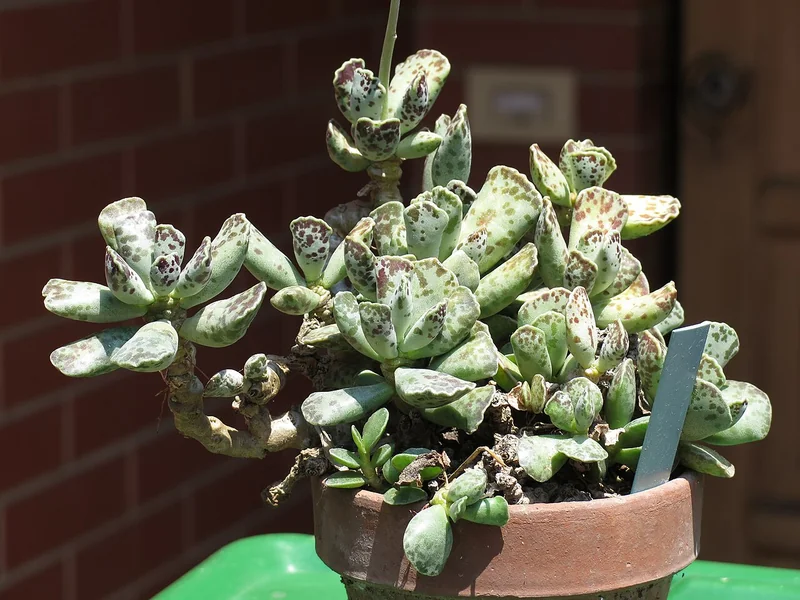
Adromischus maculatus, the Calico Hearts, is a dwarf succulent from South Africa's Western Cape that produces flat, rounded-paddle leaves in grey-green marked with irregular, deep-purple to reddish-brown blotches. These splashed markings vary considerably between plants, making each specimen uniquely patterned. It is slow-growing, stays compact for years in a small pot, and makes an ideal miniature succulent for bright windowsills and specialist collections.
Care facts at a glance
- Light
- Bright indirect
- Water
- Water every 2–3 weeks in summer; monthly in winter. Allow complete drying between waterings.
- Humidity
- 10–40 %
- Temperature
- 5–35 °C
- Soil
- Very gritty succulent mix; 50% mineral grit for fast drainage.
- Origin
- Rocky, dry hillsides of the Western Cape, South Africa.
- Mature size
- 8–15 cm tall; compact clumping rosettes.
Overview
Adromischus maculatus (Salm-Dyck) Lem. was described in 1852 and has been a favourite among succulent collectors ever since for its highly variable leaf markings. The purple blotching is caused by anthocyanin pigmentation that varies with light intensity, temperature, and genetic variation between individual plants — plants grown in bright, slightly cooler conditions tend to develop the most vivid purple markings. No two plants have identical markings.
Care Priorities
- Bright light is essential for the purple markings to develop fully; plants in low light lose the blotching and become plain grey-green.
- Allow the soil to dry completely between waterings — the flat, paddle leaves store a generous water reserve.
- Use a very small pot; the compact root system performs better slightly confined.
- Protect from frost but appreciate a cool, dry winter rest that enhances flowering.
Common Problems
Purple markings that fade to plain grey-green are caused by insufficient light. Move to a south-facing windowsill with direct morning sun. Mushy leaf bases indicate rot — often from humidity trapped in the leaf rosette; improve airflow and reduce watering frequency. Leaves that fall at the slightest touch are usually a sign of either severe drought (they will feel completely flat) or root rot (they will feel soft). Individual fallen leaves root readily on dry gritty mix.
Sources & further reading (2)
- botanical-garden — accessed 2026-05-27
- encyclopedia — accessed 2026-05-27
Frequently asked questions
Why do the blotches vary so much?
The blotch pattern is genetically variable and is also influenced by light levels and temperature. This natural variation is part of the appeal — collector communities trade named clones with particularly vivid or unusual markings.
Does it flower?
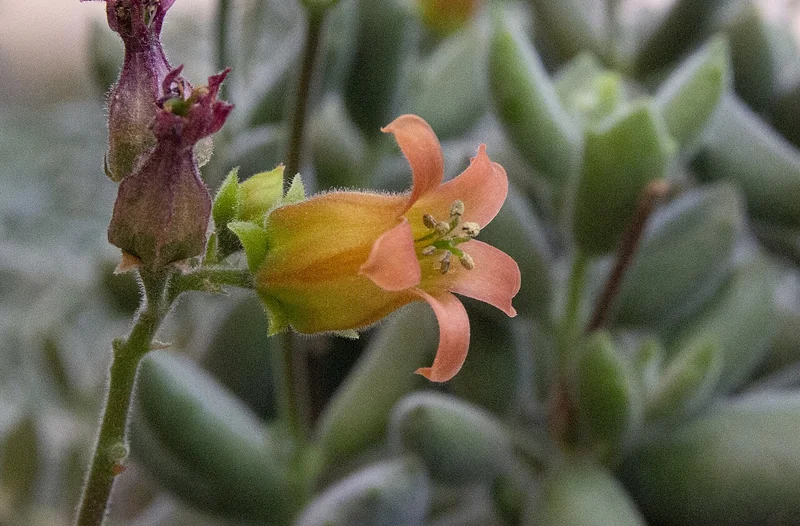
Yes — mature plants produce tall, slender stems bearing small, tubular, pinkish-white flowers in summer. The flowers are modest compared to the foliage but add seasonal interest. Flowering requires the plant to be well-established and have received good light throughout the year.
How slow is 'very slow'?
A well-grown A. maculatus might add 2–3 new leaves per year. It can stay in a 7 cm pot for 5+ years. This extreme slow growth is what makes mature, multi-headed specimens valuable collector items.