Adromischus cooperi
Adromischus cooperi Care Guide
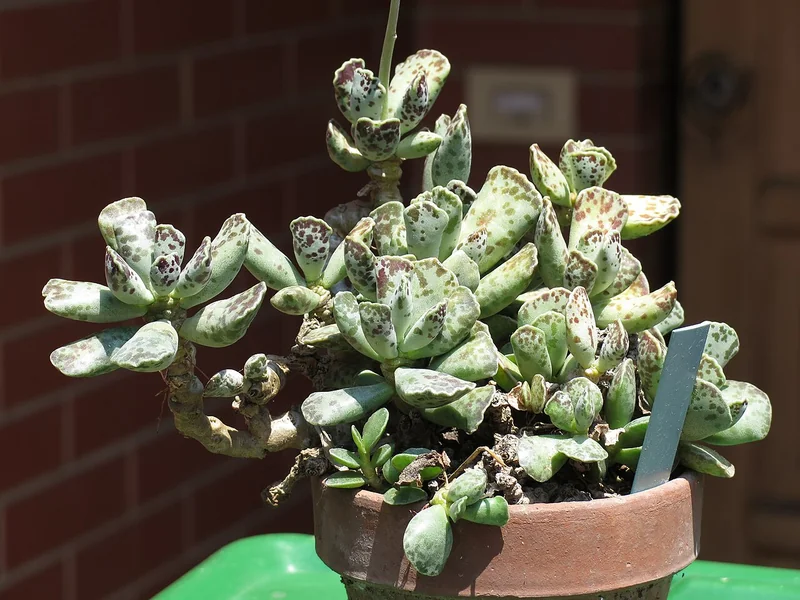 Featured photoadromischus-cooperi.jpg
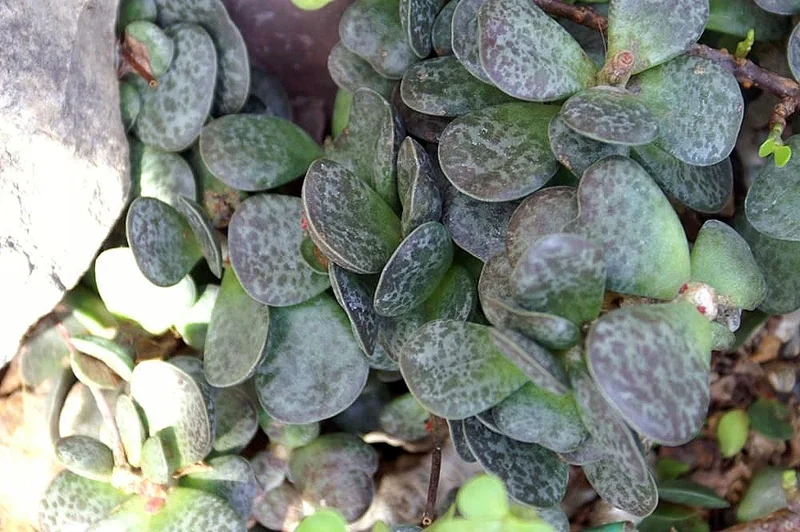
Adromischus cooperi, commonly known as the plover eggs plant, is a small South African succulent from the Cape region with thick, grey-green leaves covered in random reddish-brown to maroon spots reminiscent of bird eggs. The leaves are pleasantly tactile — slightly wavy at the margin and covered in a fine, powdery coating. It is a compact, slow-growing species perfectly suited to windowsills and succulent collections, requiring minimal care once established.
Care facts at a glance
- Light
- Bright indirect
- Water
- Water when the soil is fully dry — roughly every 3 weeks in summer, monthly or less in winter.
- Humidity
- 30–55 %
- Temperature
- 5–35 °C
- Soil
- Very gritty succulent mix: 60 percent coarse sand or perlite, 40 percent succulent compost.
- Origin
- Rocky slopes and dry scrub of the Western and Eastern Cape, South Africa.
- Mature size
- 8 to 15 cm tall; slowly spreading through stem elongation.
Overview
Adromischus cooperi was described by (Baker) A.Berger and named for the botanist Thomas Cooper. The genus Adromischus contains around 50 species, all from southern Africa. The spotted pattern on the leaves is thought to break up the plant's outline as a form of camouflage in its rocky native habitat. Leaf propagation is the primary method of increase — a detached leaf, laid on gritty mix, slowly produces a new plant from the base.
Care Priorities
- Very bright light intensifies the reddish spotting and keeps the growth compact.
- Allow soil to dry completely between waterings — the leaves are an enormous moisture reserve.
- Handle leaves gently; the powdery coating (farina) is easily damaged and does not regenerate.
- Use terracotta and gritty substrate for best drainage.
Common Problems
Leaves dropping off at the slightest touch often indicates root damage from overwatering; repot in fresh dry mix and reduce watering significantly. Mushy tissue at the stem base is root or stem rot — treat promptly. The powdery leaf coating can be rubbed off by handling; once removed it does not grow back, so handle by the stem rather than the leaves.
Sources & further reading (2)
- botanical-garden — accessed 2026-05-08
- encyclopedia — accessed 2026-05-08
Frequently asked questions
Does A. cooperi ever flower?
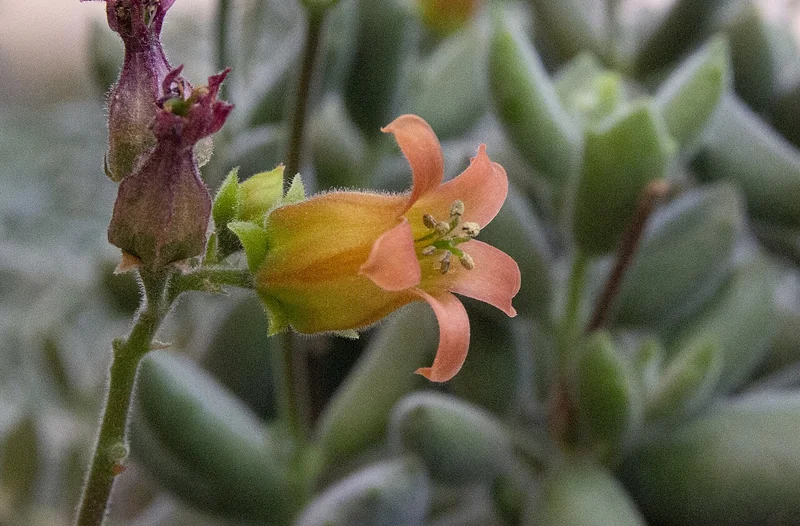
Yes — mature plants (3 or more years old) produce slender, upright spikes with small tubular pink-red flowers in summer. The flowers are modest but attractive.
How do I propagate by leaf?
Carefully twist off a healthy leaf at the base, ensuring the base is intact. Place it on barely moist gritty mix in a warm, bright spot. A tiny new rosette forms at the base of the leaf over several months.
Why are some of my leaves spotted and some plain?
Spotting varies across the leaf and is most pronounced on the upper surface. The intensity of the spots can change with light levels — bright light tends to deepen the reddish pigmentation.