Cotyledon tomentosa
Cotyledon tomentosa Care Guide
 Featured photocotyledon-tomentosa.jpg
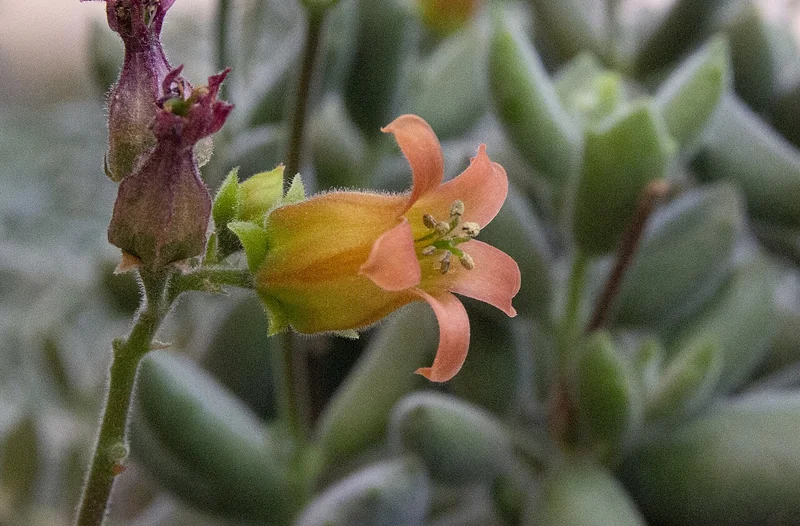
Cotyledon tomentosa subsp. ladismithiensis, universally known as Bear Paws, is a small, densely hairy succulent from South Africa's Little Karoo that produces compact rosettes of fat, oval, velvety-white leaves tipped with dark, tooth-like protrusions that give the plant its charming common name. It is one of the most beloved novelty succulents, highly sought after for its tactile appeal and its occasional display of orange-red pendant flowers on tall stems.
Care facts at a glance
- Light
- Bright indirect
- Water
- Water every 2–3 weeks in the growing season, allowing the soil to dry fully between waterings. Very minimal water in winter.
- Humidity
- 10–40 %
- Temperature
- 7–35 °C
- Soil
- Fast-draining cactus mix with extra perlite; well-aerated and mineral-rich.
- Origin
- Arid, rocky habitats of Little Karoo, South Africa.
- Mature size
- 15–30 cm tall; semi-erect, loosely branching.
Overview
Cotyledon tomentosa (Harv.) H.Jacobsen is named for the dense tomentum (felt-like hair covering) on its leaves — the same feature that creates its bear-paw appearance. The toothed leaf tip has 3–10 small, dark, claw-like protrusions that vary in number between specimens. Subspecies ladismithiensis is the most widely cultivated form, with particularly fat, densely hairy leaves. The hairs serve the same function as farina on other succulents: reflecting intense UV radiation and reducing surface water loss in the arid Karoo environment.
Care Priorities
- The fuzzy leaves must stay dry: always water directly into the soil, never overhead, and ensure good airflow around the plant to prevent moisture build-up in the hairs.
- Bright light with some direct morning sun produces the most compact, well-coloured plants.
- Low humidity (below 50%) is much preferred — the leaves deteriorate rapidly in a damp, enclosed environment.
- The plant is slow-growing and prefers to be slightly pot-bound; repot only every 3 years.
Common Problems
Rot at the base of the stem is almost always caused by water sitting in the leaf hairs or the stem axils. Remove affected tissue, allow to callus for a day, and repot in fresh, dry gritty mix. Mealybugs hide effectively in the dense hairs; inspect regularly and treat with a fine-mist spray of diluted isopropyl alcohol, taking care not to over-saturate. Leaves that drop easily when touched usually indicate underwatering or root rot; feel the stem base to determine which.
Sources & further reading (2)
- botanical-garden — accessed 2026-05-27
- encyclopedia — accessed 2026-05-27
Frequently asked questions
Can I propagate it from a single leaf?
Leaf cuttings can succeed but are less reliable than stem cuttings. For best results, allow a leaf to callus for 2–3 days, then lay it on dry, gritty mix without burying it. Mist sparingly around — not on — the leaf once callused. Stem cuttings are faster and more dependable.
Why are the tips of my bear paws turning dark?
Some darkening of the tooth tips is natural, especially in high-light or slightly stressed conditions — it's part of the plant's appearance. If the entire leaf is turning dark and soft, that indicates rot, which is a different issue requiring immediate action.
How do I get it to flower?
Bear Paws flowers more reliably outdoors or in a cool conservatory with maximum light. Give it a cool winter rest (around 10 °C) with minimal watering and it should produce orange-red pendant flowers on tall stalks in spring or early summer.