Achimenes longiflora
Achimenes longiflora Care Guide
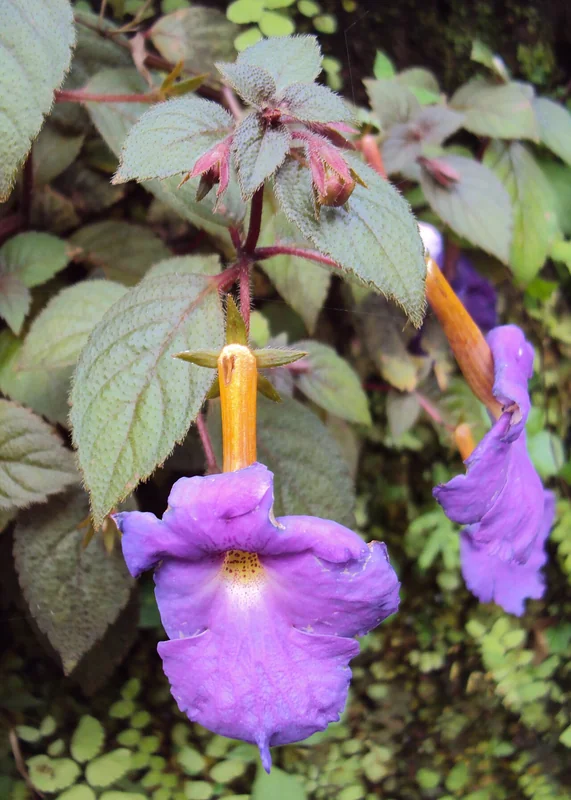 Featured photoachimenes-longiflora.jpg
Achimenes longiflora is a tuberous gesneriad from the cloud forests of Guatemala and Mexico, producing a profusion of large, violet-blue (or white to pink in cultivar forms) flowers with wide, flared corollas over a long summer season from June to October. It grows from tiny, pine-cone-like scaly rhizomes (tubercles) that remain dormant through winter. Easy to grow when the dormancy cycle is respected, it is one of the most floriferous summer houseplants available and has been in cultivation since the 19th century, producing numerous named cultivars.
Care facts at a glance
- Light
- Bright indirect
- Water
- Water every 5 to 7 days during the growing season (once actively growing); keep consistently moist. Withhold water completely in winter.
- Humidity
- 50–75 %
- Temperature
- 10–28 °C
- Soil
- Rich, free-draining mix: peat-free potting compost with 20% perlite.
- Origin
- Cloud forests of Guatemala and southern Mexico.
- Mature size
- Trailing or semi-upright stems to 30–50 cm in a hanging basket.
Overview
Achimenes longiflora DC. was described by Augustin de Candolle in 1845. The genus name may derive from the Greek 'a-cheimainein' (to endure cold) — referring to the dormancy strategy rather than cold tolerance. The common name 'Hot Water Plant' comes from the old practice of watering the dormant tubercles with warm water to break dormancy in spring. A. longiflora is native to the cool, humid cloud forests of Central America, where it grows in shaded, rocky locations as an ephemeral — completing its above-ground growth in the rainy season and retreating to underground tubercles in the dry season. In cultivation the cycle is: tubercles dormant in winter → new growth in spring → summer flowering → autumn die-back → winter storage.
Care Priorities
- Respect the dormancy cycle completely — in autumn when stems die back, allow the medium to dry, unpot, collect the tiny scaly tubercles, and store dry in a paper bag at 10–15 °C through winter.
- In spring (February–March), restart by planting tubercles 2–3 cm deep in fresh mix and watering once; growth begins within 2–3 weeks.
- Plant multiple tubercles in a hanging basket for the most impressive display — 10–15 per 25 cm basket is appropriate.
- Pinch stem tips when plants reach 10 cm to encourage branching and more flower stems.
- A consistent supply of moisture during flowering is important; irregular watering causes bud drop.
Common Problems
Bud drop before flowers open is caused by irregular watering or sudden temperature change; maintain consistent conditions once buds form. Aphids on new growth and flower buds in the warm season are the most common pest; treat with insecticidal soap. Tubercles rotting in winter storage result from being stored while still moist — allow the medium to fully dry before storage and store only firm, dry tubercles. Failure to sprout in spring may indicate tubercles dried out too much in storage or were stored too cold; discard shrivelled, very light tubercles and check storage conditions.
Sources & further reading (2)
- botanical-garden — accessed 2026-05-27
- encyclopedia — accessed 2026-05-27
Frequently asked questions
Why is it called the Hot Water Plant?
The name comes from an old horticultural practice: watering dormant tubercles with warm water (about 40 °C) in late winter was believed to break dormancy and stimulate sprouting. Modern understanding shows that warmth and moisture together break dormancy; the water temperature itself is less critical. The name persists as a charming historical curiosity.
How many tubercles does one plant produce?
A healthy plant grown through summer and allowed to flower and die back naturally can produce 10–30 tiny tubercles from a single starting tubercle. The population multiplies significantly with each growing season, so even starting with a few tubercles produces a large collection within 2–3 years.
Can I keep it growing year-round without dormancy?
No — the plant requires winter dormancy; attempts to maintain growth year-round result in gradual decline. The dormancy period allows the tubercles to accumulate energy reserves for the following season's vigorous growth and flowering. Forcing year-round growth exhausts the plant.