Fittonia albivenis
Fittonia albivenis (Nerve Plant) Care Guide
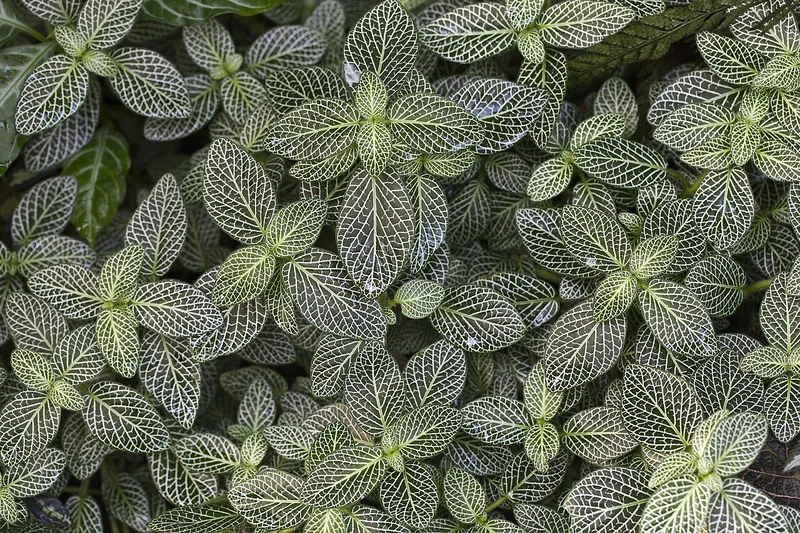 Featured photofittonia-albivenis.jpg
Fittonia albivenis is the nerve plant, a Peruvian creeping forest-floor plant with small, vivid leaves marked in bright white, pink, or red veins over dark green. It is one of the most colour-dense small foliage plants and a popular terrarium subject. It is humidity-loving and dries out quickly, but recovers fast from drought wilt — leaves bounce back within hours of watering.
Care facts at a glance
- Light
- Bright indirect
- Water
- Water when the top of the mix has dried; nerve plants wilt fast and visibly.
- Humidity
- 60–80 %
- Temperature
- 18–27 °C
- Soil
- Peat-rich mix with perlite.
- Origin
- Peruvian rainforests.
- Mature size
- 10 to 20 cm tall, spreading.
Overview
Fittonia albivenis grows on the floor of Peruvian rainforests in dappled light and high humidity. Indoors it does best in terraria, bathrooms, or grouped plant arrangements.
Care Priorities
- Bright filtered light; deep shade dulls the venation.
- Higher humidity is non-negotiable for crispy-edge prevention.
- Keep evenly moist; nerve plants wilt fast.
- Pinch back leggy stems to keep growth dense.
Common Problems
Sudden wilt is thirst — water and recover. Crispy edges are dry air. Pale, washed-out venation is too little light.
Sources & further reading (2)
- encyclopedia — accessed 2026-04-28
- botanical-garden — accessed 2026-04-28
Frequently asked questions
Why does it wilt so dramatically?
Nerve plants are drama queens of the houseplant world — they collapse completely when thirsty and recover within hours of watering. Use this as a watering guide.
Best for terraria?
Yes — high humidity and steady warmth in a terrarium suit it perfectly.
White, pink, or red — care difference?
Same care. The pink and red cultivars need slightly brighter light to maintain their saturated colour.