Canis lupus familiaris
Tornjak
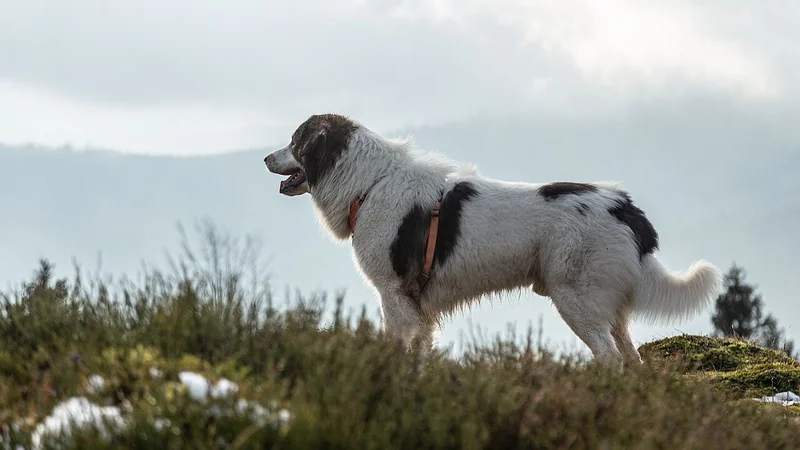 Featured phototornjak.jpg
The Tornjak is a large, powerful livestock guardian breed native to Bosnia and Herzegovina and Croatia, documented in medieval Bosnian monastery chronicles from as early as 1067 AD. The breed was used for centuries in the Dinaric Alps and surrounding mountain ranges to guard sheep and cattle flocks against wolves and bears. After near-extinction in the 20th century, the breed was revived in the 1970s and 1980s. The FCI registered it jointly in 2007 under Bosnia-Herzegovina and Croatia's patronage. Males stand 65–70 cm.
Quick facts
- AKC group
- Working
- Origin country
- Bosnia and Herzegovina / Croatia
- Origin period
- Medieval, documented from 1067 AD
- Coat type
- Long
- Coat colors
- White with coloured markings (most common), Various combinations of black, grey, chestnut, yellow, and white
- Average lifespan
- 12-14 years
- Recognition
- FCI 2007 · Group 2 — Pinscher and Schnauzer-Molossoid Breeds, Swiss Mountain and Cattle Dogs (Section 2.2: Molossoid breeds, Mountain type)
Origin
The first written record of the Tornjak appears in the 1067 chronicles of the Benedictine monastery of Žitomislić in Bosnia, which describe large, powerful dogs guarding flocks in the mountain regions. Additional monastery documents from the 12th and 14th centuries in Bosnia and Herzegovina reference similar dogs. The breed was the standard livestock guardian of the Dinaric Alps and the surrounding mountain ranges from at least the medieval period through the 19th century, used by transhumant shepherds moving large flocks between summer highland and winter lowland pastures. The name 'tornjak' from 'tor' (enclosed sheep pen) describes the dog's primary working post.
Recognition
Professor Zdravko Džafić in Sarajevo and a Croatian research team independently located surviving specimens in the remote mountain villages of Bosnia and Croatia in the late 1970s and began parallel reconstruction programs. The two national programs eventually cooperated and presented a unified breed standard. The FCI registered the Tornjak under standard No. 355 in 2007, granting joint patronage to Bosnia and Herzegovina and Croatia — the only breed with two patron countries. It is classified in Group 2, Section 2.2 (Molossoid breeds, Mountain type).
Standard
The FCI standard describes a large, well-built, muscular dog with a rectangular body slightly longer than tall, a broad skull, and a strong muzzle. The coat is long, dense, and straight with a thick undercoat; the neck carries a pronounced mane. The most common colour pattern is white with coloured (black, grey, chestnut, or yellow) patches; solid colours and various multi-colour combinations are also accepted. Males stand 65–70 cm; females 60–65 cm. The breed is known for its steady, calm character when guarding — it patrols the perimeter of the flock rather than confronting predators unless necessary.
Sources & further reading (3)
- fci-standard — accessed 2026-05-27
- encyclopedia — accessed 2026-05-27
- kennel-club-registry — accessed 2026-05-27
Frequently asked questions
When was the Tornjak first documented?
The earliest written record appears in the chronicles of the Benedictine monastery of Žitomislić in Bosnia, dated to 1067 AD, making the Tornjak one of the oldest documented working dog breeds in written European history. Additional references appear in Bosnian monastery documents from the 12th and 14th centuries. The breed's medieval range covered the Dinaric Alps and surrounding mountain regions.
Is the Tornjak FCI recognised?
Yes. The FCI registered the Tornjak under standard No. 355 in 2007, with joint patronage by Bosnia and Herzegovina and Croatia — the only FCI breed with two patron countries. It is classified in Group 2, Section 2.2 (Molossoid breeds, Mountain type). The breed is not currently recognised by the AKC or UKC.
What does 'Tornjak' mean?
The name derives from the Bosnian and Croatian word 'tor', meaning an enclosed sheep pen or fold. A 'tornjak' is therefore literally the dog that guards the 'tor'. This naming reflects the breed's most characteristic working behaviour: protecting enclosed flocks in their overnight pens from wolves and bears in the Dinaric mountain regions.